
Yesterday was a strange day online. While half the internet was patching software and changing passwords, Anthropic opened up an AI app that keeps working after you close it. Those two stories belong together, because the more an assistant can do on its own, the more it matters what it's allowed to touch.
This issue covers both, plus a big new training program for small business owners, a survey on how customers use chatbots to check you out before they buy, and five posting habits from someone who just doubled his reach on X. Each item links to the original post, and engagement numbers are as of the morning of October 22.
1. Claude Duet: an assistant that comes to you
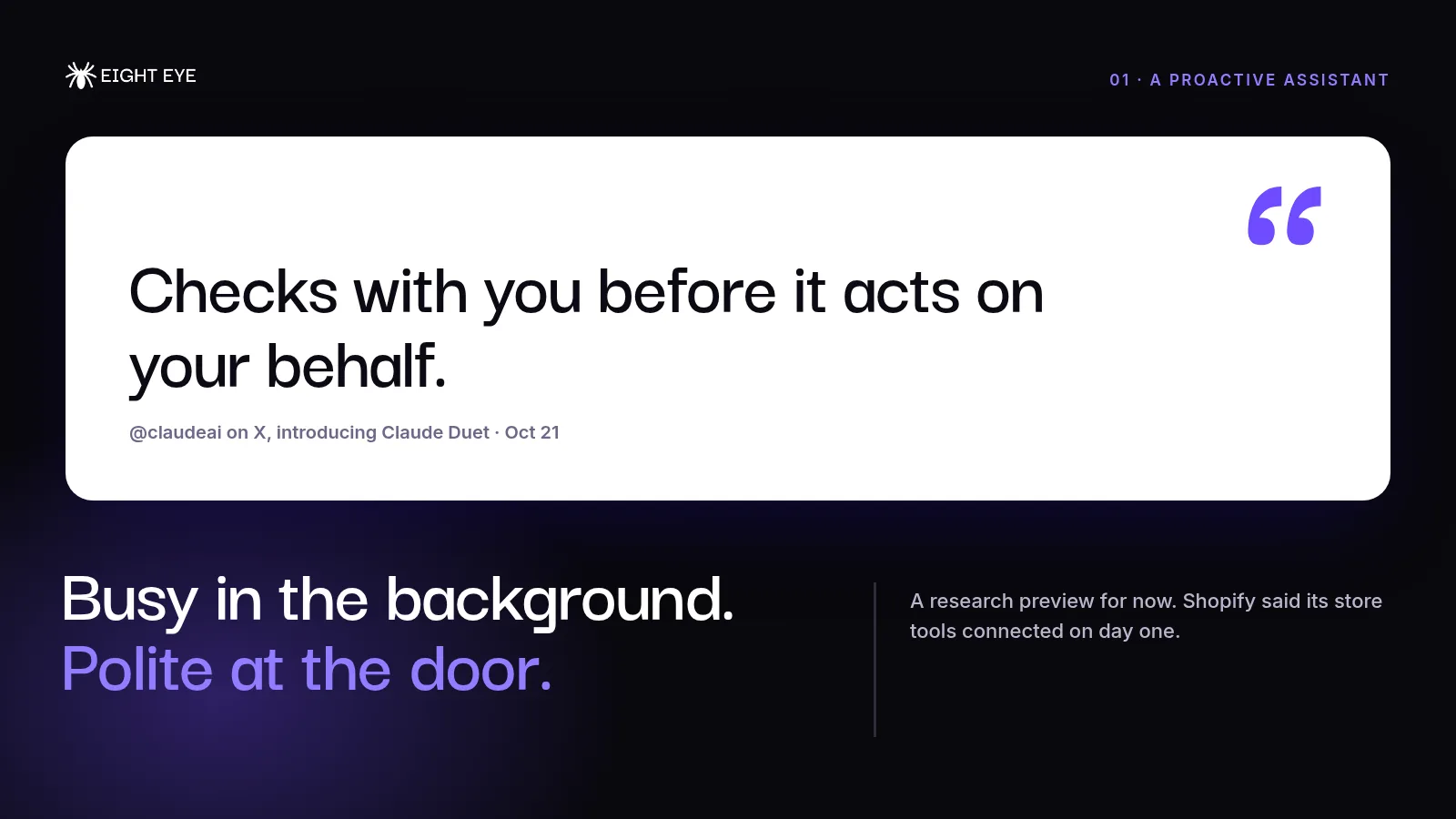
@claudeai, October 21. About 50,000 likes, 15,700 bookmarks and 7.5 million views.
Anthropic opened a research preview of Claude Duet, an app where Claude acts as a proactive agent. In the company's words, it comes to you with what needs your attention, finishes the tasks you give it, keeps working when you step away, and "checks with you before it acts on your behalf." According to X's news summary, it can connect to thousands of services like email, Slack and calendars, runs on a virtual machine so it keeps going when your devices are off, and can draft replies, chase invoices or build dashboards. Shopify said its store tools connected on day one.
Our take: This is the kind of help a busy shop owner actually wants: someone who notices the unpaid invoice and the customer who never got a callback, without being asked. The safe way to start is narrow. Connect your email and calendar first, let it draft and remind, and keep the approval step on for anything that goes out to a customer or moves money. Once you've read a few weeks of its drafts and they're right, give it more.
2. An AI key is a credit card now
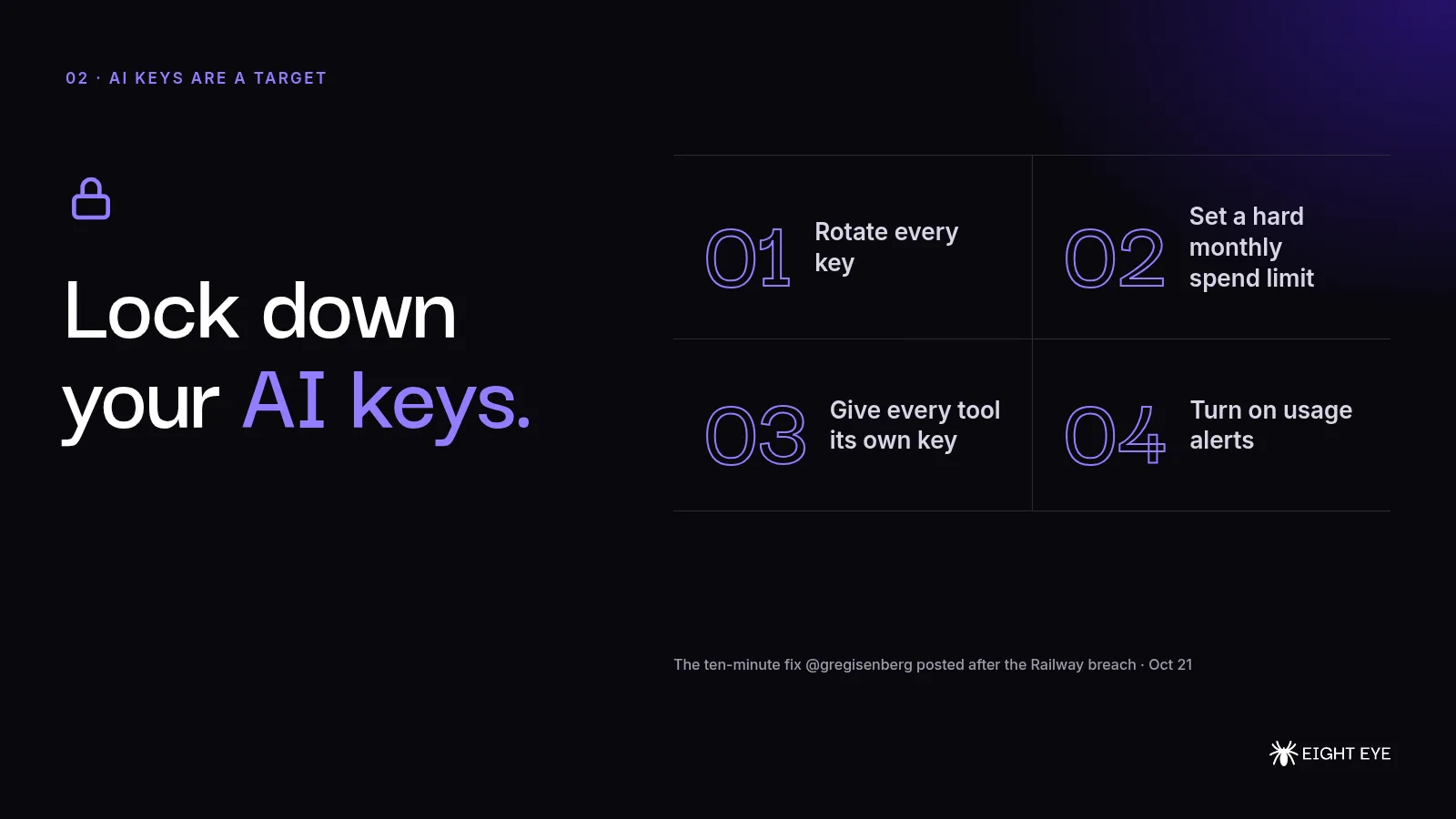
@gregisenberg, October 21. About 680 likes and 650 bookmarks.
The other big story was security. According to X's news summary, the cloud platform Railway disclosed a breach that exposed some customer secrets, including API keys, on the same day as the PHP emergency patch we covered yesterday and fixes for Node.js and GitLab. Greg Isenberg, who builds and invests in internet businesses, said the attackers were after the AI keys, because "an API key is basically a credit card for compute now." His fix takes about ten minutes: rotate every key, set a hard monthly spend limit in each AI dashboard, give every agent its own key, and turn on usage alerts.
Shopify CEO Tobi Lütke called it the "craziest day in cyber security in a long time," and Wharton professor Ethan Mollick described attack and defense now speeding up at "inhuman speeds."
Our take: You may not think you have API keys, but if a developer connected your website chat, booking form or call software to an AI service, you do. Ask whoever set it up three questions this week. Where are the keys stored? Is there a spending cap on each account? Will anyone get an alert if usage suddenly jumps? A cap turns a stolen key from a surprise bill into a small annoyance.
3. Goldman Sachs puts money into AI training for owners
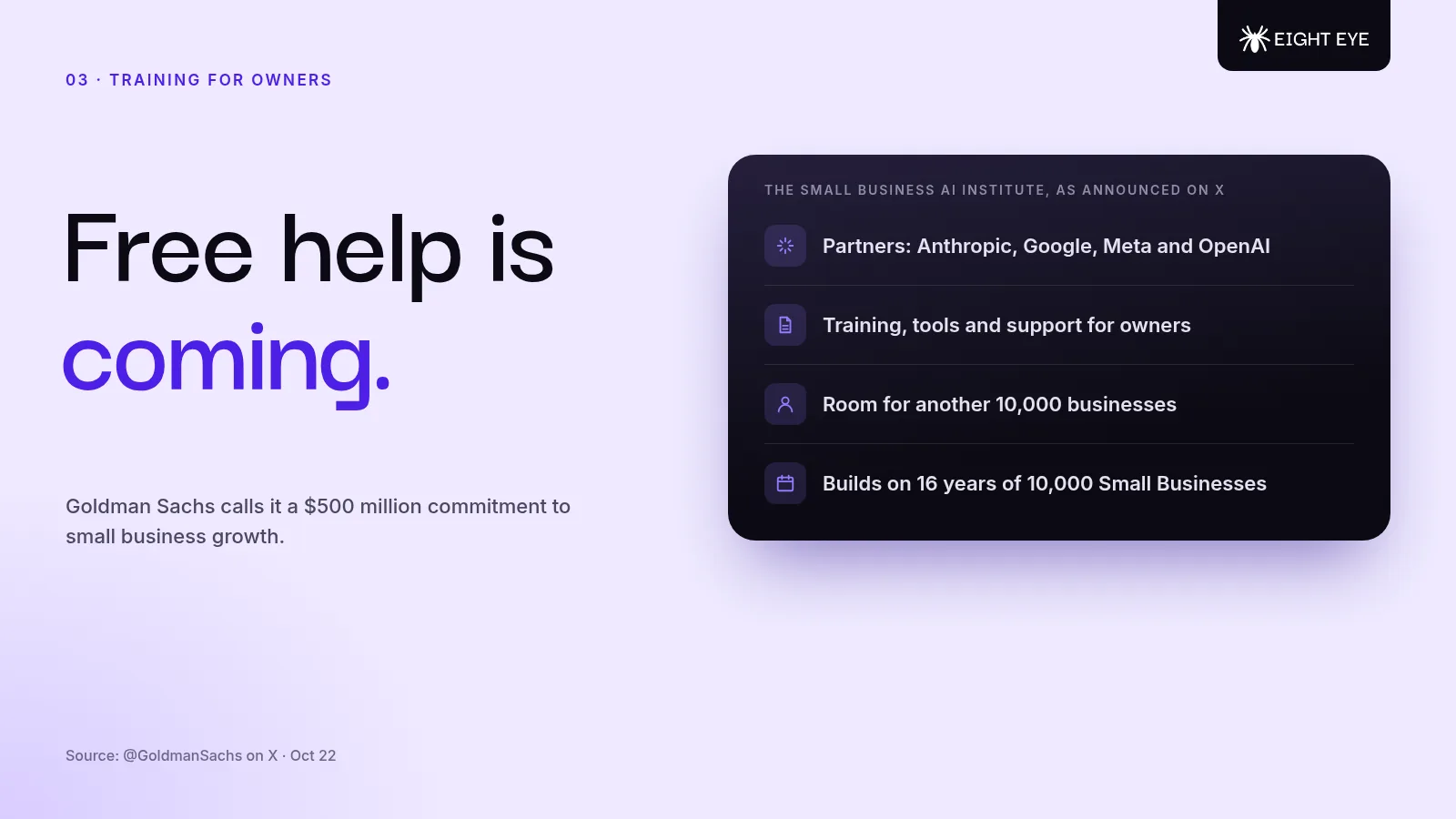
@GoldmanSachs, October 22. Posted this morning.
Goldman Sachs announced a Small Business AI Institute as part of what it called a $500 million commitment to small business growth. It builds on its 10,000 Small Businesses program, which has run for 16 years, and the firm says it will work with Anthropic, Google, Meta and OpenAI to give owners across the country training, tools and support. It also plans to bring the program to another 10,000 businesses.
Our take: Most owners we talk to don't need another AI app. They need an afternoon where someone shows them how to use one on their own quotes, schedules and follow-ups. If a free, structured program like this opens near you, it's worth the time. Watch the 10,000 Small Businesses account for details on who can apply.
4. Customers now run an AI background check on you
@alexgroberman, October 22. A smaller post, but it walks through a useful new survey.
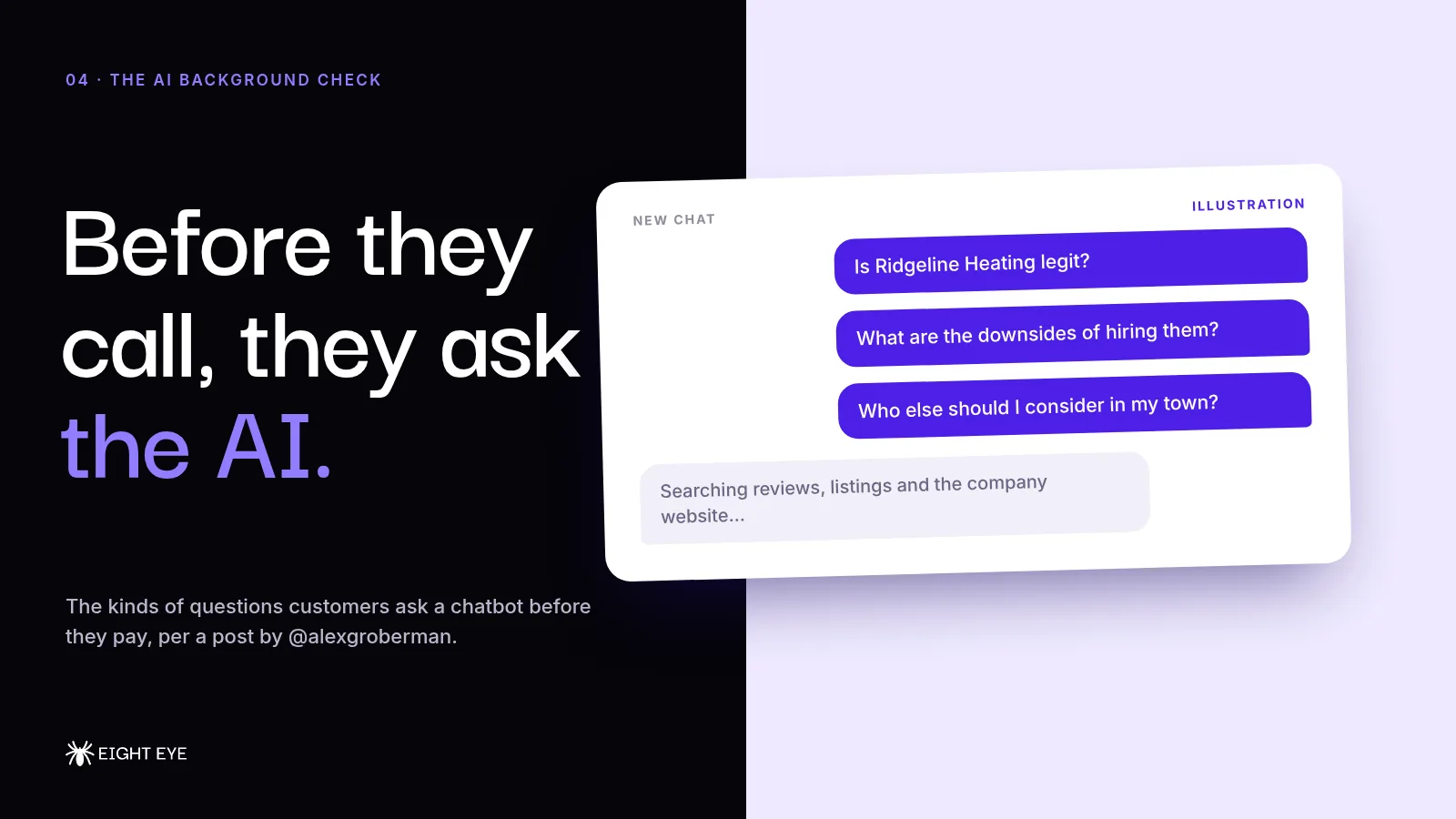
Alex Groberman, who runs an SEO company, shared results from a survey by Semrush's Exploding Topics team of 2,338 U.S. consumers. By his account, 57.5% of AI users said something a chatbot told them made them decide not to buy, and about the same share said they had bought something because a chatbot recommended it. He calls it an AI "background check": before paying, people ask whether a company is legit, what the downsides are and who else they should consider.
Our take: Try it yourself tonight. Ask ChatGPT or Gemini, "Is [your company] a good choice for a furnace replacement in [your town]? What are the downsides?" Then read what it found. If the answer is thin or out of date, the fix is the usual work done well: a clear website that says what you do, where and roughly what it costs, an up-to-date Google Business Profile, and steady reviews from real customers.
5. Five posting habits from Noah Kagan

@noahkagan, October 21. About 360 likes and 190 bookmarks.
Noah Kagan, who runs the software deals site AppSumo, said X accepted him into its creator payouts after his monthly views from verified users went from about 292,000 to 500,000. What worked: posting twice a day instead of once every three days, spacing posts at least six hours apart, rerunning posts that flopped with a new hook, giving people something they can copy, and accepting that a few posts do most of the work. What didn't: posting about his own stats.
Our take: The same habits work on Facebook and Instagram for a local business. Post more often than feels natural. Try a slow photo again with a better first line. And give people something to keep, like a short checklist for what to do before your furnace tune-up or a photo of what a corroded panel looks like. People save and share useful posts, and those shares bring in new customers.
One more for the tech crowd
OpenAI said (about 4,500 likes) that its frontier models and Codex agent workflows are coming to Google Cloud's Model Garden, so companies can use them where they already build. For anyone choosing tools, it's one more sign that the model you want is showing up on the platform you already use, instead of the other way around.
That's issue nine
If one of these made you want to check what your AI tools can touch, write to us at support@eighteye.ai. Eight Eye is the AI growth partner for small businesses, from answering and following up with every lead to getting found online and keeping the busywork moving. See how it works, compare plans and pricing, or book a demo.
See you in the next issue.