

Most of what gets posted about AI on X is written by tech people, for tech people. Some of it still matters if you run an HVAC, plumbing or electrical business in Massachusetts. You just have to dig it out.
So that's what this newsletter is for. Each issue, we pick the posts that got the most attention over the past week, explain what they actually said, link you to the original, and tell you what we'd do about it if we were running your shop. Engagement numbers are as of the evening of October 14.
1. ChatGPT answers stopped being just text
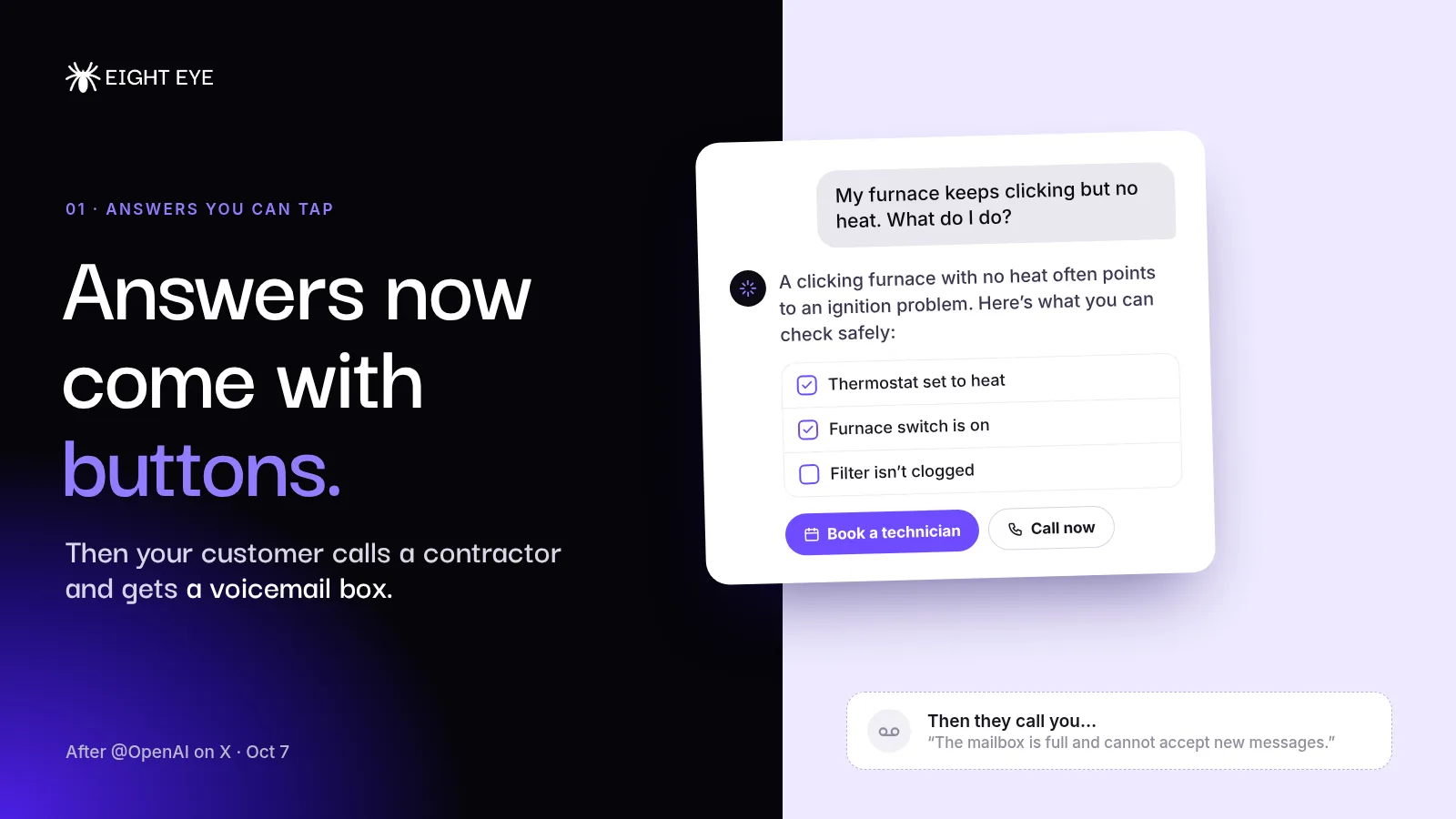
@OpenAI, October 7. About 23,700 likes and 6.3 million views.
OpenAI rolled out GPT-6 in ChatGPT along with something it calls Intelligent UI. Answers can now come back with charts, visuals, buttons, forms and small interactive tools built on the spot, instead of a wall of text. In the same thread, OpenAI said paid plans got it first and the free tiers would follow starting the next day.
Our take: Your customers are getting used to an assistant that answers right away and hands them something they can tap. Then they call a contractor and get a voicemail box. That gap is getting more obvious, not less. You don't need charts on your phone line, but you do need the basics covered every time: someone (or something) picks up, gets the address and the problem, and books the visit or tells them when you'll call back. That's the job of a missed-call text back, and our missed-call calculator lets you plug in your own numbers to see what unanswered calls might be costing you.
2. Anthropic's AI agents outgrew the tools built for humans
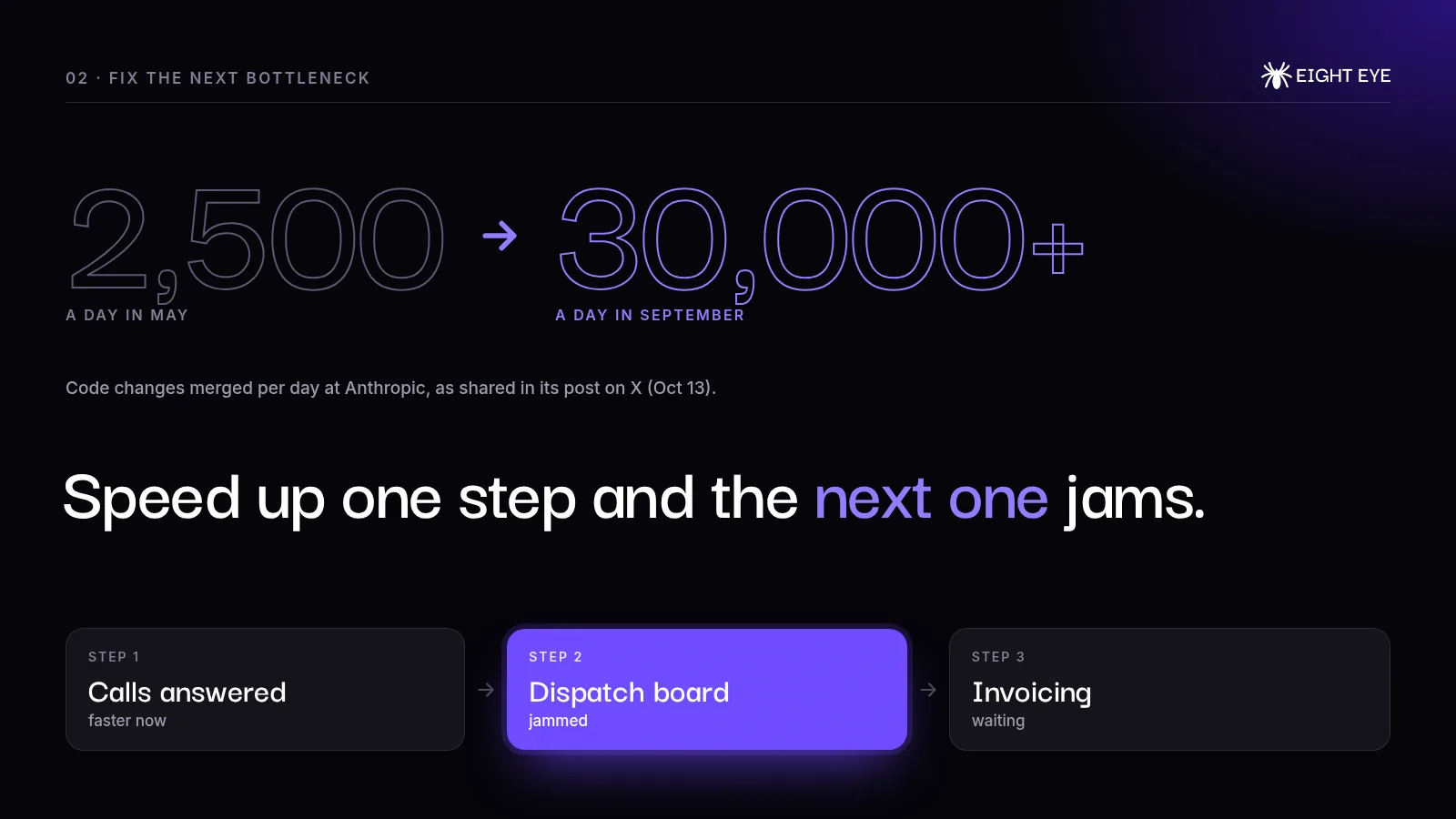
@AnthropicAI, October 13. About 24,400 likes and 7.1 million views, the most-liked post we found this week.
Anthropic said it went from merging roughly 2,500 code changes a day in May to more than 30,000 a day in September. Their software tools were built for human-speed work, not agent-speed work, so those tools became the bottleneck. They built their own version control system and moved off git in five months.
Our take: Skip the engineering details and keep the lesson: when you speed up one part of the business, the slowest part next to it becomes the new problem. A shop that starts booking more jobs off answered calls usually finds out its dispatch board or invoicing can't keep up. Before you automate the front end, take a look at what's going to catch all that extra work.
3. Greg Isenberg's 21 notes from 48 hours in San Francisco
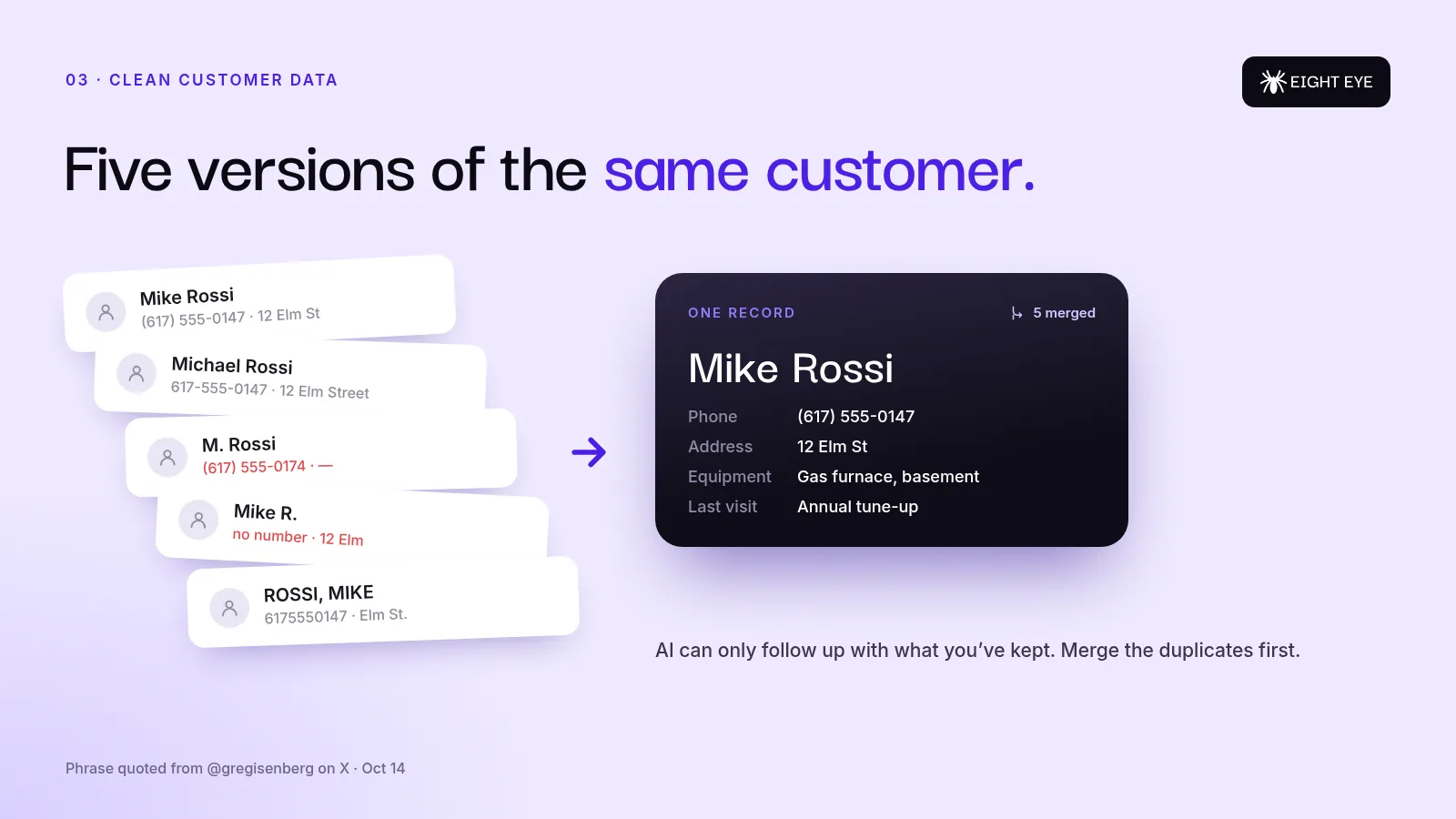
@gregisenberg, October 14. About 7,400 likes, 10,000 bookmarks and 500,000 views.
Greg spent two days with AI founders and executives and posted a long list of what he heard. A few points translate straight to Main Street. Companies want to hook their data up to AI agents, then find out the data is a mess: in his words, "five versions of the same customer, old Slack channels, PDFs nobody can search." He thinks the value is moving toward the data and workflows a business has built up over the years. And he warns that every agent with access to your systems is "a new door into your company."
Our take: If you want AI to follow up with past customers, it can only work with what you've kept. Spend an afternoon cleaning up your customer list. Merge the duplicates, fix the phone numbers, write down what equipment is at each address. That list is worth more than any tool you put on top of it. And when you give any software access to your calendar or CRM, know exactly what it can touch and how to shut it off.
4. Alex Hormozi's five-line operating manual
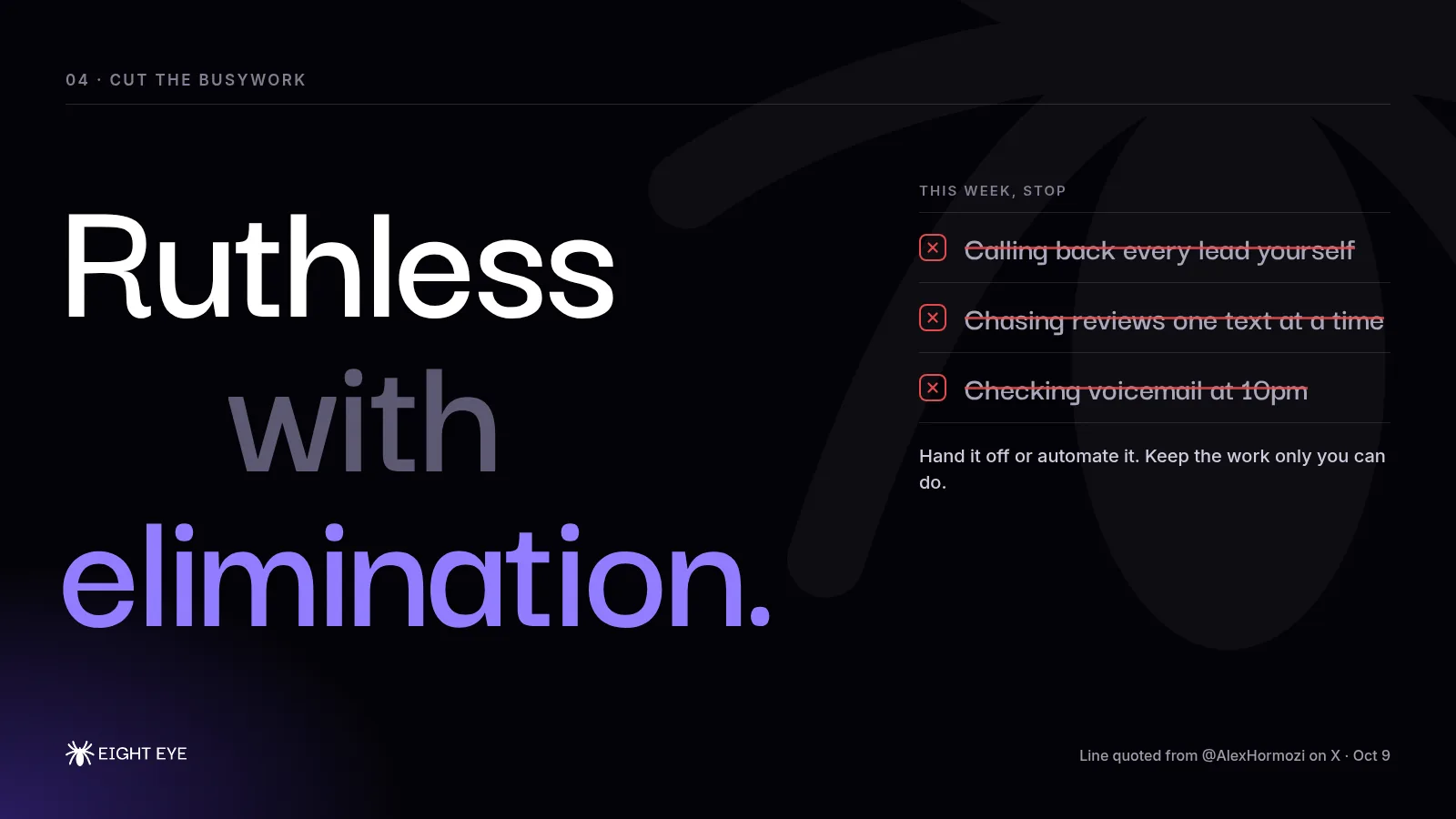
@AlexHormozi, October 9. About 7,600 likes, 1,000 reposts and 2,500 bookmarks.
The whole post is five lines. The first two: "Ruthless with elimination. Violent with execution." The rest are about bouncing back from setbacks, iterating constantly, and refusing to lower your standards.
Our take: Start with "ruthless with elimination." Most owners we talk to are still doing jobs that shouldn't be theirs anymore: calling back every lead personally, chasing reviews one text at a time, checking voicemail at 10pm. Make a list of the repetitive things you did this week. Cut what doesn't matter, hand off or automate what does, and spend your time on the work only you can do.
5. Your customers' AI assistants are about to start calling you
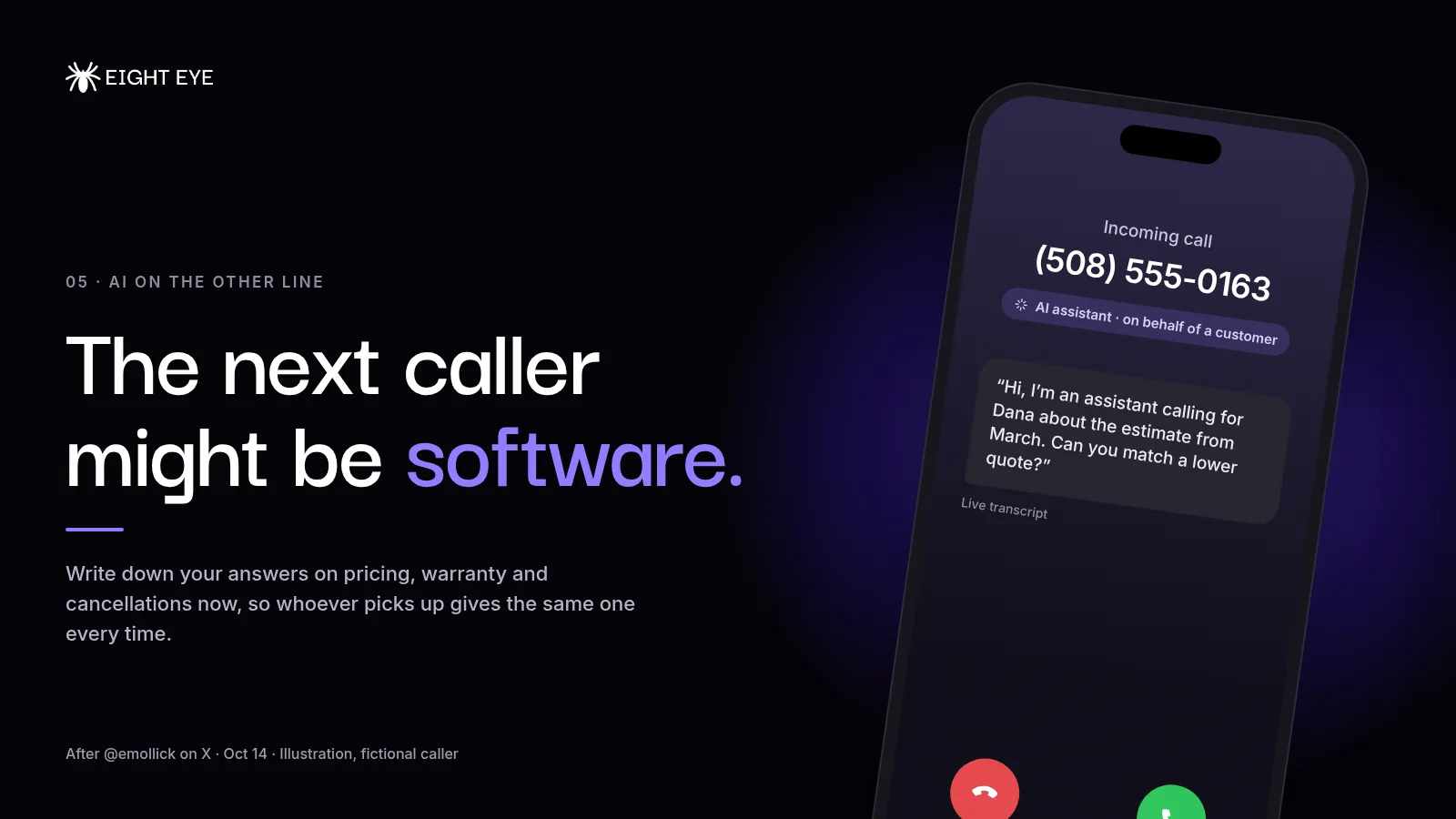
@emollick, October 14. About 1,200 likes and 465,000 views.
Ethan Mollick, a Wharton professor who writes about AI, expects customer service departments to get flooded once people realize consumer AI assistants can make unlimited requests on their behalf: chasing old refunds, negotiating deals and so on. He calls it, in effect, a "perfectly legal distributed denial of service attack" on customer service.
Our take: This hits local shops too. Expect more calls and messages asking for quotes, comparing your price with three competitors, pushing on a warranty claim, or trying to move an appointment. Some will come from a person and some from software working for a person. Write down your answers to the common ones now (pricing ranges, service area, warranty terms, cancellation policy) so whoever answers your phone, human or AI, gives the same answer every time. Our simulated demo calls show what that sounds like on a real trades line.
6. OpenAI says small business use of AI agents is climbing fast in Europe
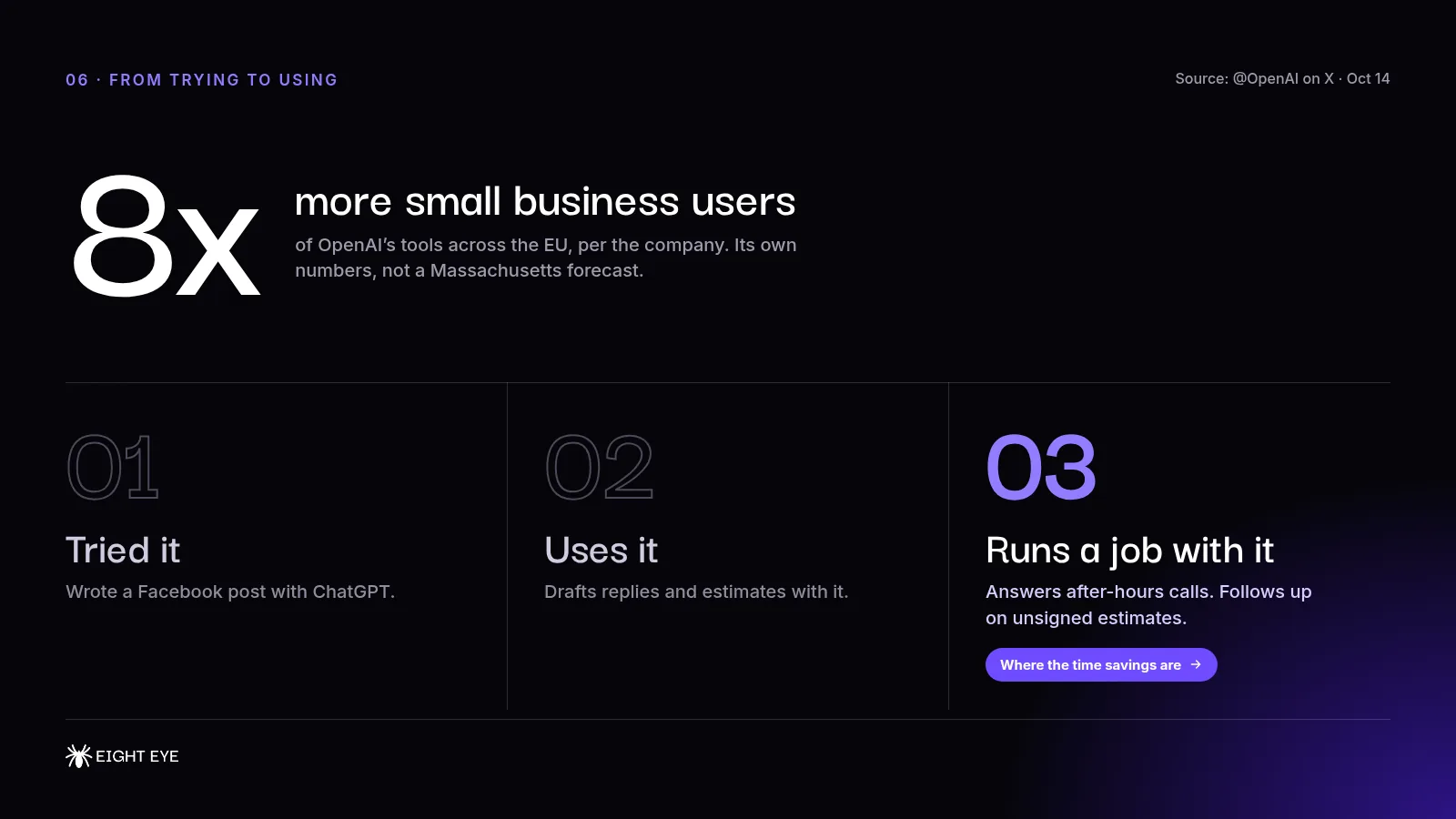
@OpenAI, October 14. About 1,700 likes and 200,000 views.
OpenAI shared a new Economic Research report on Europe. According to the post, more than half of the AI use among its EU business customers now involves agents, and the number of small business users there has grown 8x. The report frames the opportunity as turning broad adoption into deeper use.
Our take: Those are OpenAI's numbers about its own European customers, so don't read them as a forecast for Massachusetts. The useful part is "deeper use." Plenty of owners have tried ChatGPT to write a Facebook post. Far fewer have set AI up to do a real job in the business, like answering after-hours calls or sending the follow-up text on an unsigned estimate. Going from the first kind of use to the second is where the time savings are.
7. Regular people already use AI more than tech people think
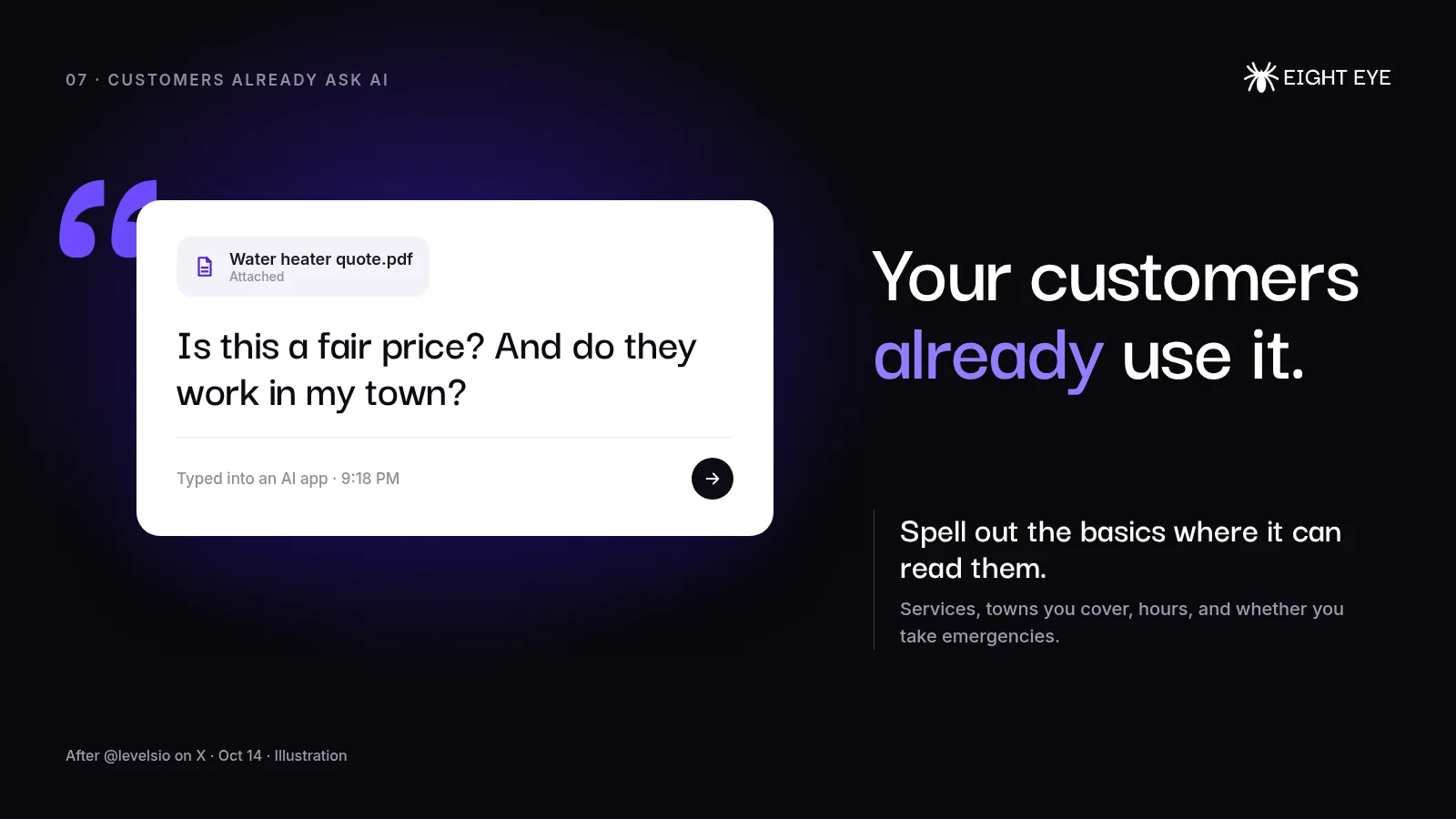
@levelsio, October 14. About 1,000 likes and 300+ replies.
Pieter Levels, who builds and runs his own internet businesses, said regular people around him already use AI apps all the time, and in advanced ways. His point is that tech people live in a bubble, thinking they're the only ones using it.
Our take: Assume your customers use it. Some will look you up through an AI assistant before they ever see your website, and some will paste your quote into ChatGPT and ask whether it's fair. Make sure your website and Google profile spell out the basics: the services you offer, the towns you cover, your hours, and whether you handle emergencies. Clear, specific information is what a person or an assistant can actually use.
8. A security to-do list worth doing tonight
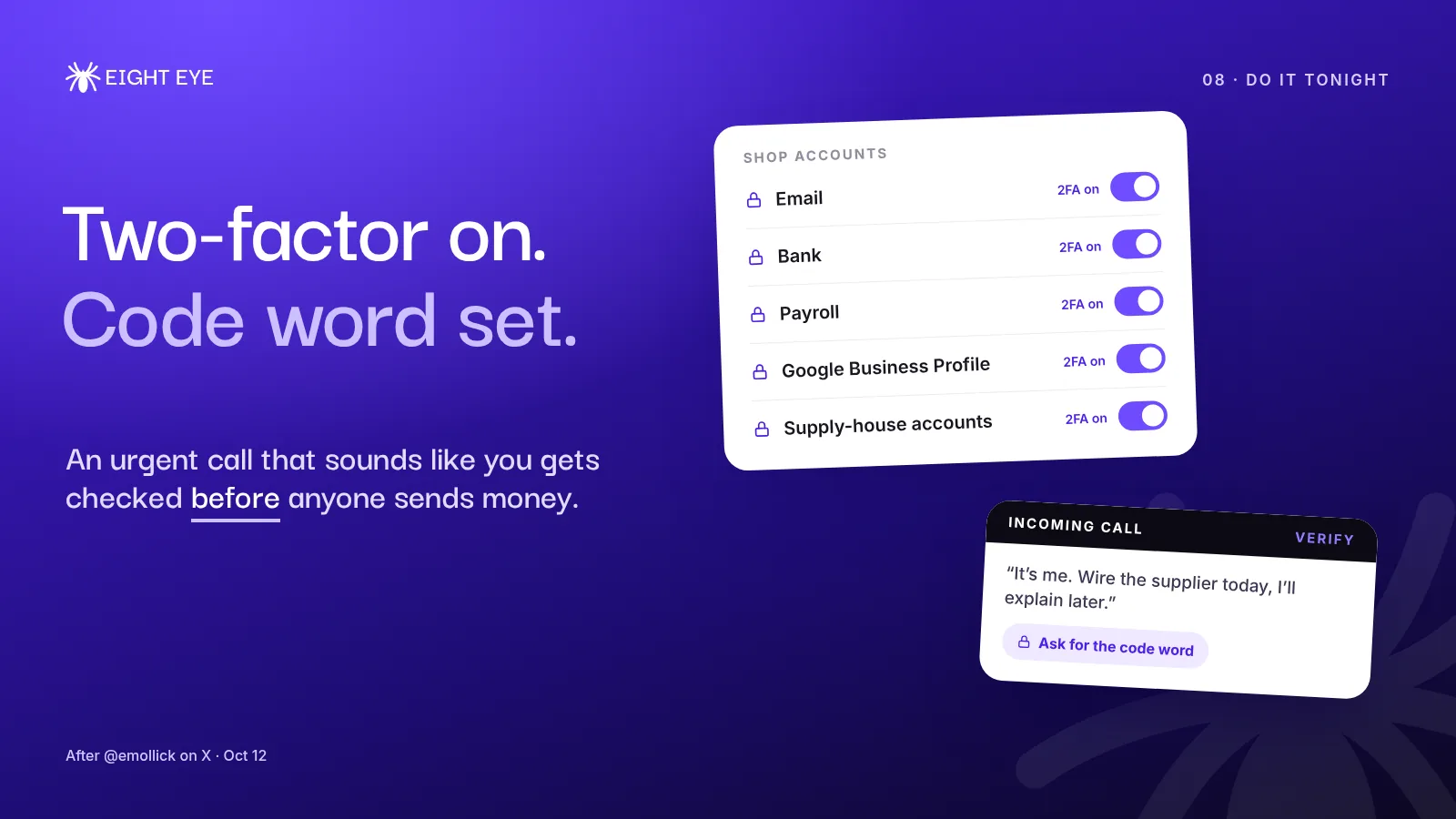
@emollick, October 12. About 980 likes and 230 bookmarks.
Mollick's advice: turn on two-factor authentication on every account, and set up a password with family members in case you get a voice call asking for money. His reasoning is that AI is making sophisticated, mass-targeted attacks cheaper to run.
Our take: Do the same at the shop. Turn on two-factor for your email, bank, payroll, Google Business Profile and any supply-house accounts. Agree on a code word with whoever handles your money, so an urgent call that sounds like you, asking for a wire or a card number, gets verified before anyone acts on it.
That's issue one
If one of these got you thinking about your own phones, follow-up or reviews, reply to this email or write to support@eighteye.ai. If you want to see how Eight Eye answers calls, texts back missed callers, and books jobs for HVAC, plumbing and electrical shops, you can book a demo at eighteye.ai.
See you next week.