
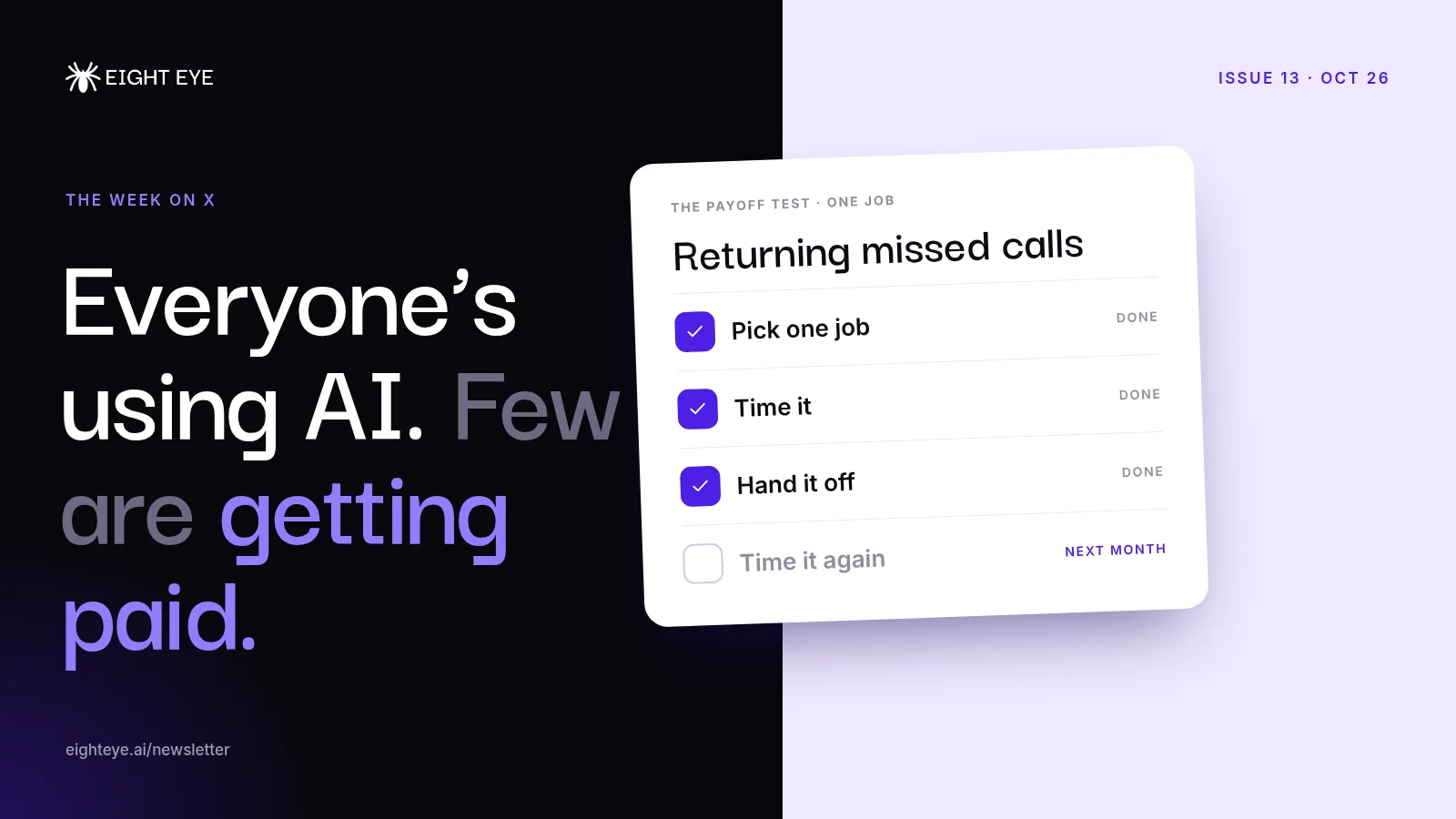
Almost every small business owner we talk to has tried AI by now. A chatbot drafted a few emails, someone made a flyer, maybe a tool summarizes calls. Ask the next question, though (is it making you money?), and the room usually gets quiet.
This week two very different sources put numbers on that quiet. A Goldman Sachs survey of small business owners and a note from Apollo's chief economist both landed on the same idea: using AI and getting paid for it are two separate things. That's our lead. We also cover why software is about to get a lot cheaper, why founders who started with AI from day one are moving faster, a safer way to let AI tools log in for you and Anthropic's IPO filing. Each item links to the original post on X, and engagement numbers are as of the morning of October 26.
1. Most owners use AI. Few have it running the business.
@iam_kencox, October 25, and @GoldmanSachs, October 22.
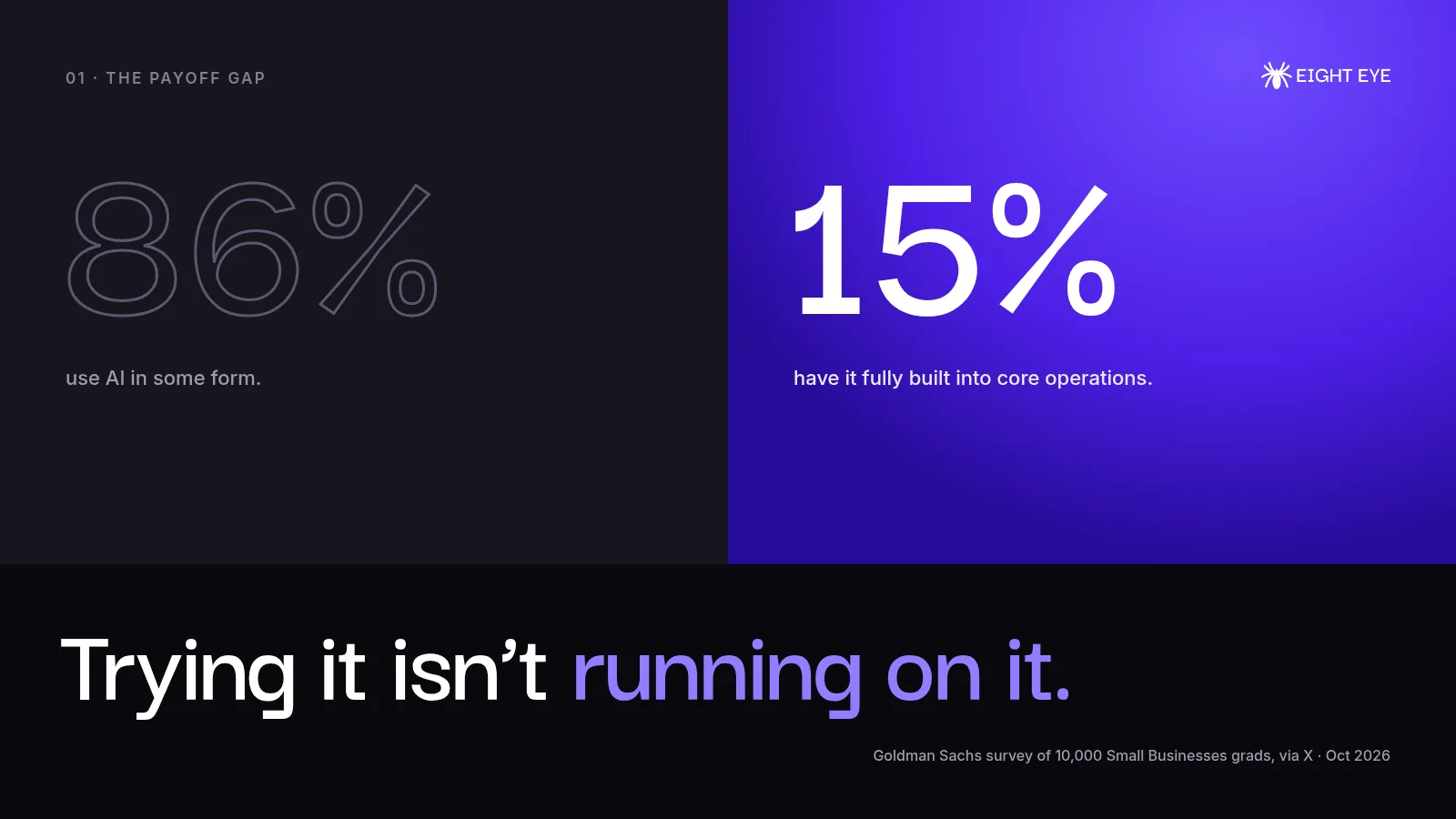
Goldman Sachs launched a Small Business AI Institute last week as part of a $500 million commitment, and CEO David Solomon held a town hall with owners, moderated by NBC's Christine Romans. Alongside it came a survey of more than 2,400 graduates of Goldman's 10,000 Small Businesses program. As St. Louis entrepreneur Ken Cox and Dylan Harris both summarized it, 86% of those owners now use AI, but only 15% have it fully built into their core operations. Ken Cox also flagged a third number: 74% of the owners using AI have no formal policy for it. The report's own phrase for this is "the gap between adoption and integration."
Big companies have the same problem. Digg passed along an October 24 note from Apollo chief economist Torsten Slok: revenue per worker and profit margins are rising at the seven giant tech companies, and staying flat across the other 493 companies in the S&P 500. In other words, the companies selling AI are clearly getting paid. Most of the companies buying it can't point to the money yet.
Our take: The gap isn't about which AI tool you pick. It's that most businesses add a tool and leave the work exactly as it was. Two things close it.
- Pick one job and measure it. Not "use AI more." One job: returning missed calls, sending estimates, chasing unpaid invoices, booking maintenance visits. Write down how it goes today (how long it takes, how many fall through), hand it off, then check the same numbers a month later. If you can't measure it, you won't know if it paid.
- Write a one-page AI policy. What customer information can go into AI tools and what can't, who reviews anything that goes out to a customer, and who to call when something looks wrong. It takes an hour, and it puts you ahead of three out of four owners in that survey.
2. Software is getting cheap. Good for you, maybe not for software companies.
@levelsio, October 26. About 670 likes, 300 bookmarks and 50,000 views.
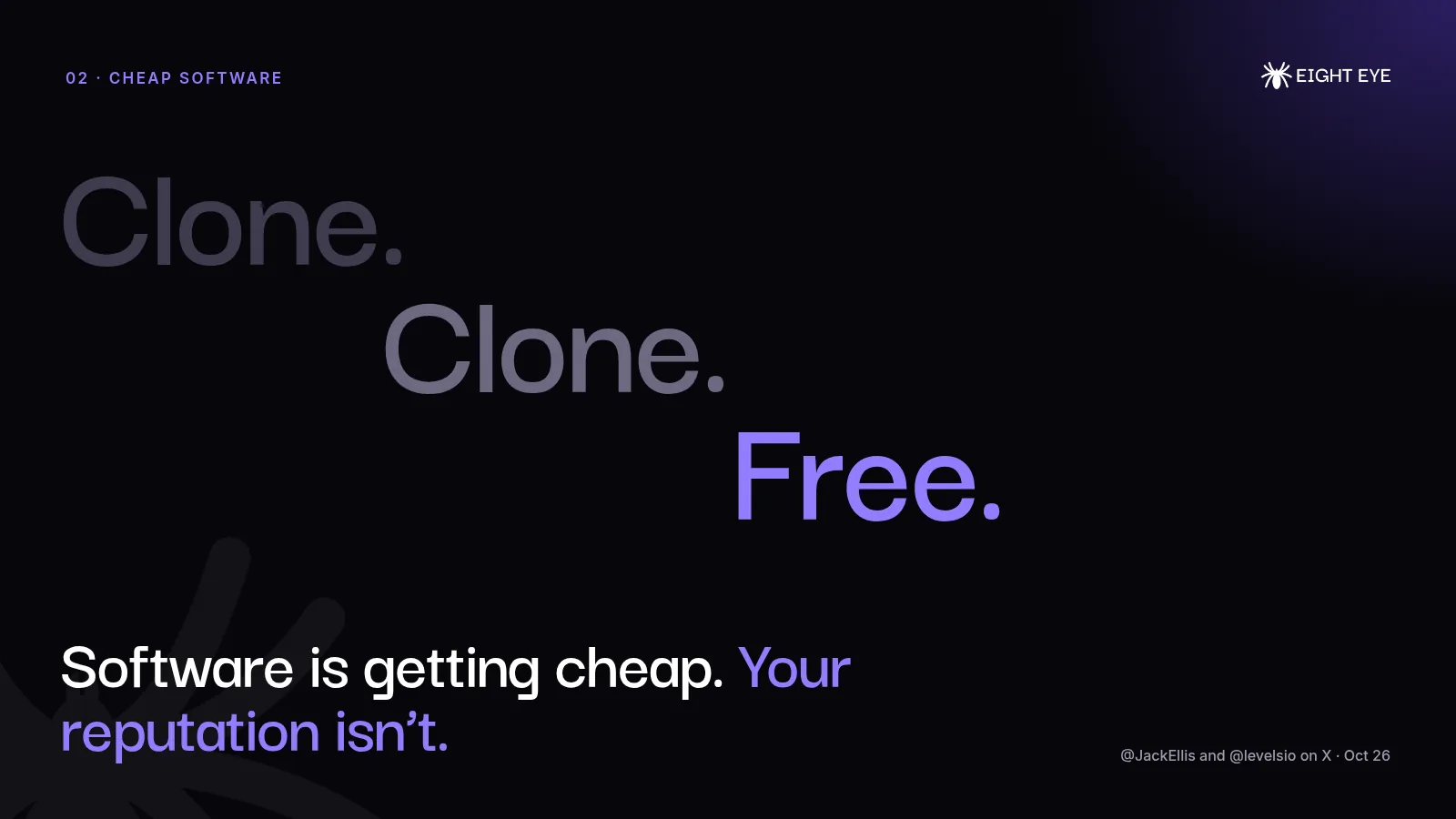
It started with a joke from Jack Ellis (about 370 likes and 67,000 views), co-founder of the analytics company Fathom. Someone clones a popular newsletter tool because it's too expensive, then someone clones the clone for the same reason, then someone else releases a copy for free. Pieter Levels quoted it with a blunt read: with AI making software easy to build and copy, it's "a race to the bottom" for most software companies, and the clear winners are the big AI and big tech firms.
Not everyone agreed. Ellis replied that he mostly sees this among indie makers, and that a friend's product he could rebuild in a few days still brings in millions. Levels' answer: if you sell to businesses, you're probably fine.
Our take: For a contractor, this is mostly good news. The apps you pay for every month (scheduling, invoicing, review requests, website builders) are going to face cheaper competition, so don't sign multi-year contracts you can't get out of, and make sure you can export your customer list and job history any time. And notice what doesn't get cloned in a weekend: a licensed tech who shows up on time, a crew customers trust in their basement, a phone that gets answered. That's your moat, and AI should be protecting it, not replacing it.
3. The "started with AI" advantage
@joshelman, October 25. About 1,200 likes and 277,000 views.
Josh Elman, a longtime investor and early product leader at Twitter and Facebook, said he'd talked to several founders who spent the last three years building their products with code written by hand. They feel slower than companies that started this year with code written by AI agents. His words: "I have never seen such an order of magnitude difference."
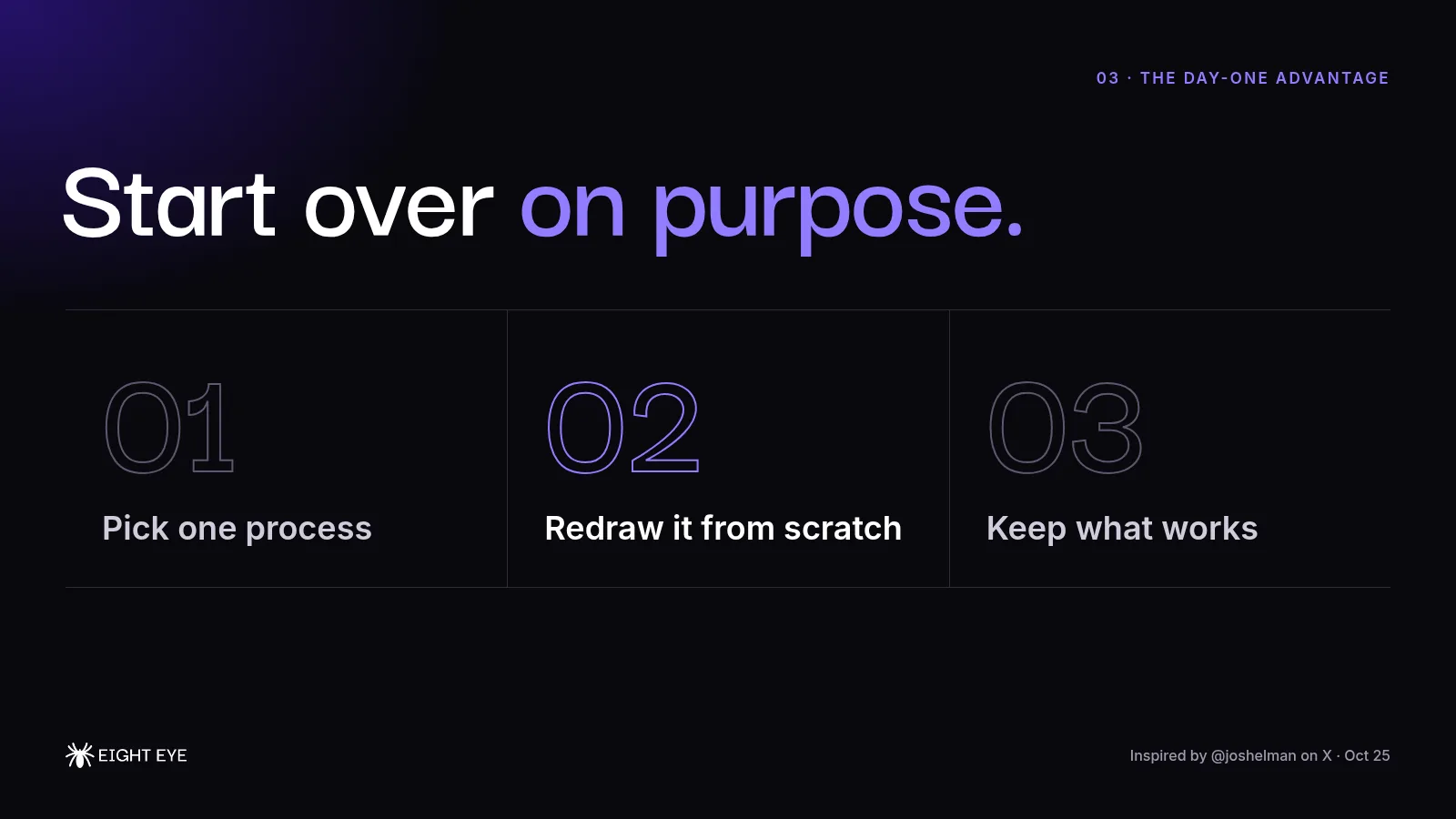
Our take: This is about new software companies, but the pattern shows up in the trades too. A new shop that opens this year can set up AI to answer calls, text back, book jobs and ask for reviews on day one, with no old habits in the way. An established shop has the reputation, the customer list and the experienced techs, which matter more. The fix isn't to tear everything down. Pick one process, like how a new call becomes a booked job, and sketch how you'd set it up if you were opening tomorrow. Then keep the parts of the old way that customers actually like.
4. Let AI log in without handing it your password
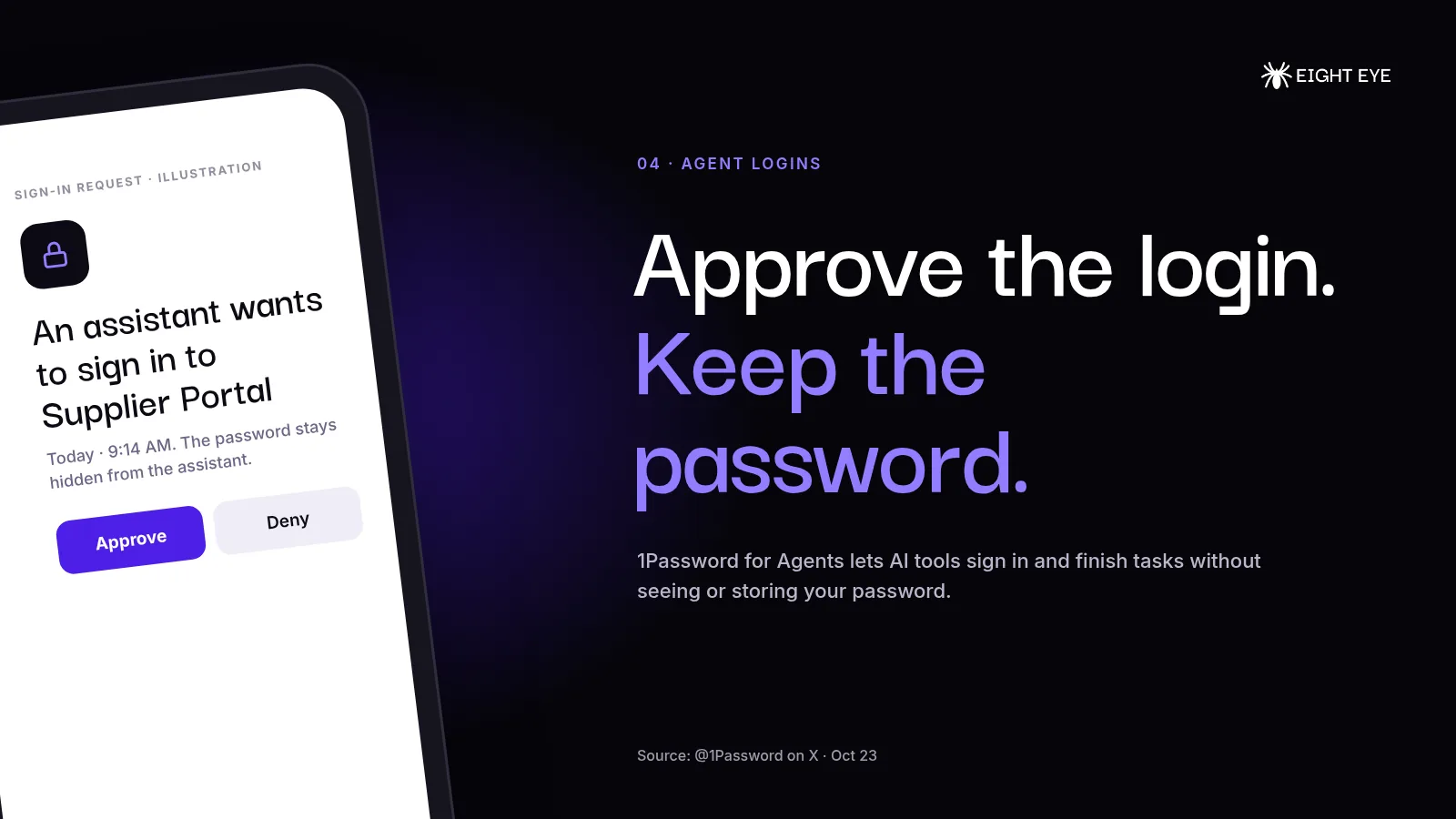
@1Password, October 23. About 260 likes and 21,000 views.
1Password announced 1Password for Agents, which lets AI agents sign in to websites and finish tasks without ever seeing or storing the actual password. 1Password says it's building it with a long list of AI companies, including Anthropic, OpenAI and several browser-automation tools.
Our take: In issue 11 we covered banks blocking AI tools that log in with a customer's password. This is the other half of that story: logins built for AI, where the assistant proves who it is, you approve it, and the password stays locked away. Until tools like this are everywhere, keep one simple rule. Never paste your real password for the bank, payroll or a supplier account into an AI chat. If a tool needs access, look for an official "connect" or approval option instead.
One more for the tech crowd
Anthropic, the company behind Claude, publicly filed for an IPO this morning. As @KobeissiLetter summarized it (about 3,200 likes and 310,000 views by mid-morning), the company plans to list on Nasdaq under the ticker ANT, and its filing shows $16.3 billion in revenue for the first half of 2026 alongside an $80.7 billion net loss. Several summaries of the filing note that most of that loss is a non-cash accounting charge tied to how Anthropic raised money, not cash out the door. Read it next to our lead story and you get the whole picture of the AI economy right now: the companies building AI are growing at a speed few businesses ever see, and the rest of us are still figuring out how to turn it into profit.
That's issue thirteen
If you've tried AI but can't say what it's done for the business, write to us at support@eighteye.ai and tell us which job you'd most like off your plate. Eight Eye is the AI growth partner for small businesses, from answering and following up with every lead to getting found online and keeping the busywork moving. See how it works, compare plans and pricing, or book a demo.
See you in the next issue.