
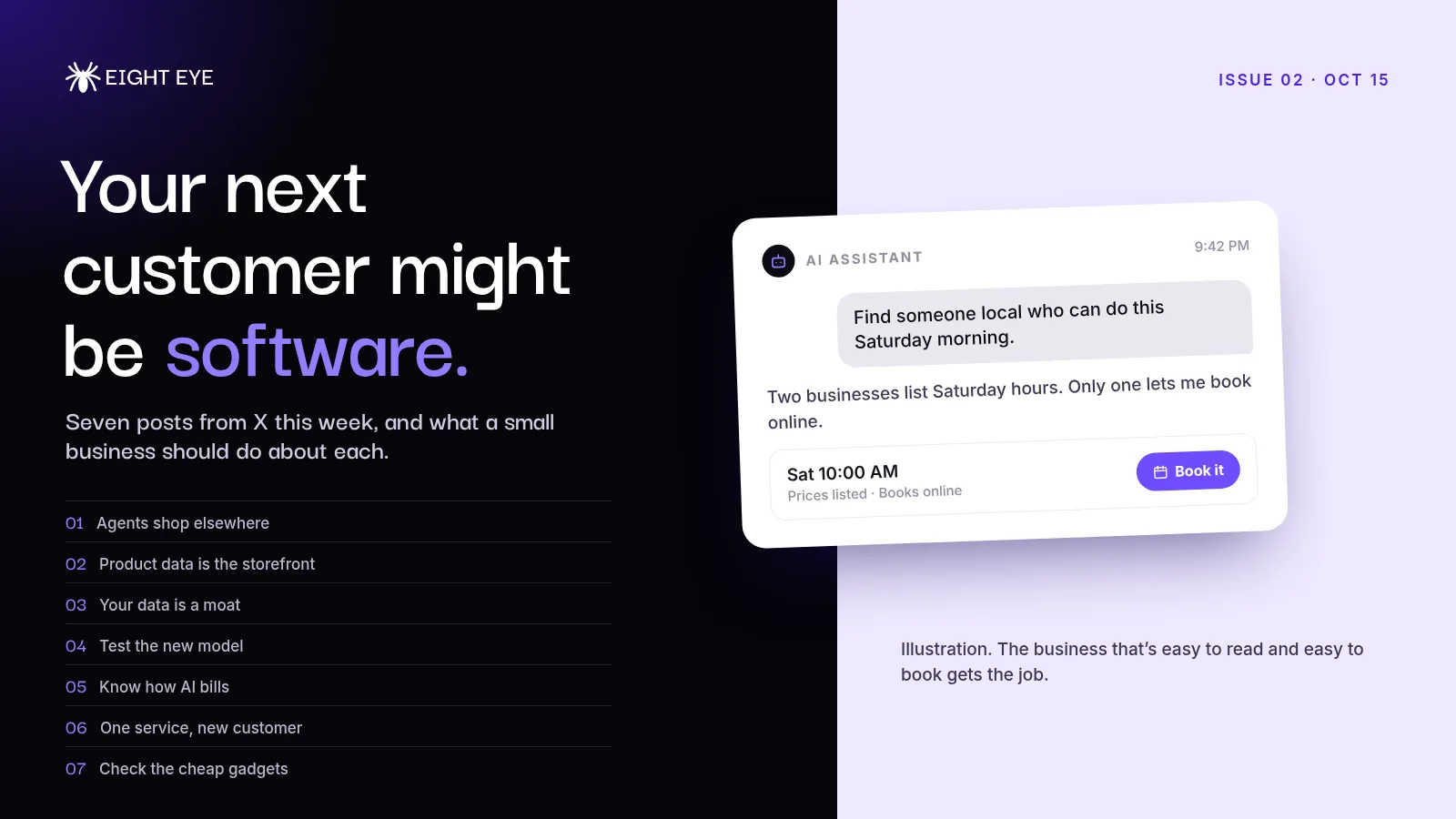
The biggest story on X this week wasn't a new chatbot. It was AI assistants trying to buy things, and some stores deciding they'd rather not let them.
If you run a small business, that matters more than any model launch. People are starting to hand an assistant a task like "find me someone who can do this Saturday" or "reorder the paper," and the assistant goes off and picks a business on its own. Below are seven posts that got a lot of attention over the past two days, what they actually said, a link to each one, and what we'd do about it if it were our shop. Engagement numbers are as of the morning of October 15.
1. When one store blocks AI shoppers, they just go somewhere else
@elonmusk, October 15. About 10,400 likes and 14 million views.
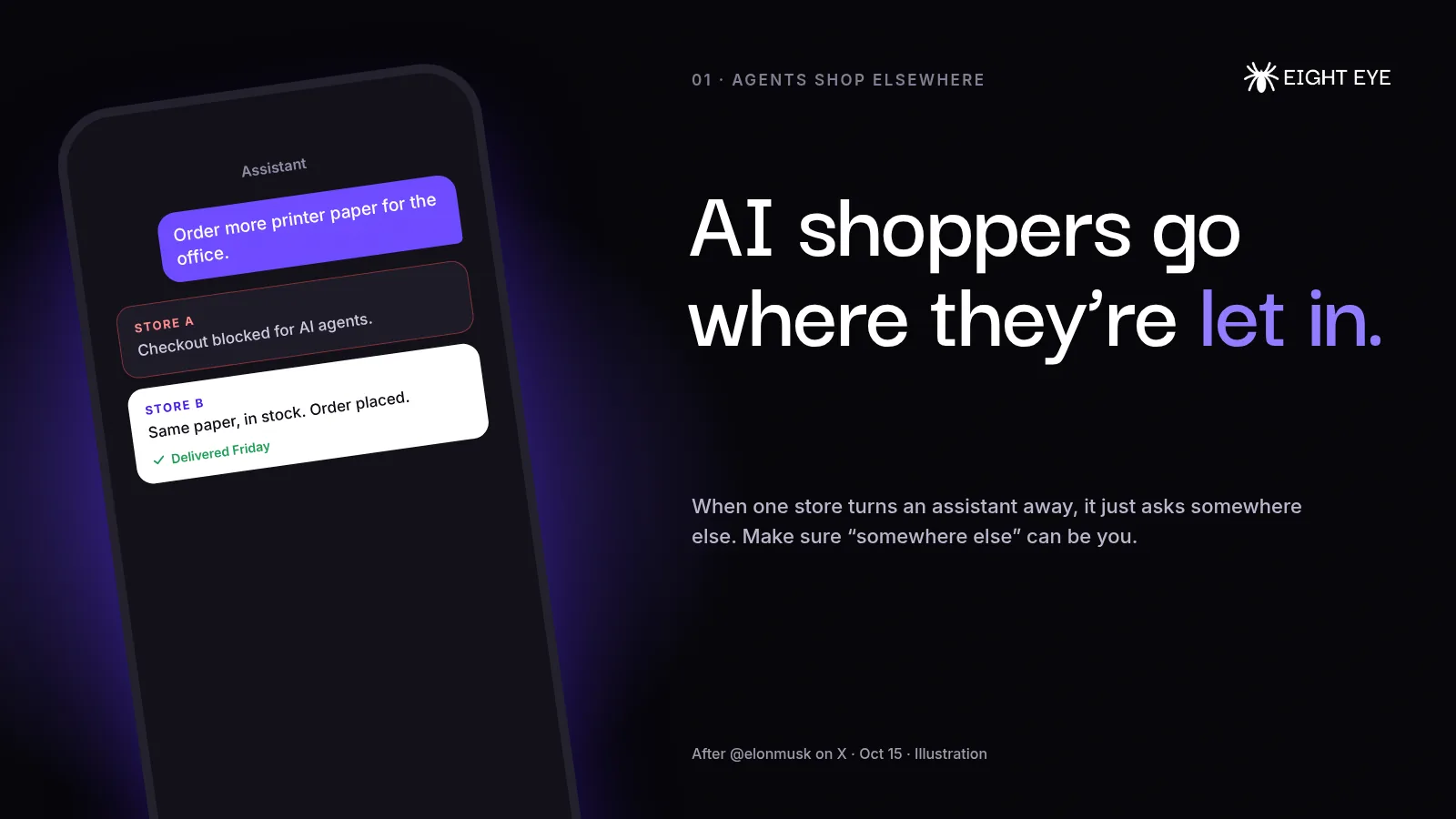
Elon Musk was replying to a user who said their Grok Bot assistant could no longer place orders on Amazon. That user shared a message saying continued access by "an unauthorized AI agent" violates Amazon's Conditions of Use. Musk's answer was short: ask the assistant to buy from another site and get a better deal, because there are far more places to shop than Amazon.
Our take: Whatever you think of the fight between the big companies, the takeaway for a local business is simple. An assistant that hits a wall doesn't give up; it tries the next option. You want to be that next option. That means your hours, prices or price ranges, service area and a way to book or order should be easy to find and easy to use, without a phone call during business hours being the only way in.
2. Shopify wants every AI assistant to be a personal shopper
@tobi, October 13. About 1,270 likes, 880 bookmarks and 146,000 views.
Tobi Lütke, Shopify's CEO, announced a new "shop skill" that you can add to an existing AI agent. Once you connect a Shop account, the agent can act as your personal shopper. Shopify's own account followed up with the line that every agent can search the web, "but shopping takes more than that."
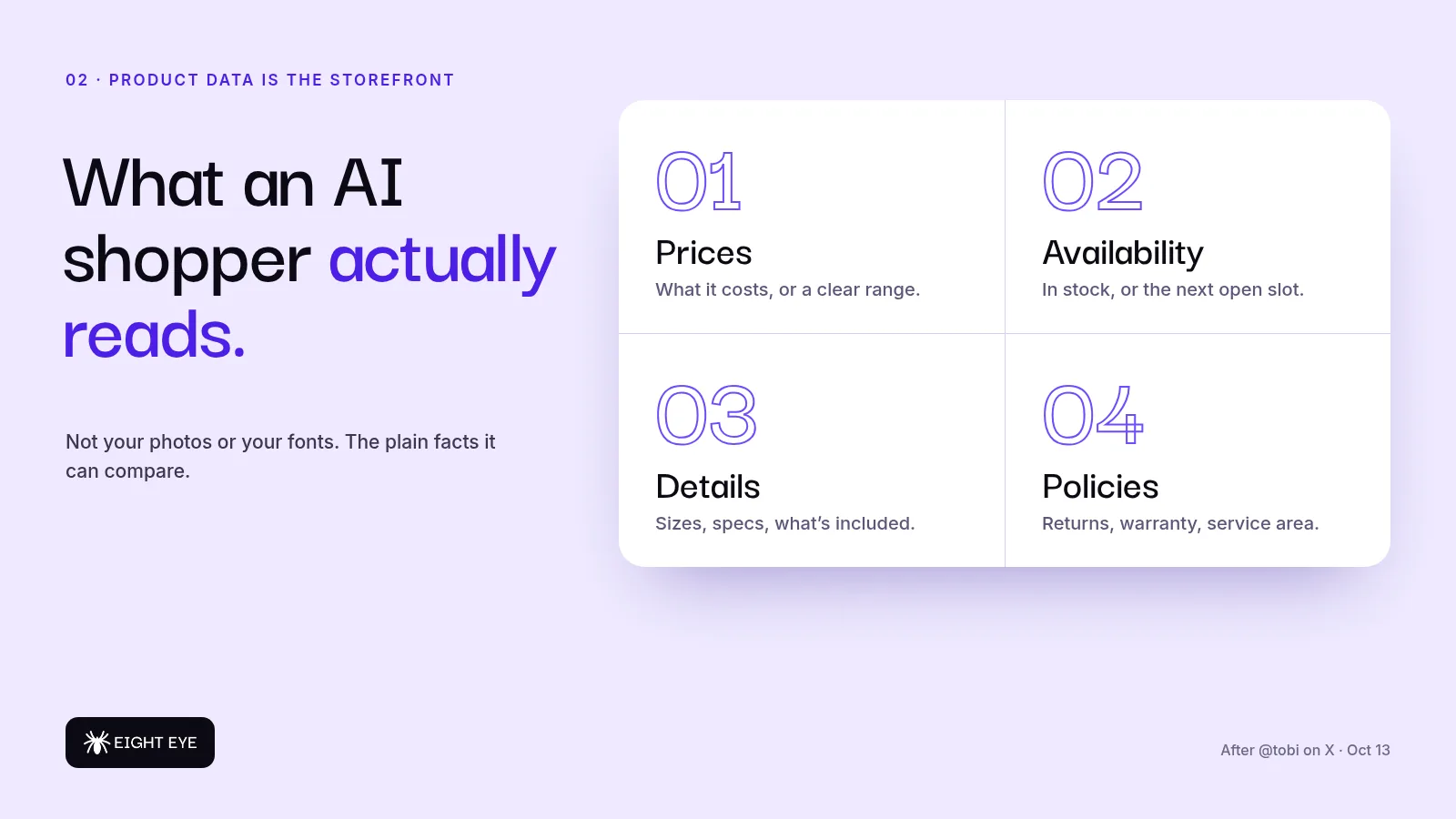
Our take: If assistants are doing the shopping, your product and service information is your storefront. A nice photo doesn't help much if the assistant can't tell what something costs, whether it's in stock, or what your return policy is. Go through your listings this week. Fill in the missing prices and sizes, fix the out-of-date stock counts, and put your policies in plain words. If you sell services instead of products, the same goes for what's included, rough pricing and the towns you cover.
3. Pieter Levels is selling years of hand-collected data to AI agents
@levelsio, October 13. About 380 likes, 225 bookmarks and 77,000 views.
Levels, who runs Nomads.com on his own, launched a paid API for the site's data and said it's built mainly for AI agents, with businesses integrating it second. The data is things like cost of living, tested internet speeds and neighborhood ratings, which he says he's collected by hand for years and keeps fresh. His summary: "data is a moat."
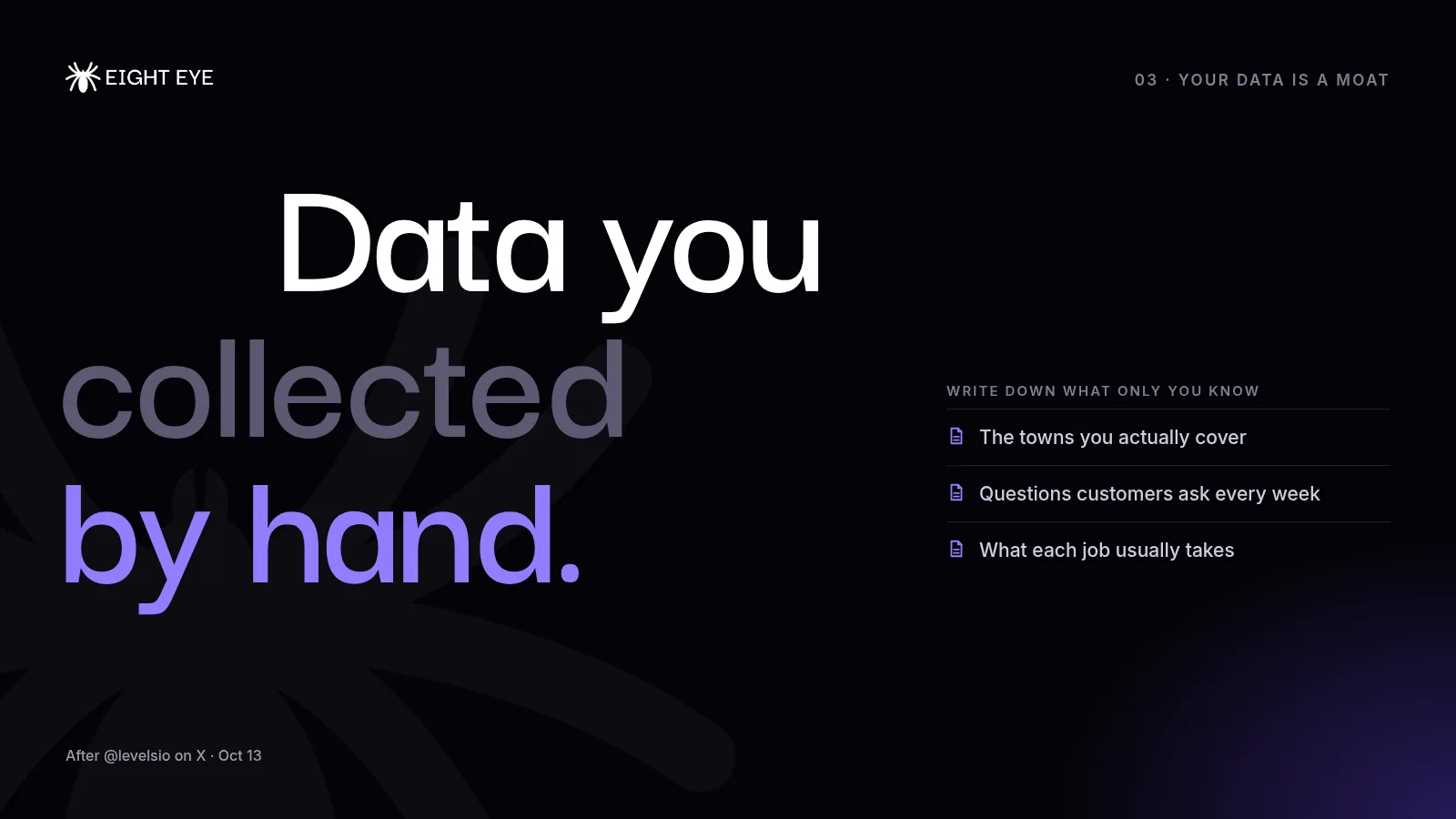
Our take: You probably won't sell an API. But you do have knowledge nobody else has written down: which neighborhoods you serve, the questions customers ask every single week, how long a typical job takes, what to check before you call. Put that on your website in plain language. It helps real customers, it gives AI assistants something solid to quote when someone asks about your kind of business, and it's hard for a competitor to copy.
4. Gemini 4 is out. Test it on your own work, not the benchmarks
@GoogleDeepMind, October 13. About 6,300 likes and 2.4 million views.
Google DeepMind made Gemini 4 Argon available worldwide and pitched it at hard, start-to-finish problems in coding, business workflows and cyber defense. Wharton professor Ethan Mollick, who tried it before launch, called it a big jump over earlier Gemini models and more agentic than before.
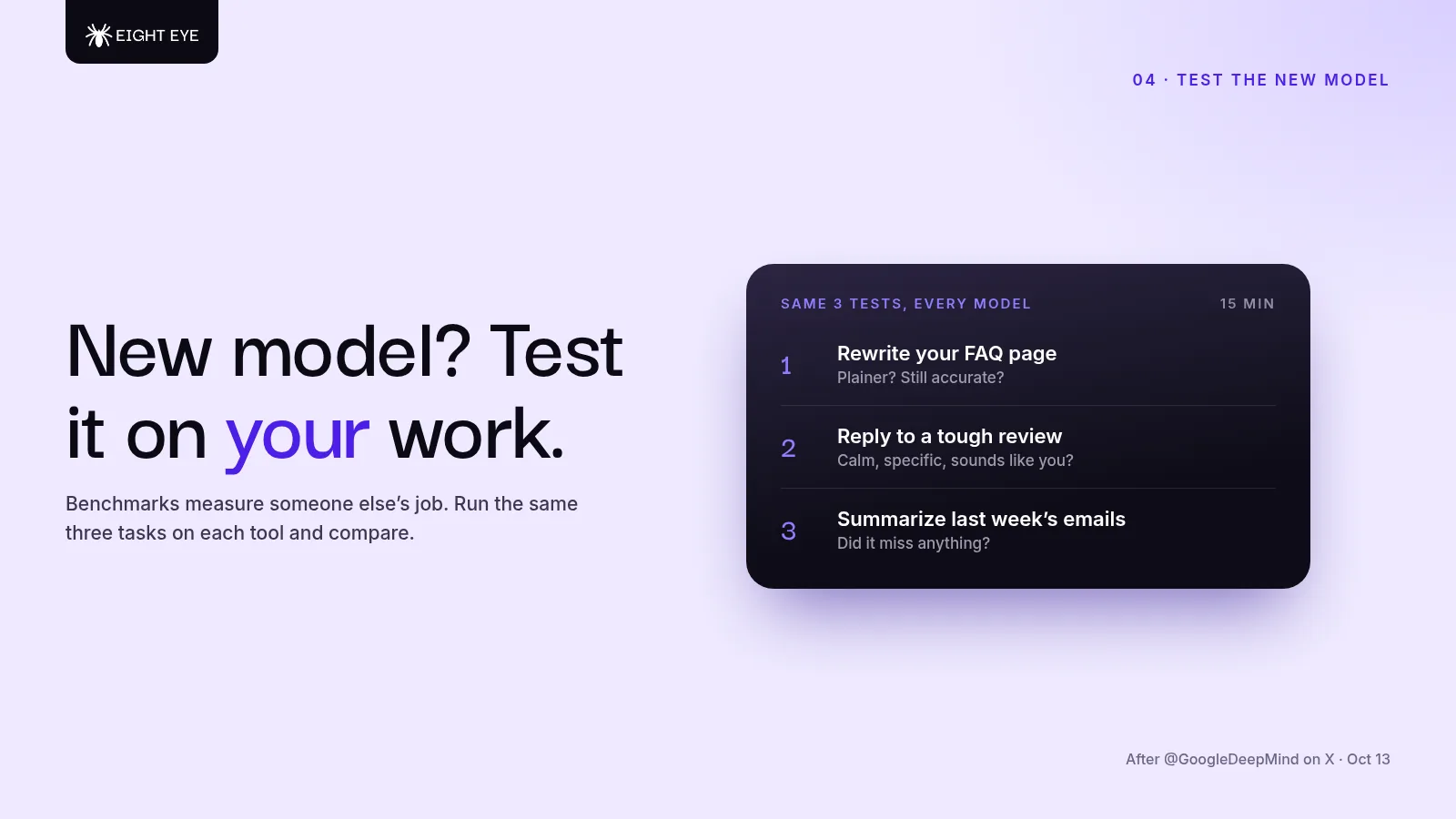
Our take: A new model shows up almost every week now, and you don't have to switch every time. Keep three real tasks from your business on hand, like rewriting your FAQ page, answering a tough review, or summarizing a week of customer emails. When a new model comes out, run the same three and compare the answers side by side. Fifteen minutes tells you more than any leaderboard.
5. Jason Calacanis turned off his AI assistant over the bill
@Jason, October 13. About 335 likes, 270 replies and 112,000 views.
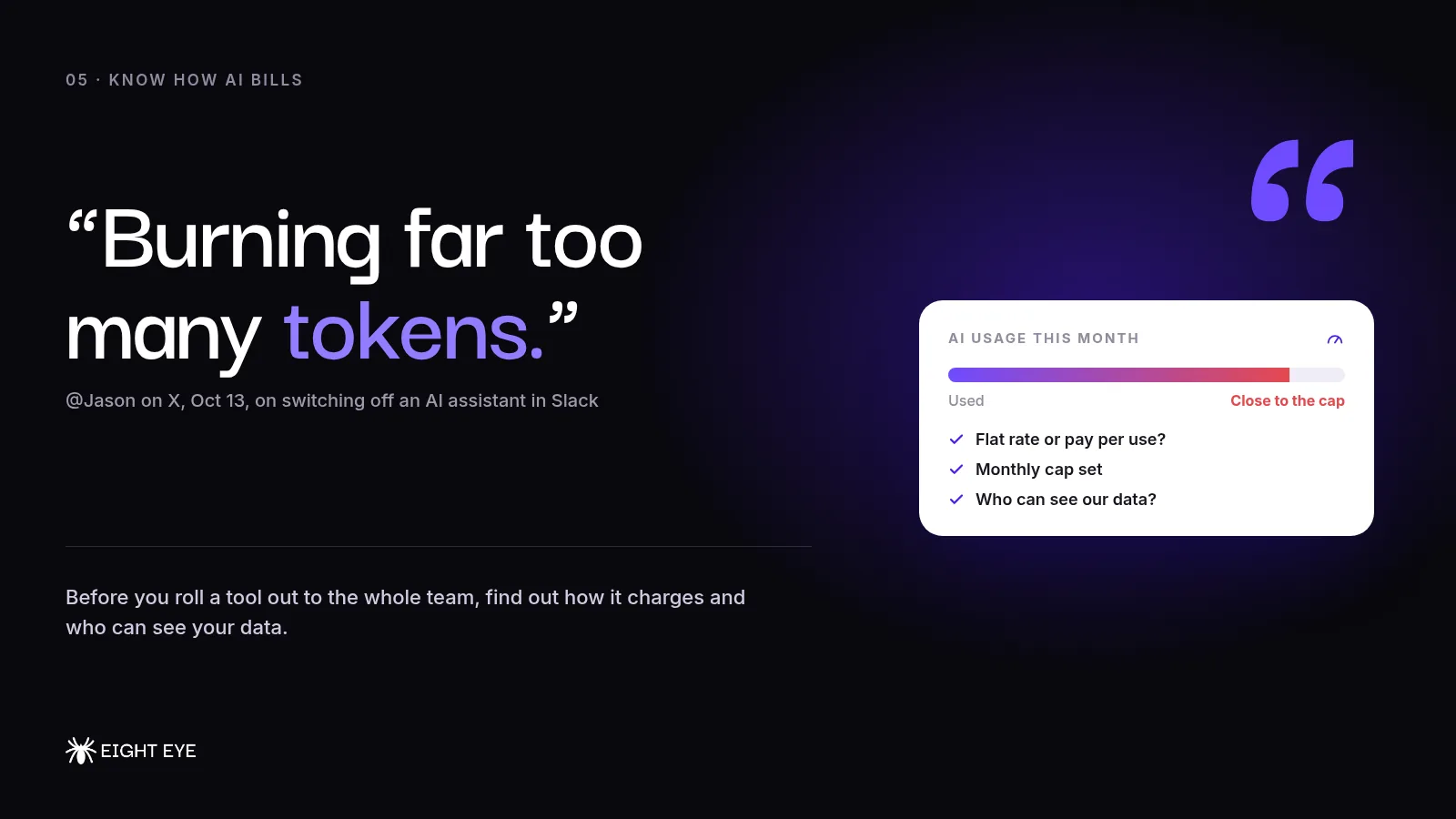
The investor and podcaster said he had to switch off Claude in Slack because, being priced by usage, it was "burning far too many tokens." He asked for a flat-rate alternative and added that he doesn't love handing his data to the big AI labs.
Our take: Before you roll any AI tool out to your whole team, find out two things. How does it charge: a flat monthly price, or per use? And where does your data go? Usage pricing is fine for light use, but a tool that everyone on the team pokes at all day can add up fast. Set a monthly cap if the tool allows it, check the bill after the first week, and read the data settings before you connect it to your email or customer list.
6. Greg Isenberg's Apple lesson: one product, a different customer
@gregisenberg, October 13. About 515 likes, 180 replies and 111,000 views.
People were mocking Apple's new HomeView as "just an iPad on a speaker." Greg's point was that this is Apple's whole playbook: take one product and sell it to a totally different customer. He walked through the lineup, from the iPad for kids and artists to AirPods for commuters, and noted it's the same chips and the same apps, sold to a different person every time.
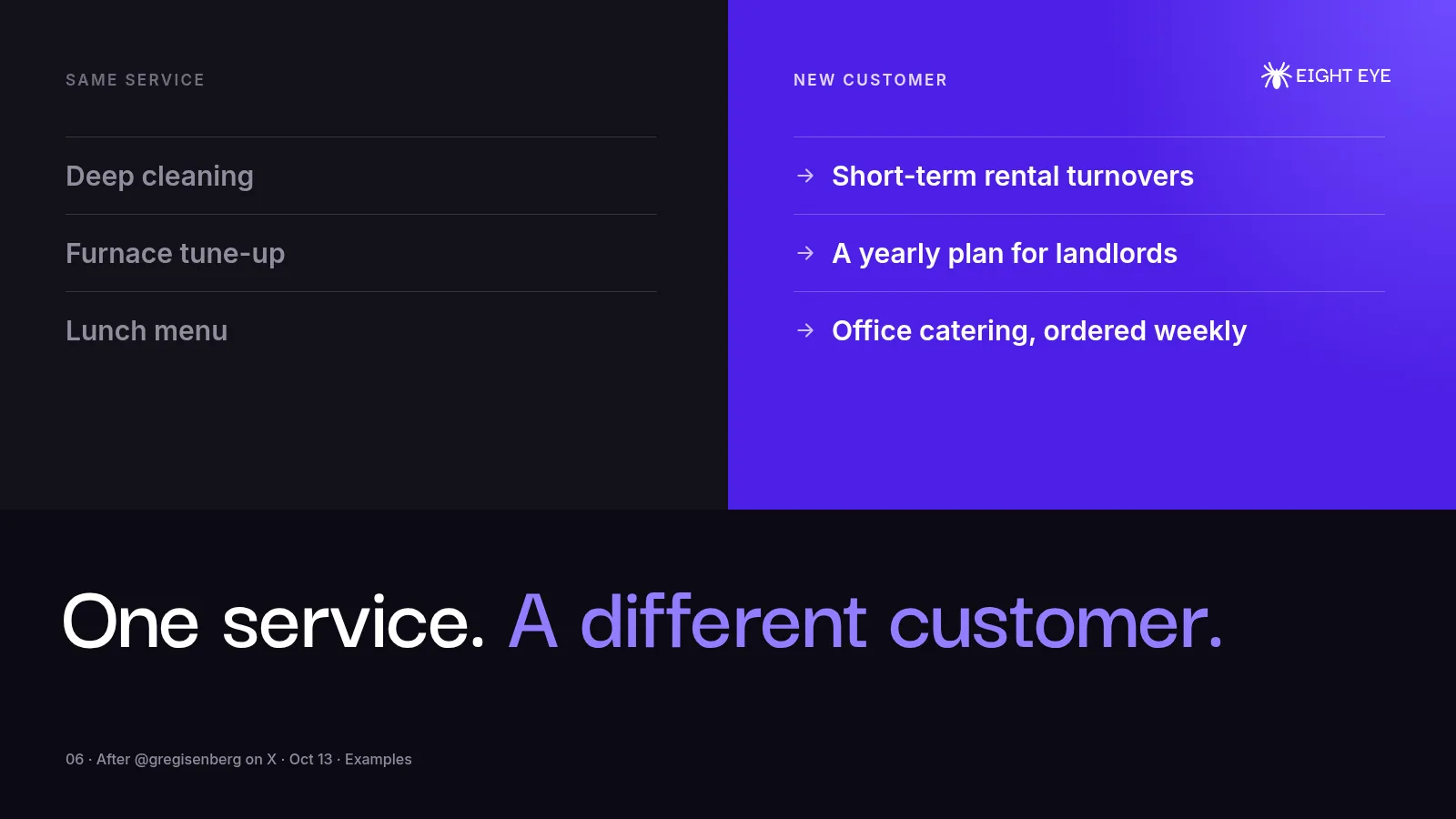
Our take: Most small businesses can do this without building anything new. A cleaning company can package the same deep clean as a turnover service for short-term rental hosts. An HVAC shop can sell tune-ups as a yearly plan for landlords with several units. A restaurant can sell its lunch menu as weekly office catering. Look at your best service and ask who else would pay for it if you named it for them. AI is good at the grunt work here: drafting the new page, the offer and the first round of emails.
7. The cheap gadgets on your Wi-Fi are worth ten minutes tonight
@emollick, October 13. About 560 likes and 118 replies.
Mollick pointed to what he called a worthwhile and unnerving reminder from Anthropic: pay attention to the moment AI crosses an ability threshold, not just the steady improvement. The threshold in this case was the capability needed for a self-replicating AI worm on internet-connected devices, like off-brand TVs.
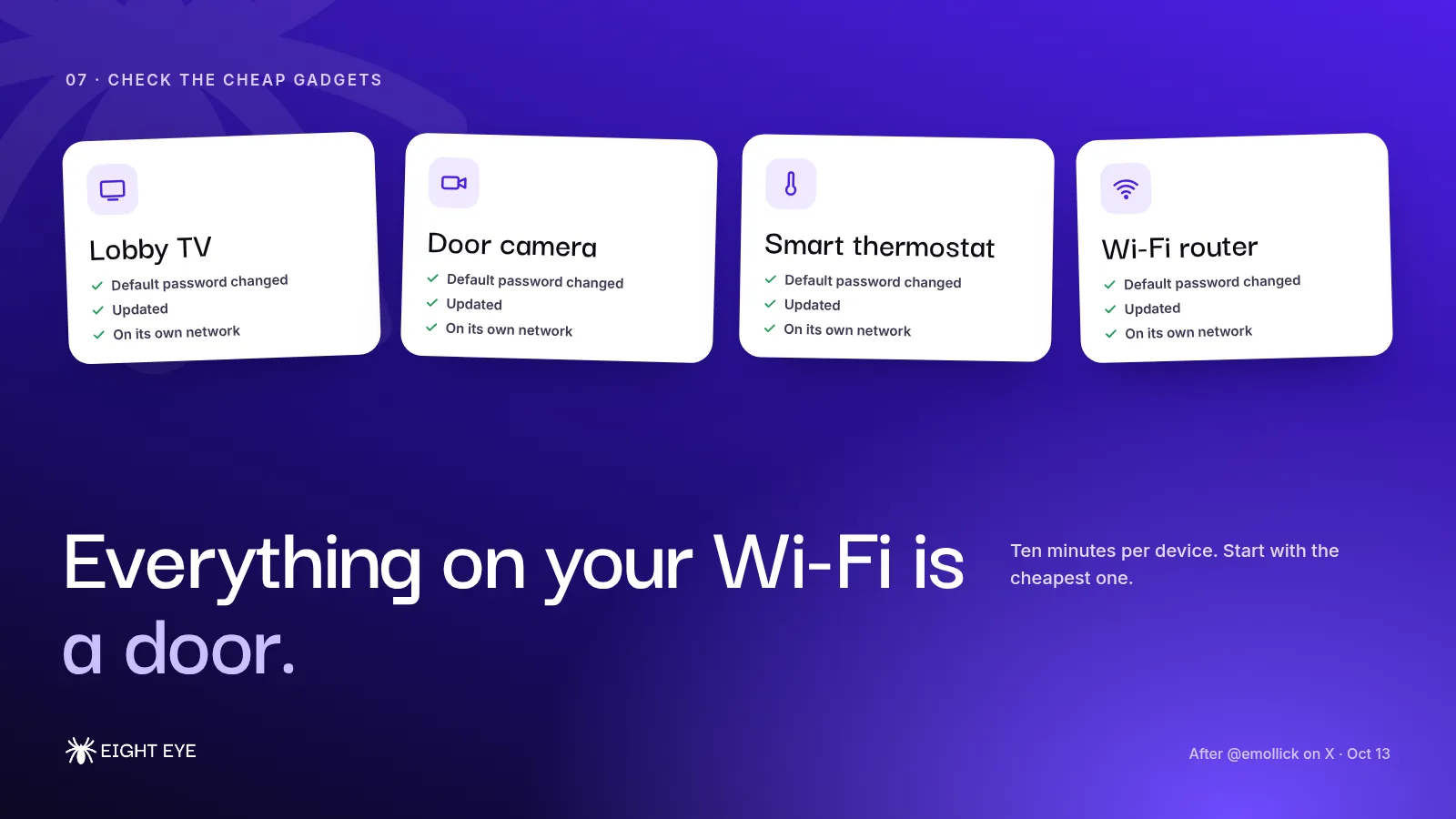
Our take: Walk around your business and list everything that's connected to your Wi-Fi: the TV in the waiting room, door cameras, the smart thermostat, the router itself. Change any default passwords, install updates, and if your router supports it, put those gadgets on a separate guest network away from the computer you use for payroll and payments. Start with the cheapest no-name device. It's usually the one nobody has touched since it was plugged in.
That's issue two
If one of these got you thinking about how your business shows up when a customer, or a customer's assistant, comes looking, write to us at support@eighteye.ai. Eight Eye helps small businesses use AI to grow, from answering and following up with every lead to getting found online. See how it works, browse the industries we serve, or book a demo.
See you in the next issue.