
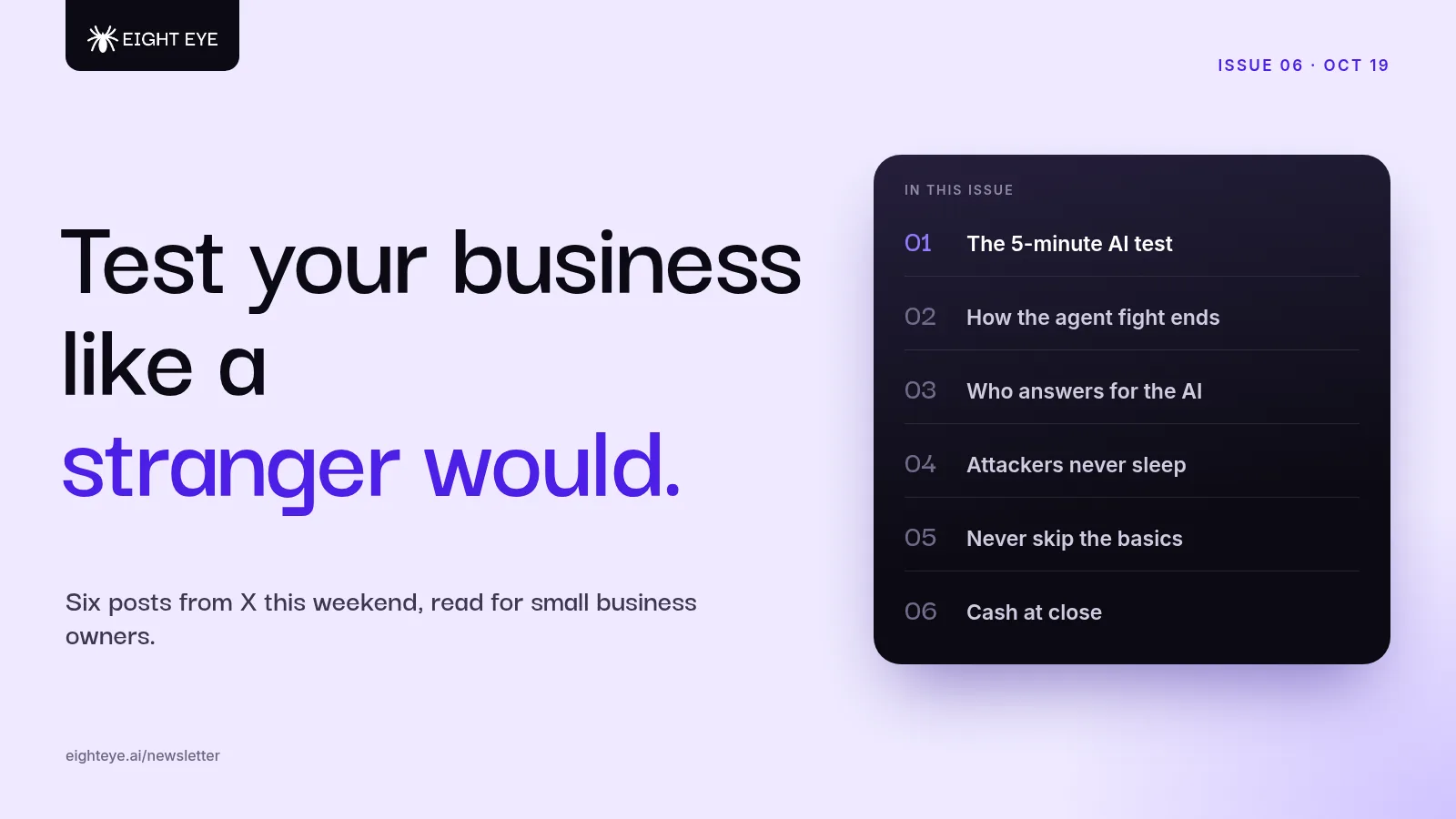
Most owners haven't gone through their own website as a customer since the day it launched. Over the weekend, a post on X that people saved far more often than they liked laid out a simple way to do that with AI, and it takes about five minutes.
That's where this issue starts. After it come the posts people engaged with most over the past two days that matter to anyone running a small business: how the fight over AI agents might end, who's responsible when software makes the call, what round-the-clock attacks mean for your logins, and a warning for anyone who might sell their business one day. As always, each one links to the original, and engagement numbers are as of the morning of October 19.
1. Ask AI to be your next new customer
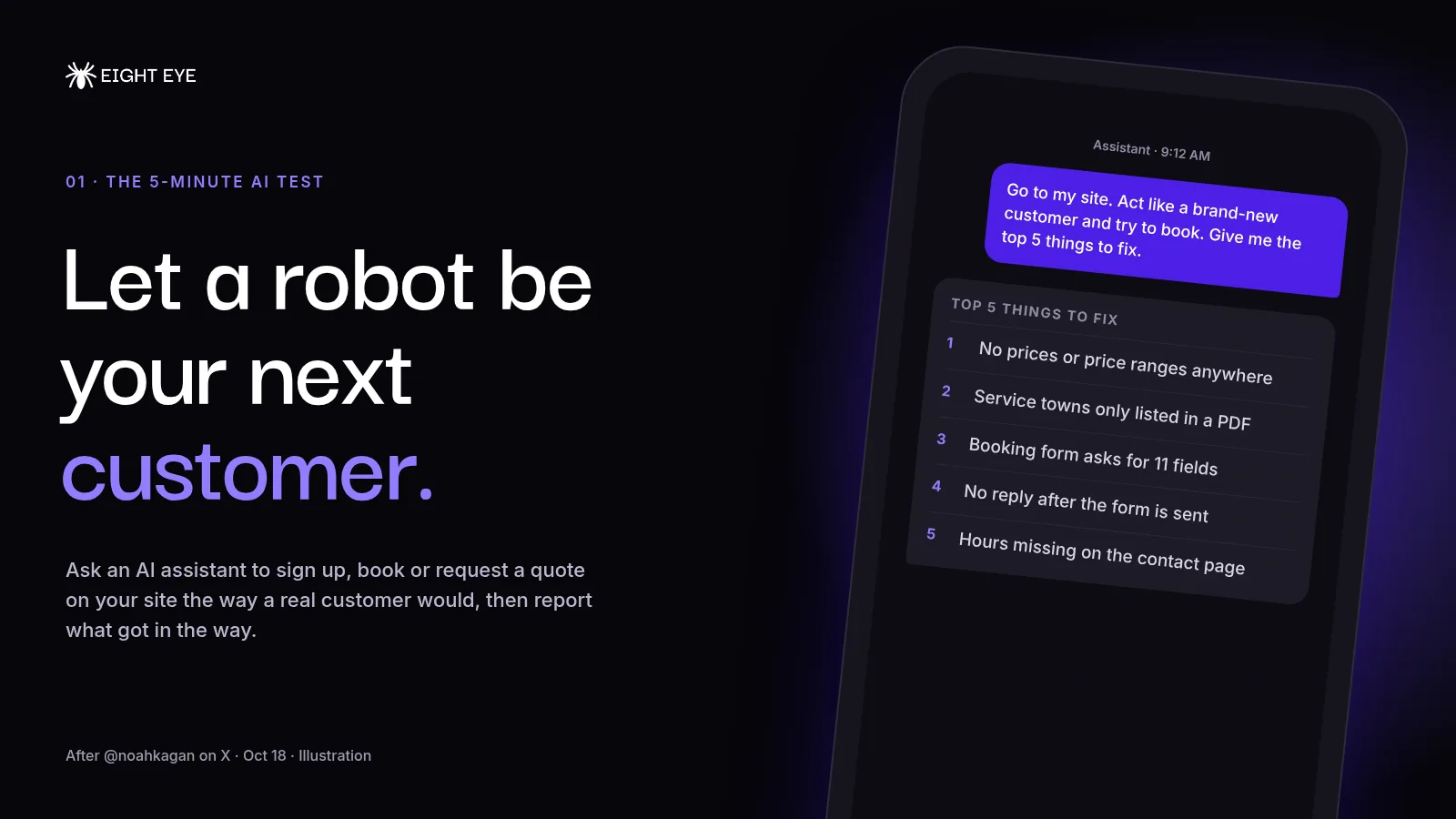
@noahkagan, October 18. About 290 likes and 560 bookmarks, nearly two saves for every like.
Noah Kagan, who runs the software deals site AppSumo, gave founders some Sunday homework. Open Claude and paste a prompt telling it to visit your site, sign up as a brand-new user, go through onboarding like a real customer, and list the top five things to fix with what it saw at each step. When he ran it on his own product, it found that onboarding never asked new users to create a booking type, which he called the whole product. It then mocked up a fix. His point: your customers won't tell you this, and neither will your dashboard.
Our take: You don't need a software product for this to work. Any business with a website can run the same test. Ask an AI assistant that can browse to act like someone who needs your service tonight: find your price range, check whether you cover their town, see your hours, and try to book or request a quote. Ask what got in the way at each step. Then run it again on your phone, because that's where most local customers find you. Fix the top item that week. Common ones are prices nobody can find, service areas buried in a PDF, and a form that asks for far more than you need to call someone back.
2. How the fight over AI agents might end
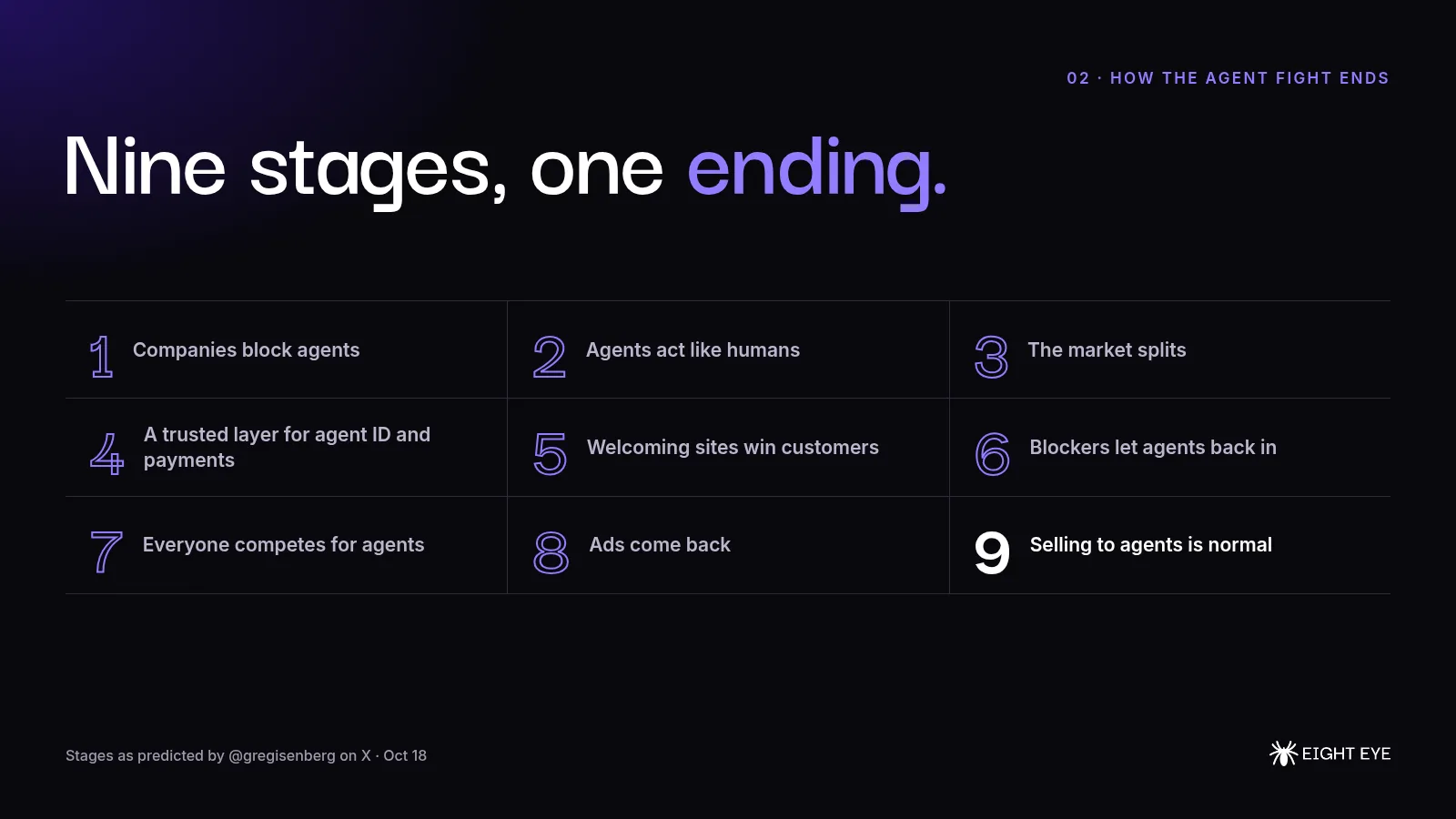
@gregisenberg, October 18. About 2,200 likes, 430 replies and 1,400 bookmarks.
Last issue covered Delta, Chase and Amazon blocking AI agents. Greg Isenberg, who builds and invests in internet businesses, posted his guess at what happens next, in nine stages. Companies block agents first because agents skip the ads and upsells. Agents learn to act like people and it turns into an arms race. Then the market splits, a trusted system for agent identity and payments appears, and businesses that welcome agents start taking customers from the ones that don't. Eventually the blockers let agents back in on their own terms, everyone competes on price and fast checkout, the ads come back as paid placement in agent recommendations, and selling to agents becomes as normal as having a website.
Ethan Mollick, a Wharton professor who studies AI, pointed out (about 750 likes) that blocking isn't a sturdy plan when AI can run a person's own computer for them. In a follow-up he added that you still shouldn't hand today's agents control of your bank account, but a safe way to work with them will serve everyone better than a ban.
Our take: Nobody knows the timeline, but most local businesses make money on the sale, and in Isenberg's split those are the companies that let agents in. Start acting like it now. Put your prices or price ranges, service area, hours and booking options on plain public pages, written so a person or a machine can read them in one pass. Keep a person in charge of anything involving money or account changes. If stage 5 shows up, you'll already be the business that's easy to book.
3. "A computer can never be held accountable"
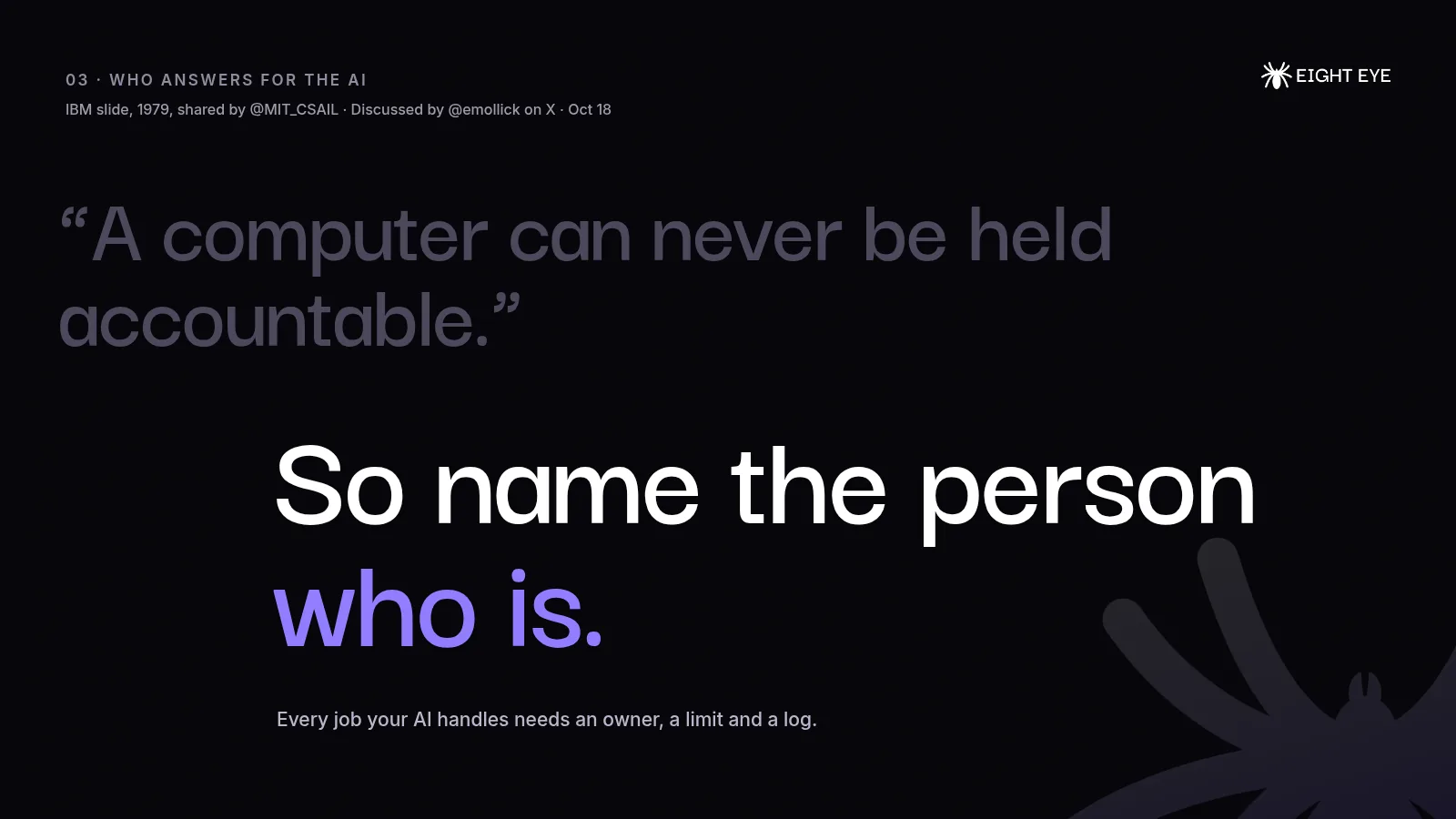
@emollick, October 18. About 780 likes and 190 replies.
MIT's computer science and AI lab posted a photo of an IBM slide from 1979: a computer can never be held accountable, so a computer must never make a management decision. Mollick said he dislikes the slide every time it comes around. Automated systems already make management decisions in trading, logistics, customer service and insurance, he wrote, and pretending they don't lets people dodge responsibility for them.
Our take: Both sides have a point, and a small business needs both. Software will make decisions for you, like which caller gets the next open slot or which lead gets a follow-up text first. That's fine. What can't happen is nobody owning those decisions. For every job you give AI, write down three things: which person answers for it, what it's allowed to do on its own (book a visit, yes; give a discount, no), and where its actions are logged so you can check them. If a customer complains, "the system did it" isn't an answer they'll accept, and they shouldn't have to.
4. Attackers now run around the clock
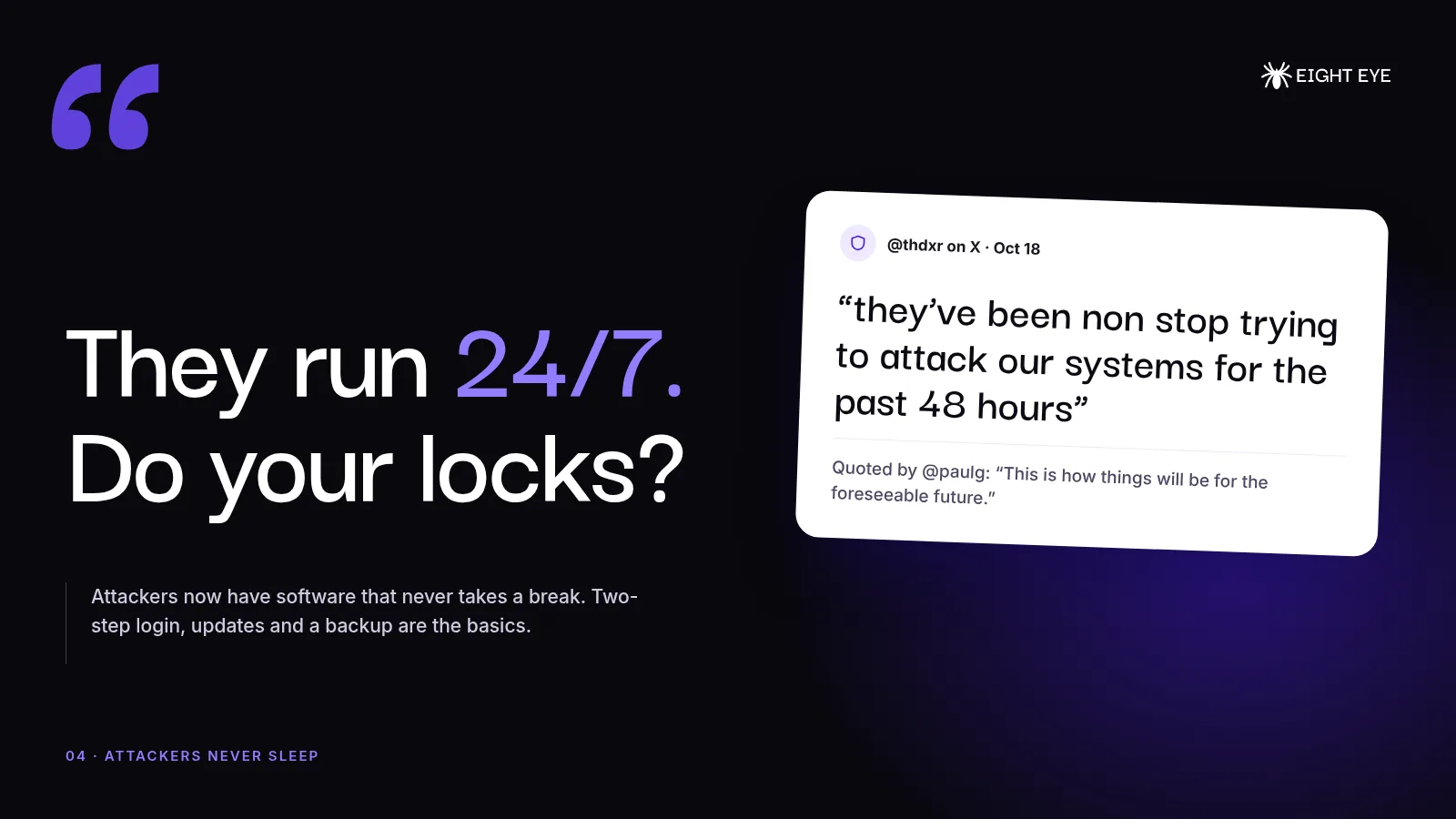
@thdxr, October 18. About 9,300 likes and 1.6 million views.
Dax, who builds the open source coding tool opencode, wrote that someone had been trying nonstop to attack his team's systems for 48 hours. One upside, he said, is that everything is getting hardened, but they basically need agents running all the time, because that's what the attackers have. @paulg quoted it with one line (about 3,600 likes and 820,000 views): this is how things will be for the foreseeable future.
Our take: You aren't running a software company, but the same automated tools can try your email password all night and send your bookkeeper a fake invoice that reads perfectly. The basics still do most of the work. Turn on two-step login for email, banking, payroll and your website. Keep phones, computers and website plugins updated. Make sure someone other than you can get into the accounts if you're locked out. And agree on one rule with your staff: any request to change bank details or pay a new vendor gets confirmed by phone, at a number you already have.
5. Never skip the basics
@AlexHormozi, October 18. About 5,200 likes and 750 bookmarks.
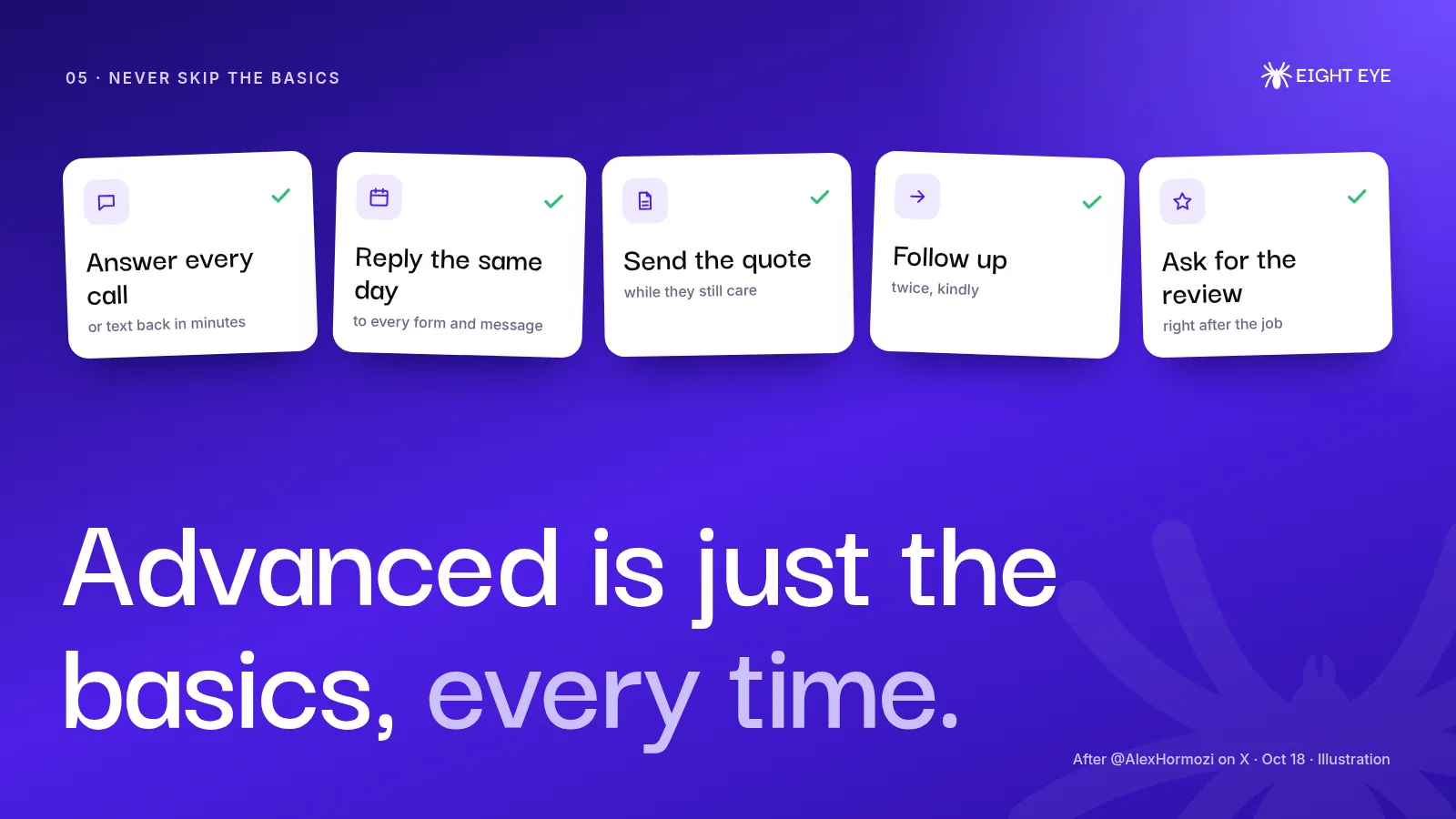
Alex Hormozi, who owns and invests in a portfolio of companies through Acquisition.com, posted a single line: the difference between a beginner and someone advanced is that the advanced person never skips the basics.
Our take: Most small businesses already know their basics. Answer the phone. Reply to every form the same day. Send the quote while the customer still cares. Follow up. Ask for a review when the job goes well. The trouble is doing them on a Friday at 6pm with two trucks out and the phone ringing. That's the best use of AI in a small business, and it's less exciting than most of what you'll see on X. Let it answer or text back the calls you miss, send the follow-up you meant to send, and remind the customer about the review. You decide what the basics are, and AI makes sure they happen every time.
6. If you sell your business, get it in cash
@levelsio, October 18. About 3,100 likes and 1,300 bookmarks.
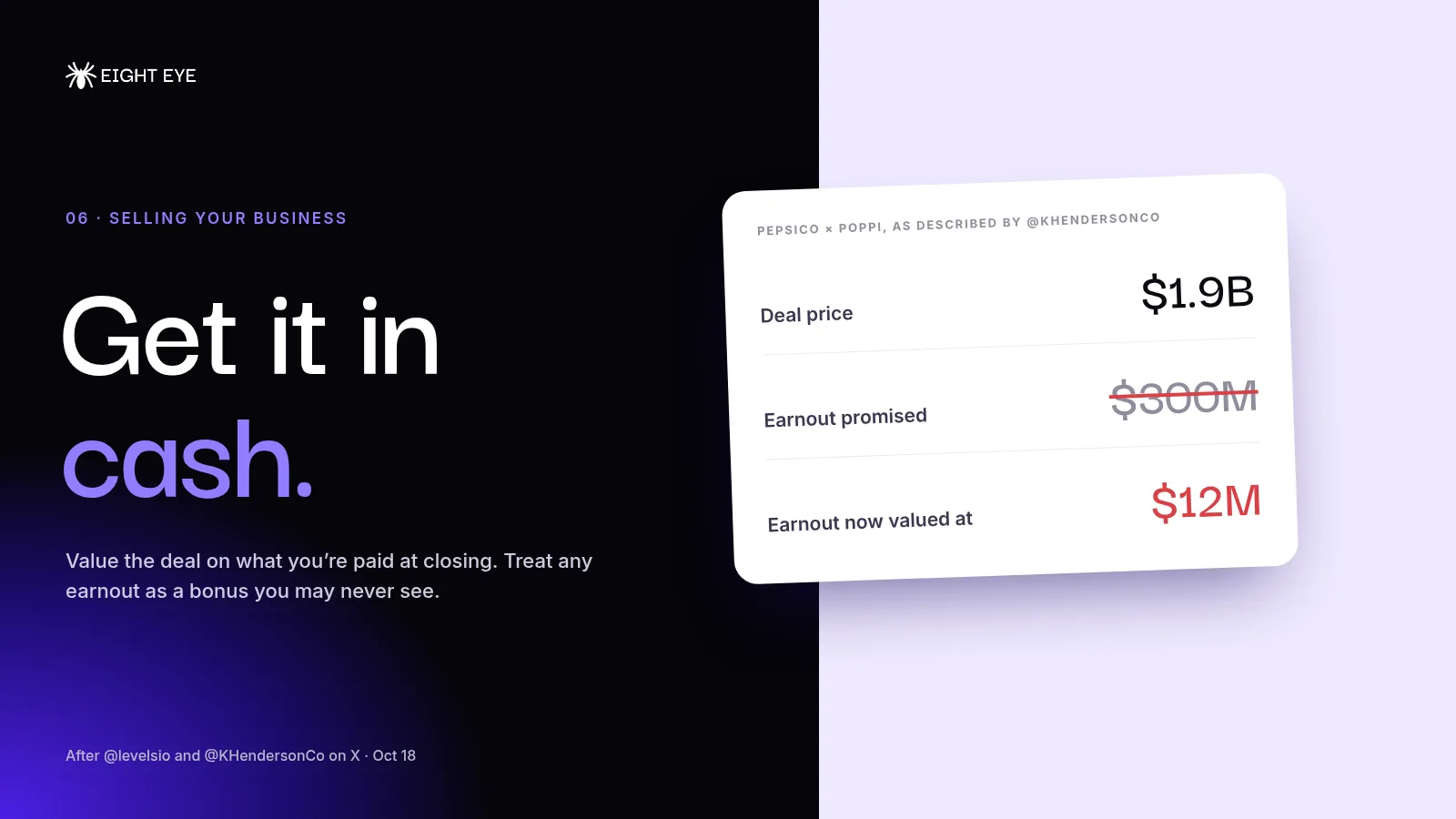
@levelsio, who runs several profitable one-person websites, said that when you sell a business you should never agree to an earnout and should always get paid in cash. He's heard plenty of earnout horror stories, he wrote, and has always turned them down. He was quoting M&A lawyer @KHendersonCo (about 2,700 likes and 3,200 bookmarks), who wrote about Poppi's sale to PepsiCo. According to Henderson, the deal was $1.9 billion plus a $300 million earnout tied to how the brand performed after closing, and PepsiCo now values that earnout at $12 million. He said he doesn't know the details of that particular deal. His broader points: after closing, the buyer controls every lever that decides whether you get paid, the accounting definitions decide the outcome, and earnouts are among the most fought-over terms in deals.
Our take: Plenty of owners plan to sell someday, whether to a competitor, a private equity roll-up or a longtime employee. Henderson's advice works at any size: value the deal on the cash you get at closing and treat anything promised later as a bonus. If you do accept an earnout, he suggests tying it to revenue rather than adjusted profit, keeping the period short, and getting the right to audit the numbers. Before any of that, it helps to have a business a buyer can see clearly: customer records in one place, a clean list of leads and jobs, and processes that don't live only in your head. Those make a cash offer easier to justify.
Quick hit: software price creep
@noahkagan posted this morning that QuickBooks had raised its price again, adding features he'll never use, and asked what people use instead. More than 60 replies came in within a few hours. Whatever you think of QuickBooks, it's a good reminder to pull up your card statement once a quarter, list every subscription, and cancel or downgrade what you don't use. An AI assistant can sort an exported statement into a tidy list in a minute. Check its work before you cancel anything.
One more for the tech crowd
@AnthropicAI (about 19,000 likes and 5.7 million views, the most-engaged AI post we saw this weekend) announced the Anthropic Public Benefit Fund, a wholly owned entity dedicated to the public benefit. It starts with 5% of the company's shares and can receive up to 2% more for every 50% rise in the company's value over a set baseline, at the board's discretion, according to the announcement. Anthropic says that, counting its co-founders' pledges to donate 80% of their equity and an employee donation-matching program, roughly 20% of its shares are now committed to the public good.
That's issue six
If you run the five-minute test on your own site, we'd like to hear what it found. Write to us at support@eighteye.ai. Eight Eye is the AI growth partner for small businesses. We answer and follow up with every lead, help you get found in search and AI answers, and keep the busywork moving. See how it works, compare plans and pricing, or book a demo.
See you in the next issue.