
Most owners have done this math in their head at least once. What would it cost to hire someone to answer the phone, chase quotes and keep the schedule straight? Then you look at the number, look at the margins, and do it yourself for another year.
This weekend, one of the best-known investors in tech posted his version of that math, and it came out very differently. Our lead is what he actually claimed, what the replies pushed back on, and what a plumbing, HVAC or electrical shop should copy from it (and what it shouldn't). After that: AI agents doing 41 full-time jobs' worth of work inside a large software company, and a simple way to find out who your best customers really are. Each item links to the original post on X, and engagement numbers are as of the morning of November 2.
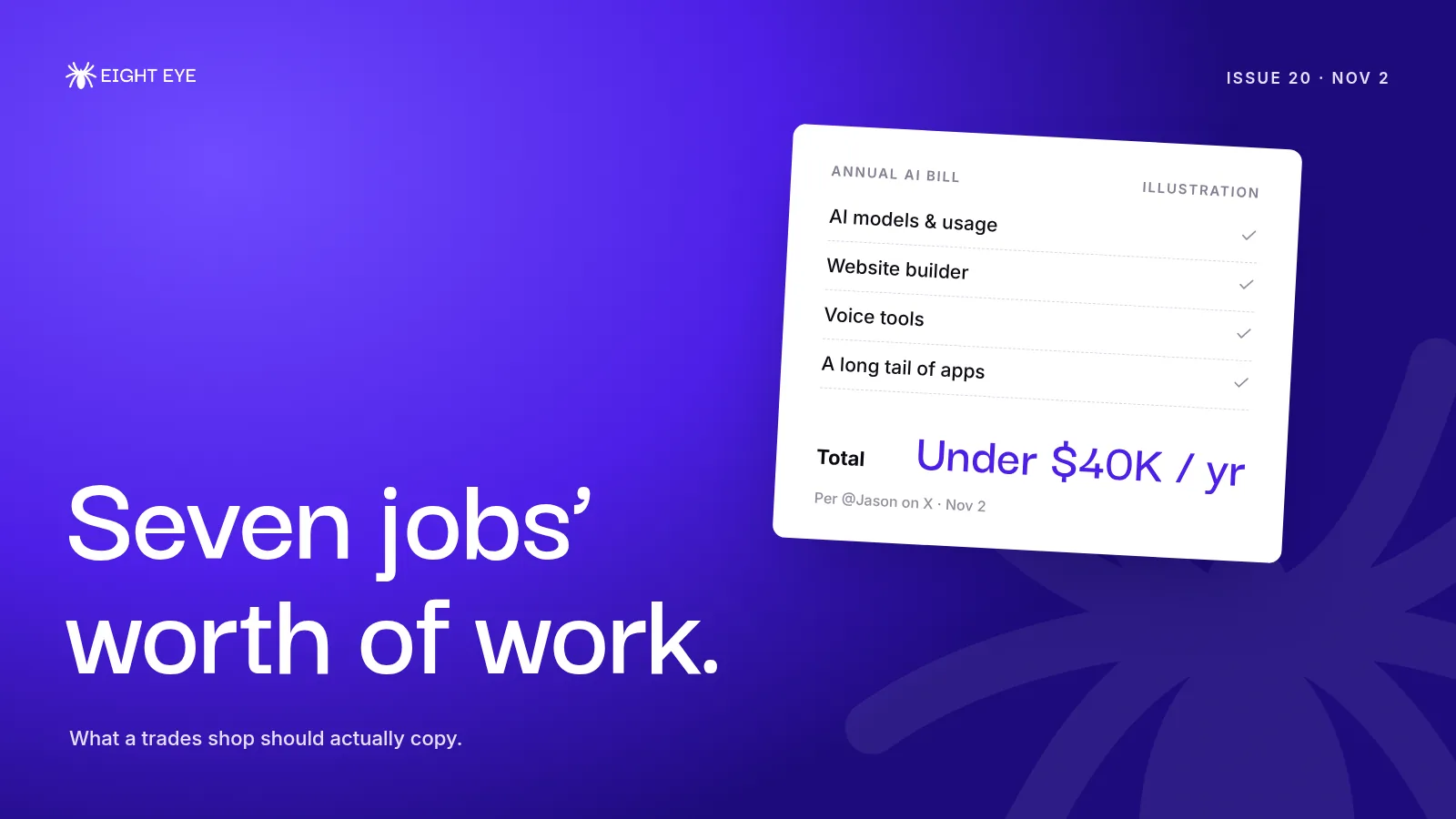
1. Under $40,000 a year in AI, and he says it covers seven full-time jobs
@Jason, November 2. About 2,500 likes, 800 bookmarks and 275,000 views.
Jason Calacanis, the investor and podcast host, wrote that he spends less than $40,000 a year on AI subscriptions and usage, from companies like Anthropic, Lovable, ElevenLabs and Grok Bot plus "a long tail" of smaller tools, and gets what he estimates is more than $2 million in value across his companies. His claims: at least seven full-time jobs automated so far, and the average task done about twice as fast. He added that the last 90 days changed more than the two years before, and that you won't get it unless you've used the newest tools for 30 hours a week.
A few hours earlier he'd put a rough rate on it (about 1,700 likes and 173,000 views): he figures these AI bots work out, on average, to roughly a $30-an-hour employee, a blend of clerical work at the low end and developer work at the high end. That post was a reply to an Elon Musk post (about 8 million views) saying the cost of serving Grok Bot had been "unsustainably high relative to revenue," after users complained their usage was running out fast.
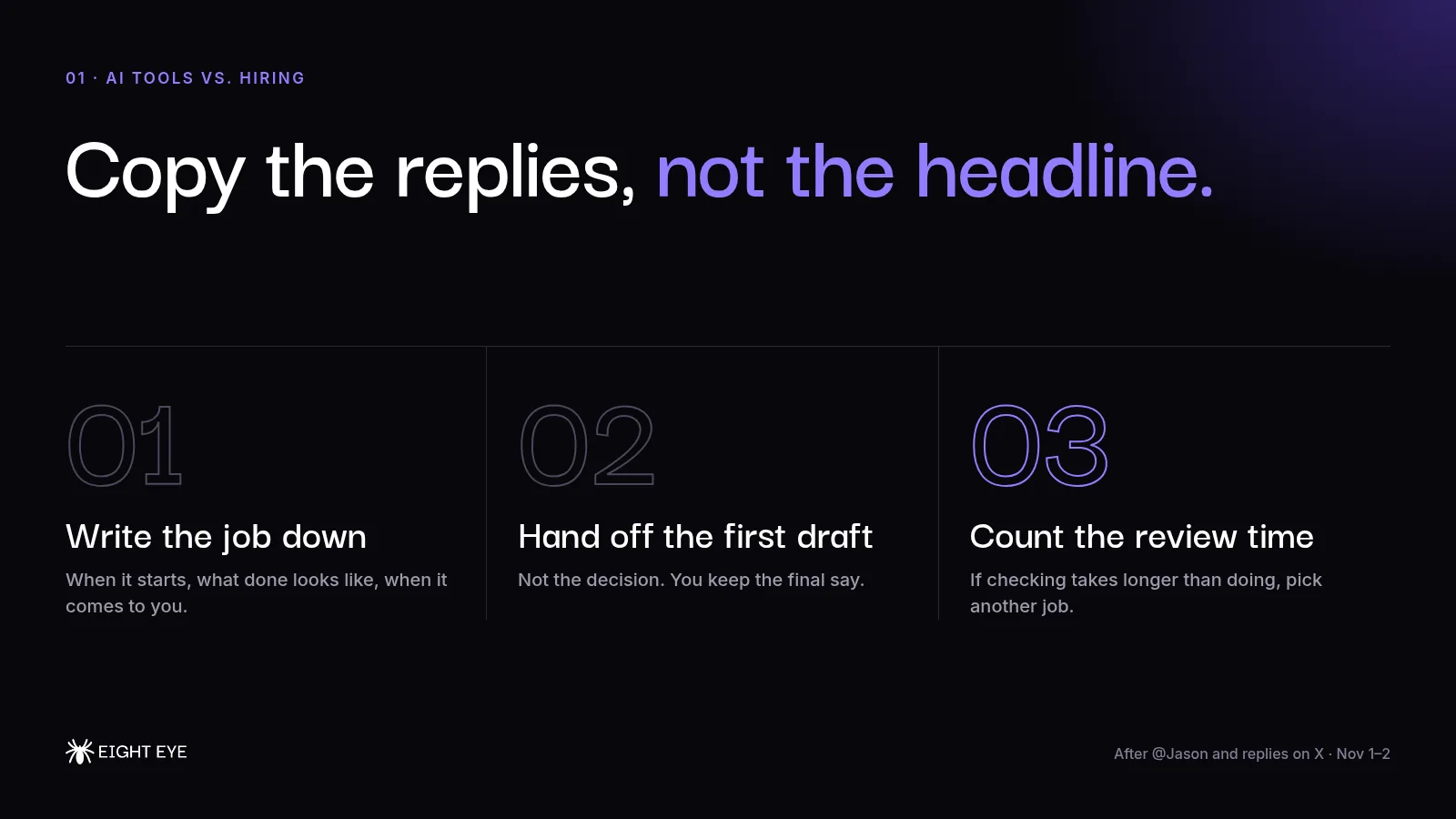
The replies are where the useful part is. One tax preparer wrote that his own AI bill is tiny, but "the real cost moved to review," because someone still has to own every output. Another pointed out that the tools are the quick part, and the slow part is "writing down what the person actually did all day." Plenty of others asked for a breakdown of the seven jobs, which he hasn't posted.
Our take: Take the $2 million as one owner's estimate, not a benchmark. But the shape of it is real, and it fits a trades shop better than you'd think. Your "seven jobs" aren't seven people. They're the hours that leak out of the week: the call you missed under a sink, the quote you meant to follow up on, the review request that never went out, the Monday morning spent rebuilding the schedule.
So copy the part from the replies, not the headline. Before you buy anything, write down one job the way you'd explain it to a new hire: when it starts, what "done" looks like, and when it has to come to you. Hand off the first draft of that job, not the decision. Then count your review time honestly for a month. If checking the work takes longer than doing it, you picked the wrong job to start with. And plan for prices to change. As that Musk reply shows, the people selling these tools are still working out what they cost to run.
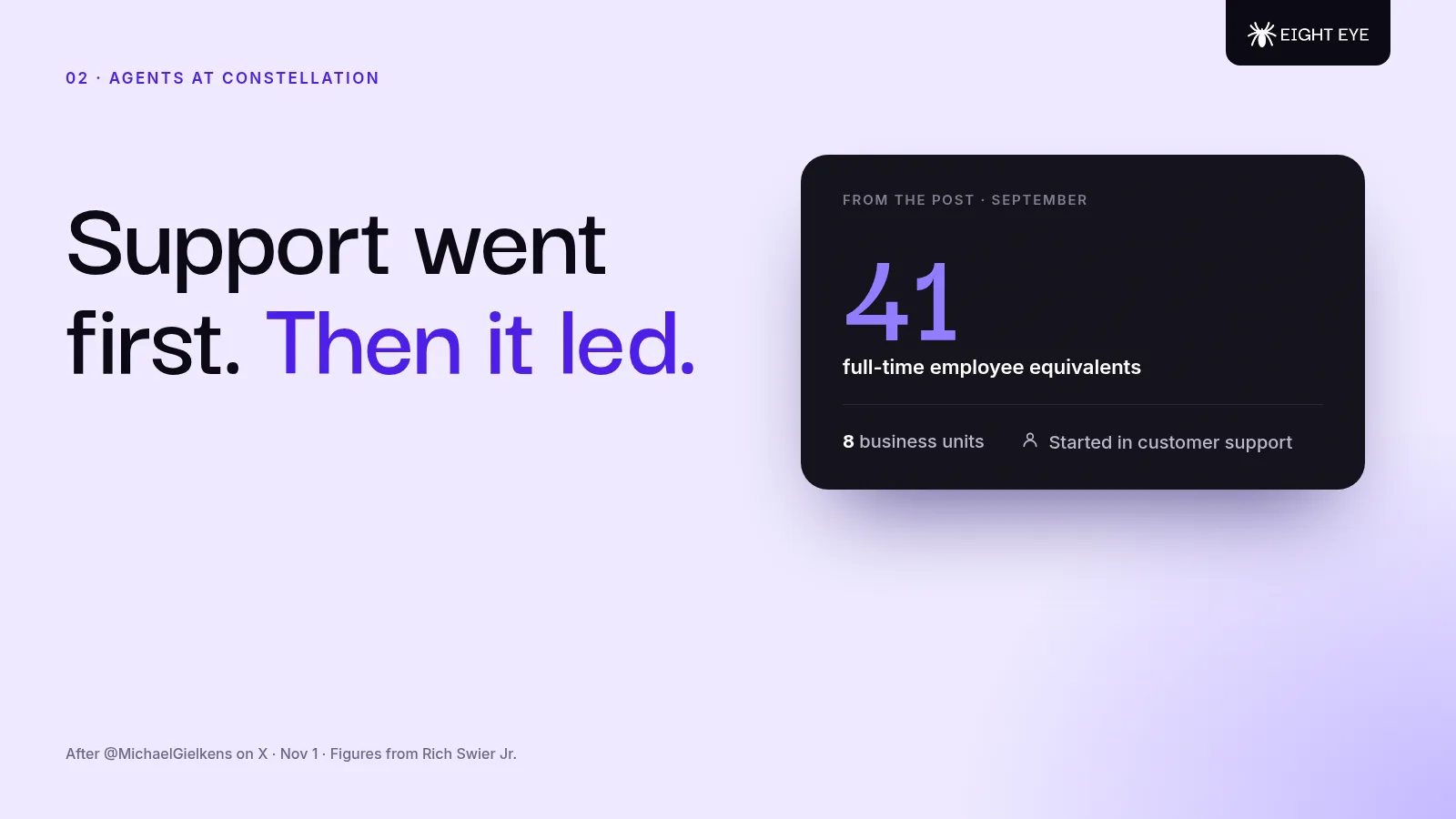
2. AI agents at eight software businesses did 41 full-time jobs' worth of work in September
@MichaelGielkens, November 1. About 100 likes and 5,100 views.
Michael Gielkens shared figures from Rich Swier Jr., founder of raia, the platform Constellation's business units use to build their own AI agents. Swier measures agents in "full time employee equivalents," meaning how many full-time people it would take to do the same work. In September, agents at eight of those business units did the work of 41. The more interesting point was where it started. Customer support was the first place agents went to work, and those support teams then became the ones helping roll agents out to the rest of each company. Per the post, they're "not being replaced. They are becoming more important."
Our take: This is a big company with a lot of software people, so don't read the 41 as a target. Read the order. They started where the questions repeat all day and the answers are already known: hours, service areas, "can you come out this week," "did you get my payment." In a contracting business, that's your phone and your text inbox. The person who answers those today knows more than anyone about what customers ask. Make that person part of setting it up, not someone it happens to.
3. A five-question setup that shows who your best customers really are
@dannypostma, November 1. About 275 likes, almost 600 bookmarks and 20,000 views.
Danny Postma, who runs the AI headshot company HeadshotPro, said most founders "have no clue who their customers are," then laid out how he figures it out with very little manual work. New customers answer five quick questions as part of signing up, not in a pop-up afterward, so most of them actually answer. AI agents read the first email from every new lead and tag why that person reached out. Then he checks what people say against what they actually buy, and his warning there is worth repeating: the customers who answer surveys the most are often not the ones paying the most. The results go into one living document that drives his ads, landing pages and sales replies.
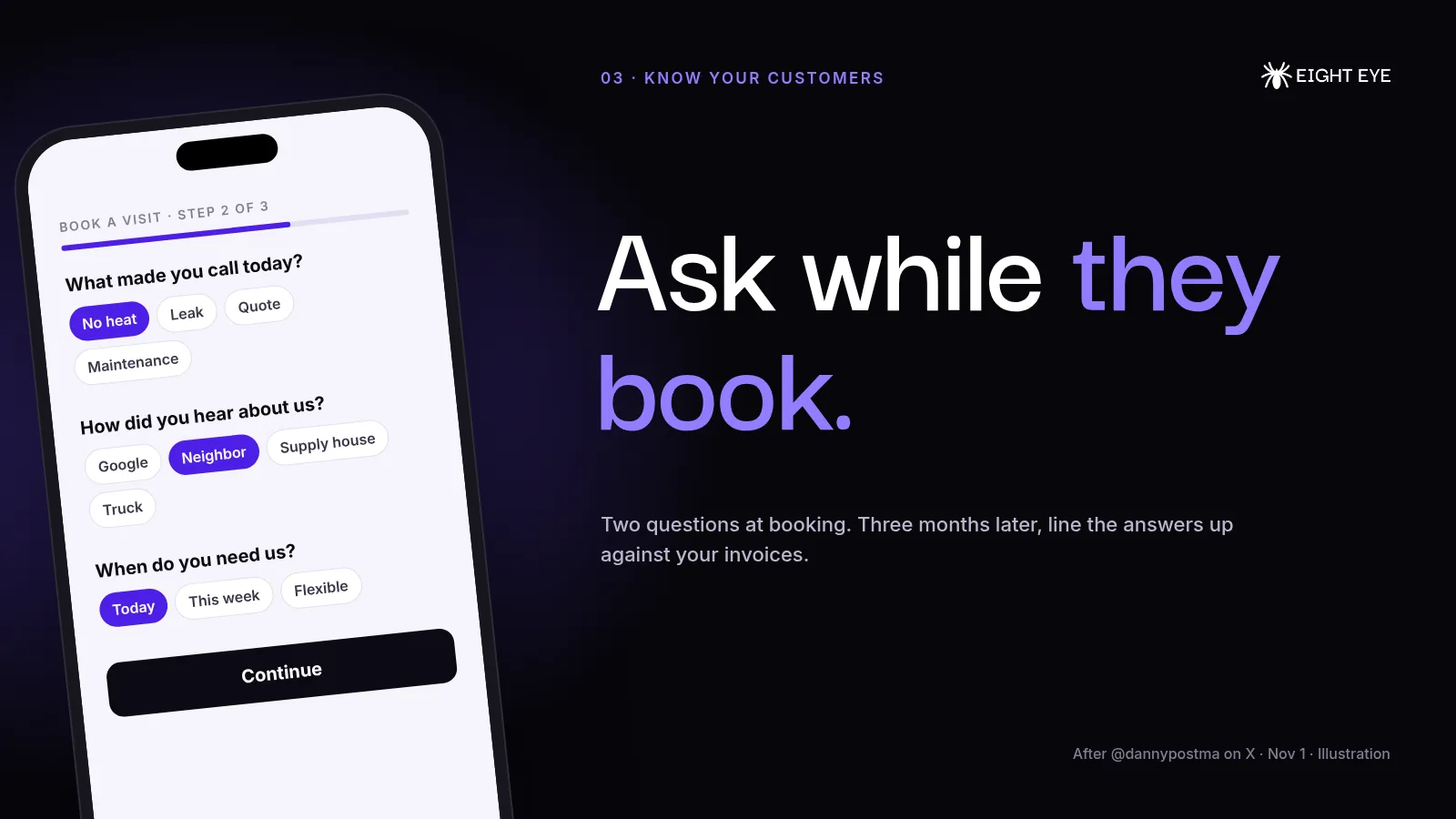
Our take: You don't need his software to do the trades version. Add two questions to the way people book with you: "What made you call today?" and "How did you hear about us?" Have whoever (or whatever) answers the phone log the answer with the job. After three months, line it up against your invoices. You may find that the jobs you advertise for aren't the ones that pay, or that your best work comes from one neighborhood, one supply house referral or one type of system. That's a better marketing plan than any agency deck, and it's built from your own customers' words.
For the tech crowd
"Liquid software." Patrick Collison (about 4,300 likes and 417,000 views), Stripe's CEO, described adding an "improvements" box to the personal apps he's built: type what you want changed, and an agent builds it. One other user of his apps submitted 150 changes in a few days. He was upfront about the open questions: maintenance, security and how it works with more than one user.
Agents still struggle with expert work. @rohanpaul_ai summarized SemiAnalysis's new GDPx benchmark, which tests agents on real professional tasks across 11 fields. The best model averaged about 12%, and every model scored zero on finance and law under strict pass-fail grading. A useful reality check next to this week's lead story: great at drafts, still weak at judgment calls.
Write like a person. Danny Postma (about 190 likes) noticed AI-written marketing copy keeps explaining features like a spec sheet, and suggested running a "tone of voice" pass on every piece of copy before it goes out. Good advice for anyone letting AI draft their website or ads.
The second-order effect. In a separate post (about 134,000 views), Postma said a call with a photo editing service made him realize AI headshots don't just cut into photographers' work. They cut into the editors those photographers hire and the software licenses those editors buy. Worth thinking about if your customers are other businesses.
That's issue twenty
If you've ever done the "should I hire someone" math and given up, start smaller: write down one job, hand off the first draft, and keep the final say. And if your phones, texts and follow-ups are where the hours leak out, write to us at support@eighteye.ai. Eight Eye is the AI growth partner for small businesses. We answer your calls, text back missed leads, follow up until they book and help you get found online, while you keep the final say. See how it works, compare plans and pricing, or book a demo.
See you in the next issue.