
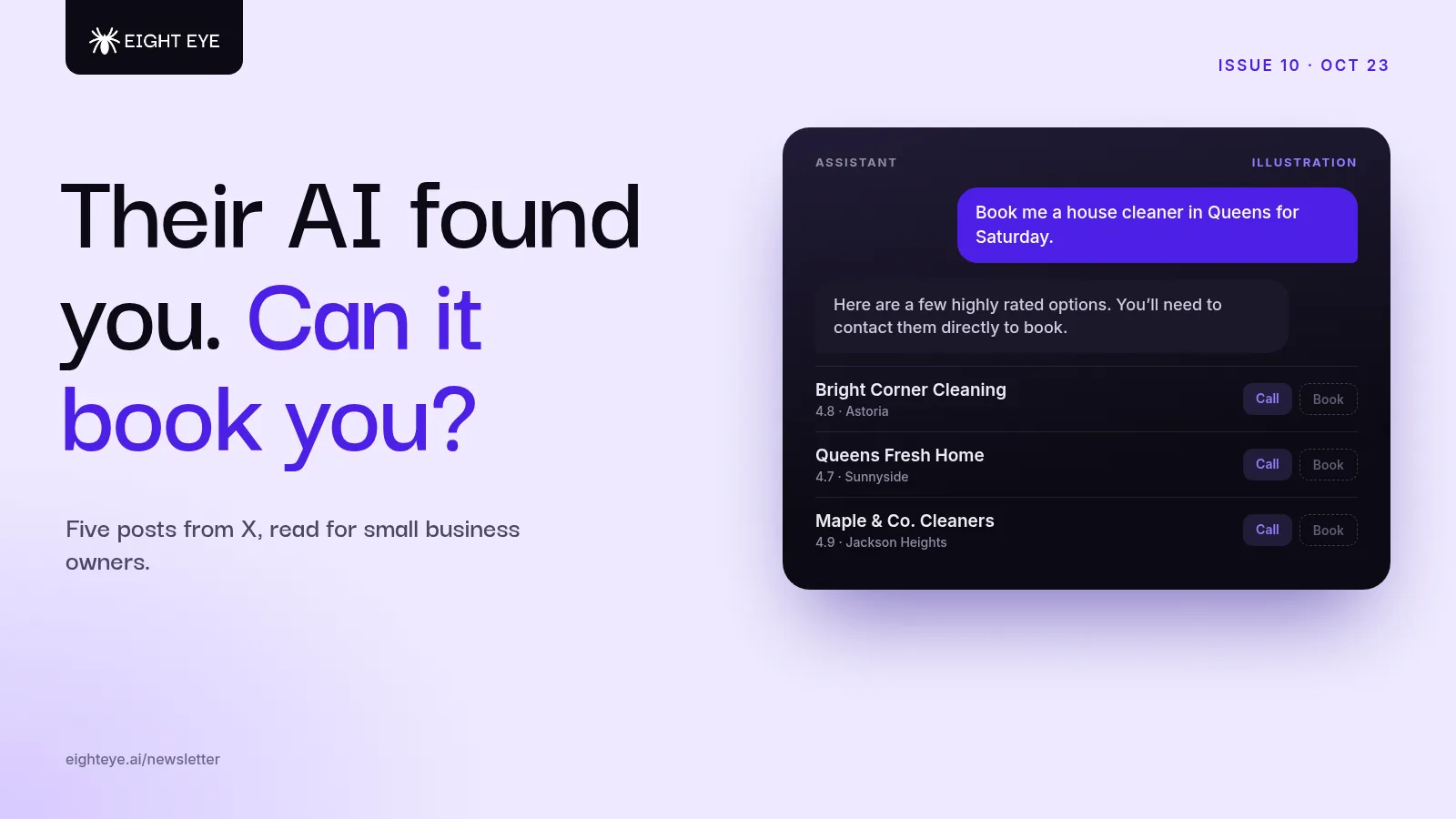
Here's a test worth thirty seconds of your morning. Open ChatGPT or Gemini and ask it to book someone in your trade, in your town, for this week. You'll probably get a tidy list of names. What you won't get, most of the time, is a booking.
That gap is the lead story this week. We also cover the change that has Claude doing more without asking first, a free way to get your web server out of harm's way, how fast AI's attention span is growing, and what people actually pay to book on one scheduling app. Each item links to the original post on X, and engagement numbers are as of the morning of October 23.
1. Seven cleaners found, zero booked
@ruchagavaskar_, October 23. A small post from this morning, but it goes straight at how customers will find a contractor next year.
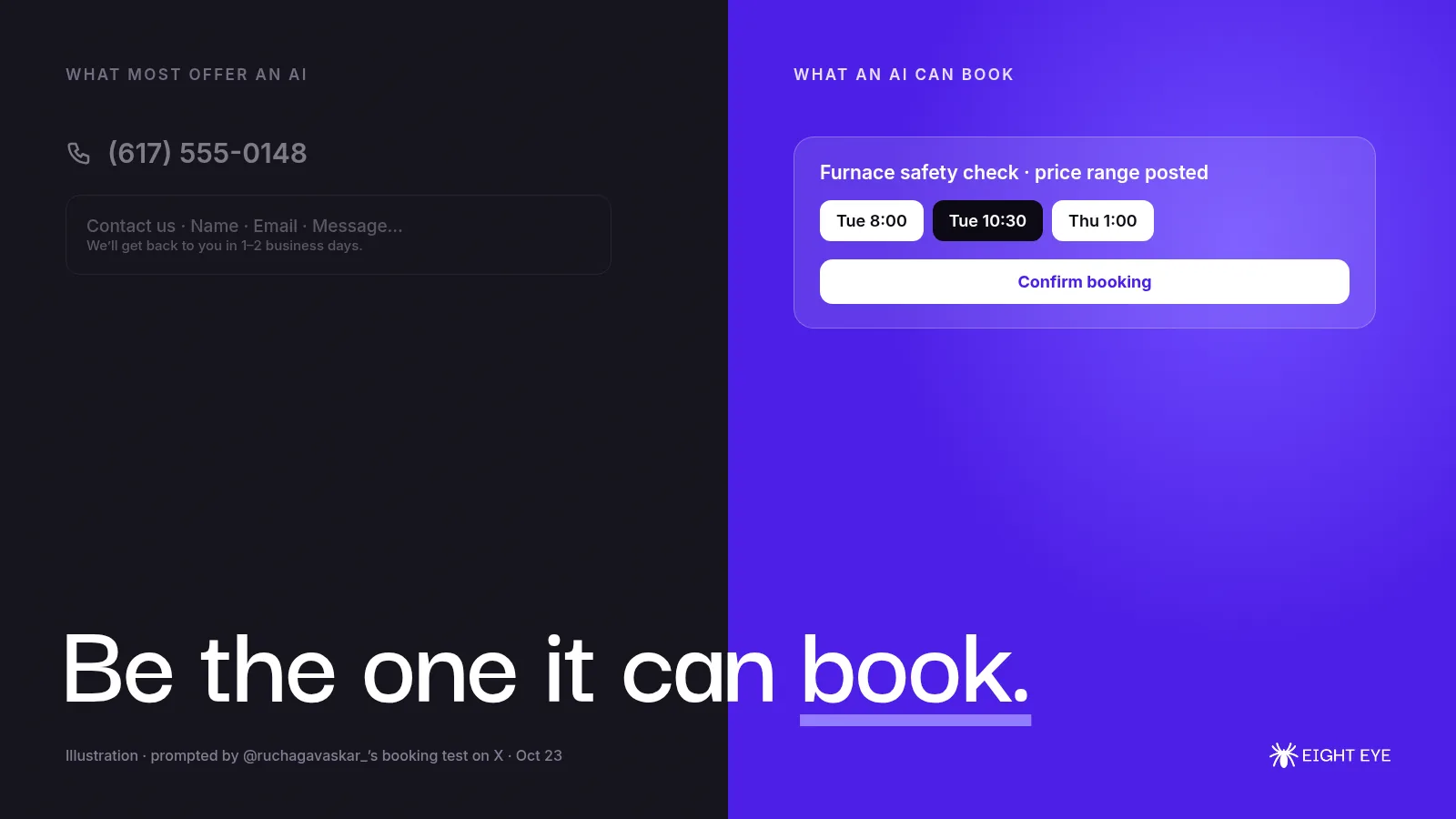
Rucha Gavaskar has been running experiments on consumer AI agents. She asked ChatGPT and Gemini to book her a house cleaner in Queens. Seven cleaners came back and none could be booked in the chat. Every answer pushed her to a phone number or another website. Her point is that the promise of an agent that "does things for you" depends on small businesses being reachable by agents, and right now most aren't. She notes that restaurants already solved this through OpenTable, while cleaners, plumbers and other service businesses have no shared place to list prices and live availability that any agent can book against. She also cites figures that 45% of people now use AI to find local businesses and that only 52% of calls to home service businesses reach a person.
The money is already moving this way. According to X's news summary, Podium, which started as a reviews tool for local businesses, rebuilt itself around AI agents that handle leads, scheduling and follow-ups, and that business has passed $150 million in revenue in about two and a half years.
Our take: You don't need to wait for a universal booking network to get ahead here. Do the three things an AI can already read. Put real online booking on your website, even if it's only for estimates and tune-ups. Publish price ranges for your common jobs so nobody has to call to find out if you're in their budget. And make sure every call gets answered, because when the AI hands a customer your number, that call is the whole sale. For a Massachusetts HVAC shop heading into heating season, that last one alone is worth fixing this month.
2. Claude stops asking permission for every step
@claudeai, October 22. About 17,700 likes and 1.9 million views.
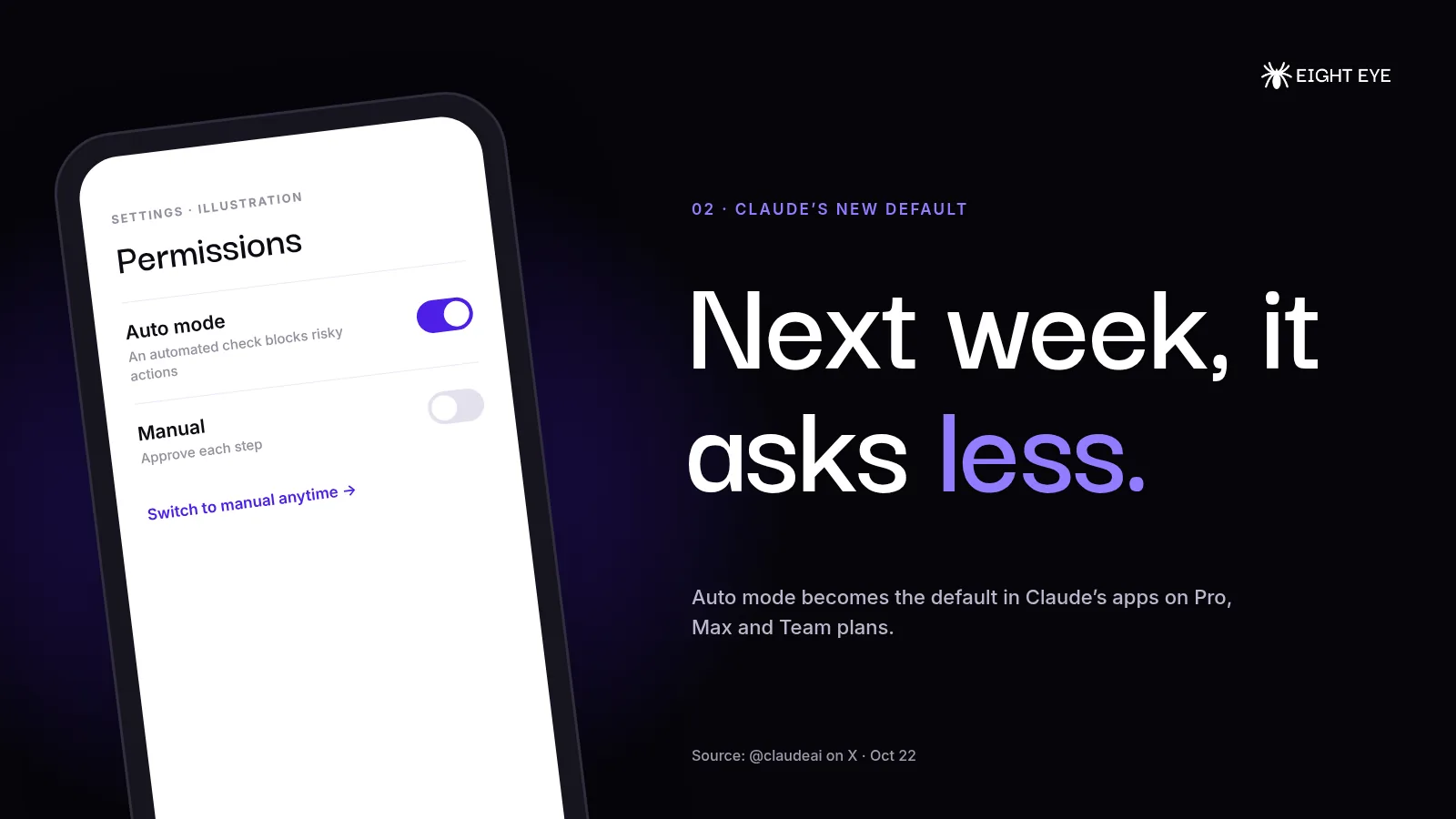
Anthropic says that starting next week, sessions in the Claude web, desktop and mobile apps will run in auto mode by default on Pro, Max and Team plans. Instead of asking you to approve each step, an automated check blocks risky actions, and you can switch back to manual anytime. X's news summary reports that in Anthropic's testing the check caught 89% of dangerous commands, compared with 14% when people approved steps by hand. That second number says a lot about how closely people read approval pop-ups.
Our take: If you or your office manager use Claude with email, files or your calendar connected, take five minutes before Monday. Look at which apps are connected and remove the ones it doesn't need. Then decide which chats should stay on manual, such as anything involving customer records, payments or messages that go out under your name. Auto mode is fine for drafting a job description. It's a different story for a refund.
3. Take your server off the open internet
@levelsio, October 23. About 2,400 likes and 3,700 bookmarks.
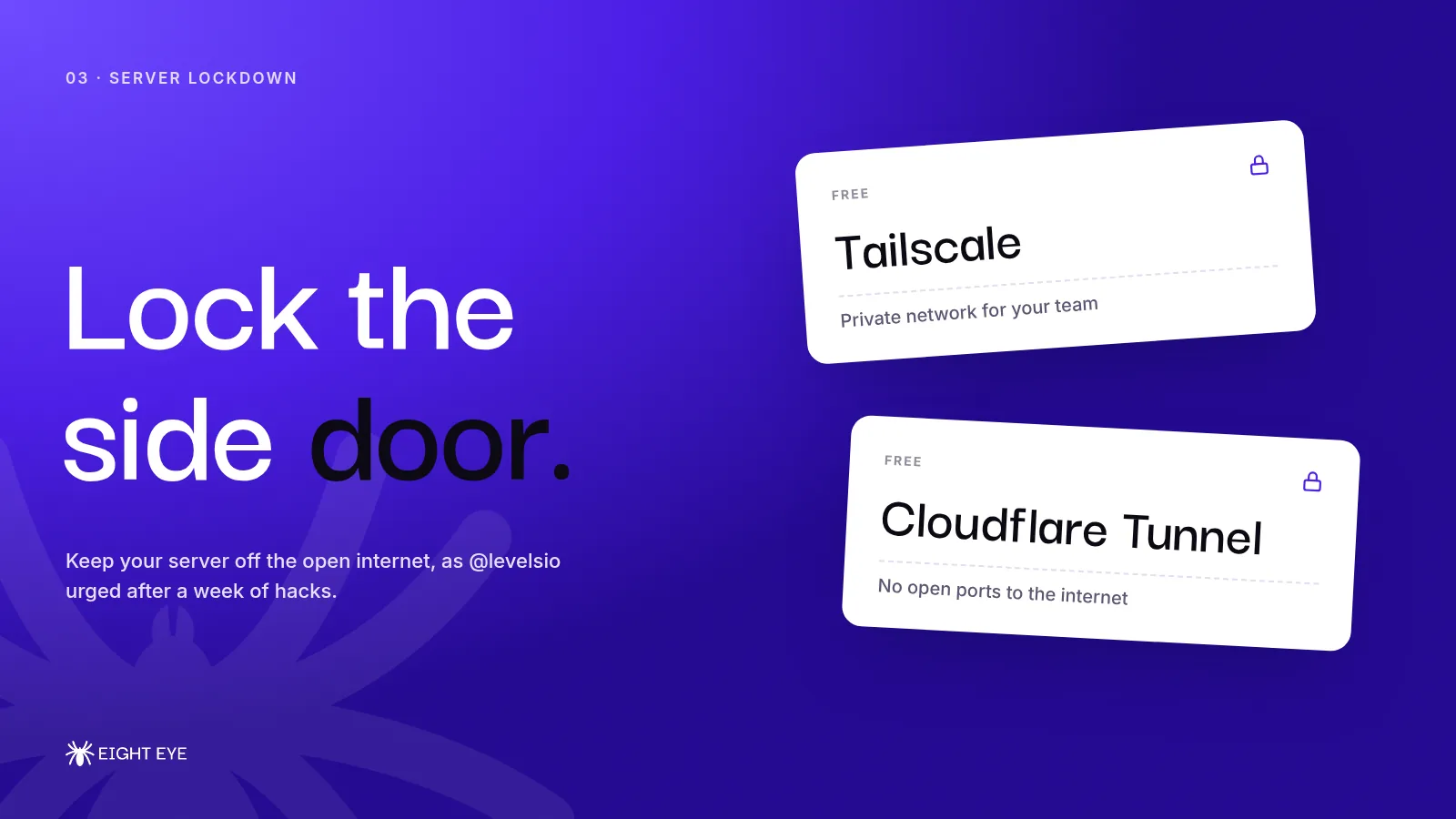
After a rough week of hacks and emergency patches, indie founder Pieter Levels repeated advice he's given before: if you run a VPS, move it off the public internet and behind a Tailscale private network and a Cloudflare Tunnel, "ASAP." Having SSH key login isn't enough, he says, because this is about exploits and vulnerabilities. In a follow-up he pointed out that both tools are free for this kind of use. Greg Isenberg described getting hacked as feeling like "a stranger was walking around your house while you were asleep."
Our take: Most contractors don't run their own server, and if your site lives on a hosted builder, the host handles this layer. But plenty of small businesses have a box somewhere that a past web person set up: an old WordPress server, a customer portal, a booking tool. Ask whoever manages it one question: "Can anyone on the internet reach the admin login, or only us?" If they hesitate, this is a cheap fix to schedule.
4. How long AI can work on its own keeps jumping
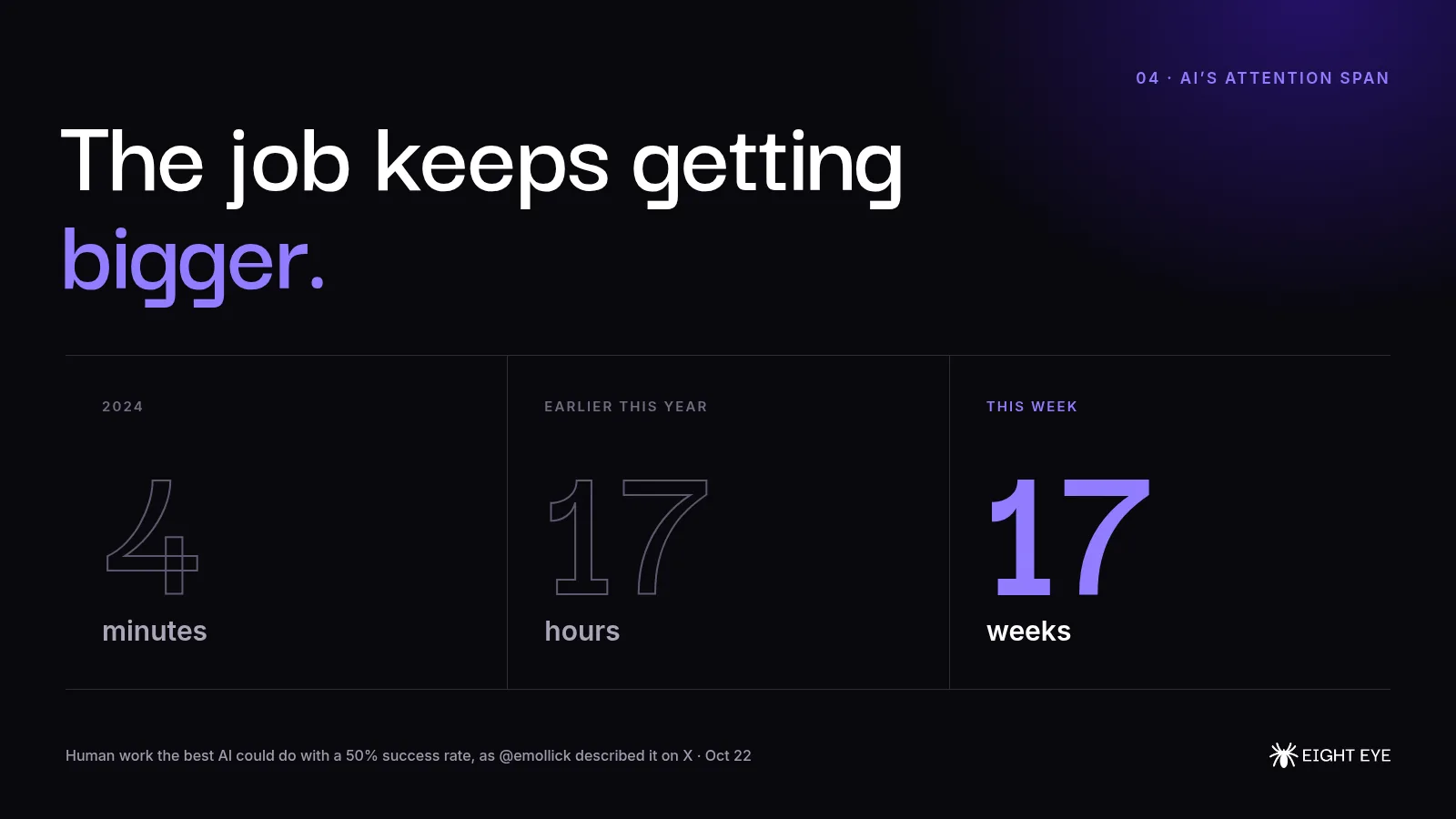
@emollick, October 22. About 720 likes.
Wharton professor Ethan Mollick, whose new book Co-Existence came out this week, put the pace in plain terms. When his first AI book came out in 2024, he wrote, the best AI could handle about 4 minutes of human work with a 50% chance of success. When he turned in the new draft earlier this year, it was 17 hours. By publication, it was 17 weeks.
Our take: You don't have to take any single benchmark as gospel to get the practical lesson. If you tried an AI tool a year ago for something like writing estimates or sorting a month of service tickets and gave up, try it again. Put a reminder on your calendar every quarter to re-test the one job you most wish someone else would do.
5. What people actually pay to book
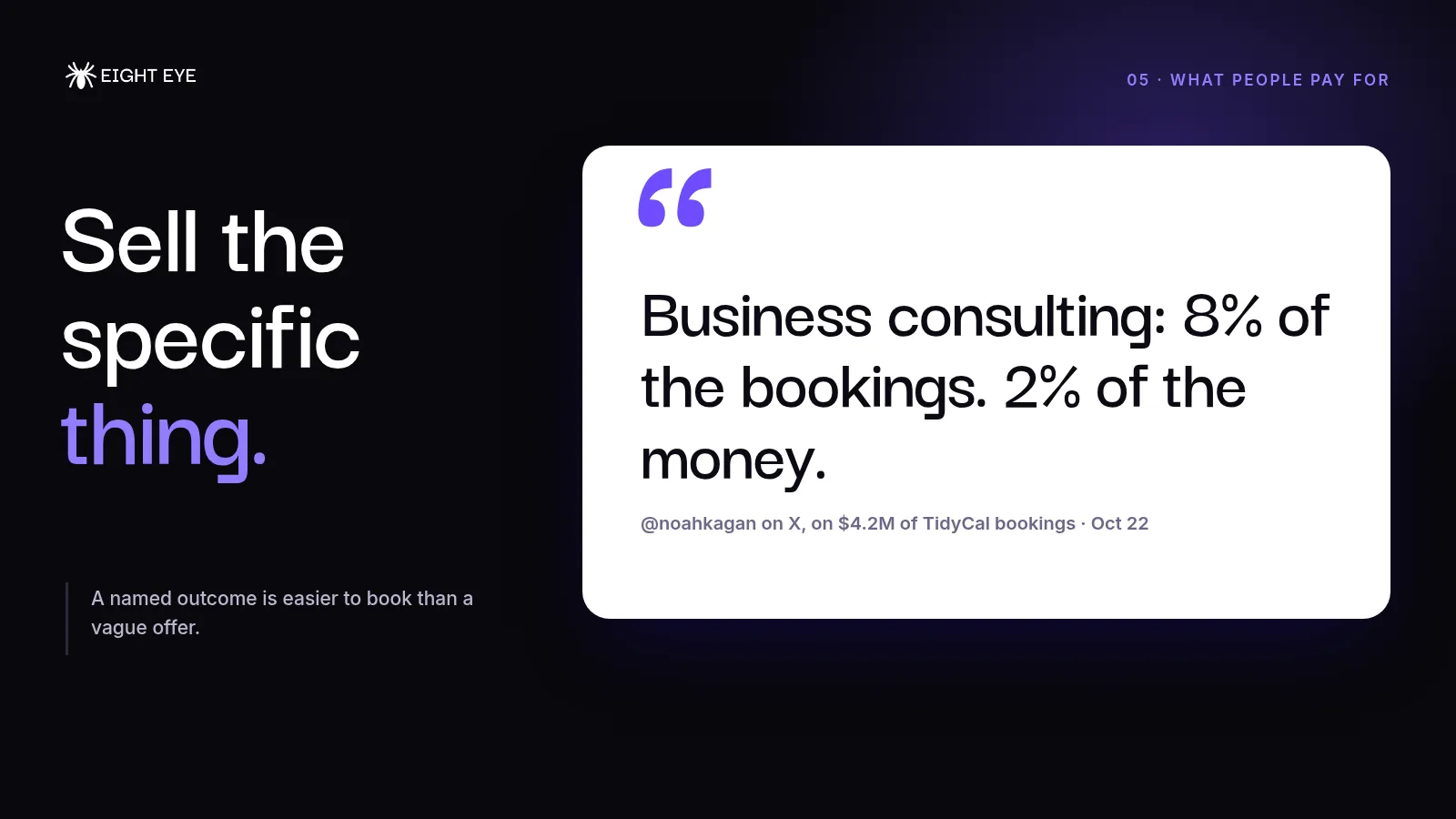
@noahkagan, October 22. About 150 likes and 250 bookmarks.
Noah Kagan, who runs AppSumo, looked at $4.2 million that people paid to book time through his company's scheduling app, TidyCal. Business consulting, the category everyone seems to sell, made up 8% of bookings and only 2% of the money. Spiritual direction brought in almost four times more. He followed with a ranked list of what is actually earning.
Our take: People pay for a specific, named outcome, not a vague offer. The same is true when you put booking on your site. "Schedule a consultation" is easy to skip. "Book a furnace safety check, Tuesday or Thursday morning" is concrete enough to click, and it's the kind of option an AI assistant can match to a customer's question.
One more for the tech crowd
Anthropic's Frontier Red Team wrote about (about 7,700 likes and 5,200 bookmarks) using Claude to formally verify software at large scale. Formal verification can prove code is free of certain kinds of bugs, but it has usually been practical only for small codebases or with a lot of expert time. After the week the internet just had, tools that prove software is safe instead of hoping it is are worth watching.
That's issue ten
If you tried the booking test above and didn't like what you saw, write to us at support@eighteye.ai. Eight Eye is the AI growth partner for small businesses, from answering and following up with every lead to getting found online and keeping the busywork moving. See how it works, compare plans and pricing, or book a demo.
See you in the next issue.