
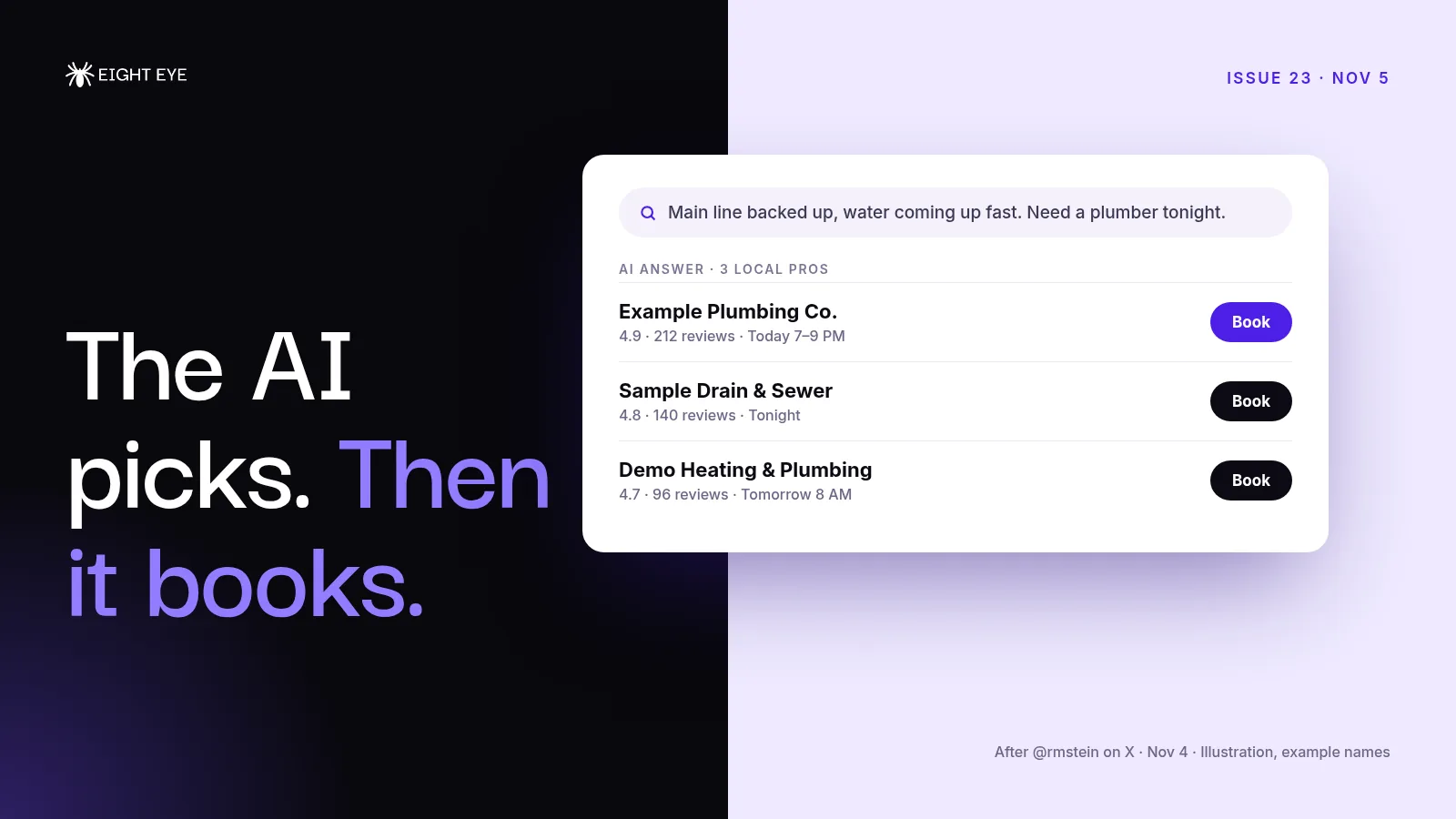
For years, the path to a new plumbing or heating customer looked the same: they search, they scroll, they click a few websites, they call. This week Google cut a few of those steps out. A homeowner can now describe the problem to Google's AI, get a short list of local pros and book one from the answer.
That's our lead, and it matters more to a trades shop than any model release this month. After that: ChatGPT can now make GIFs and reuse your reference images, which is handy for promos and risky for anything that looks like proof of work. And a well-known founder found the one job Claude flatly won't do for him. Each item links to the original post on X, and engagement numbers are as of the morning of November 5.
1. Google's AI Mode now books home services
@rmstein, November 4. About 90 likes, 30 bookmarks, 24 replies and 8,400 views.
Robby Stein, a vice president of product for Google Search, announced direct links in AI Mode for researching and booking home services, through partners Angi, Thumbtack, Housecall Pro and Jobber, with ServiceTitan "coming soon." It's live now in the U.S. He told it as a personal story: his main line backed up at home with "water coming up fast," so he described the situation to AI Mode. It compared local pricing, checked reviews, made recommendations and he booked a plumber who came right out.
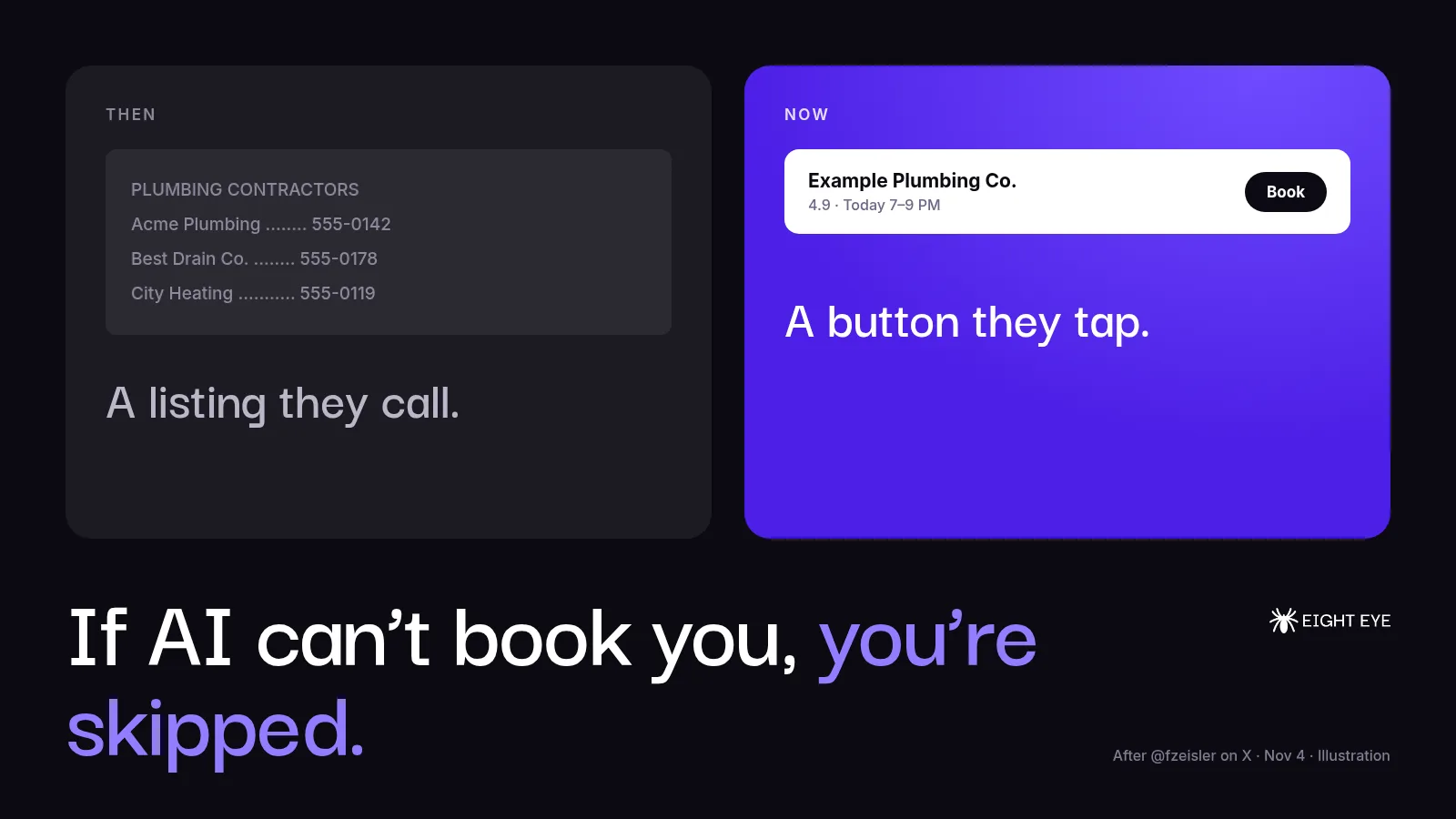
Forrest Zeisler, a co-founder of Jobber, put it this way: 20 years ago you had to be in the Yellow Pages, five years ago you needed a website, and next, "if AI agents can't find and book you, you don't exist." Jobber's own post pitched it as customers asking Google AI who to hire instead of scrolling through results.
Our take: Notice what didn't happen in Stein's story. He didn't visit a single plumber's website. The AI read the reviews, weighed the prices and handed him a button. That changes what you need to have in order:
- Know where your bookings live. If you already schedule through Housecall Pro or Jobber, check that online booking is turned on and that your services, hours and service area are right inside that tool. If you run on ServiceTitan, watch for the rollout. If you use none of them, a homeowner who finds you this way may end up booking through Angi or Thumbtack, on their terms.
- Your reviews are doing the talking. Stein said the AI checked reviews and compared pricing before it recommended anyone. Google's post doesn't spell out how it chooses which pros to show, so we won't guess. But a thin profile with old reviews and no prices gives it nothing to work with. Keep your Google Business Profile complete, answer every review and list the jobs you actually want.
- The booking is the start, not the finish. An emergency booked at 9 p.m. still needs a fast, human-sounding confirmation and a tech who shows up. The shop that confirms in two minutes keeps the job. The one that calls back tomorrow loses it to the next name on the list.
Here in Massachusetts, the first hard freeze is when this gets tested. A no-heat call booked from an AI answer at midnight is only worth something if somebody picks it up.
2. ChatGPT Images 2.6: GIFs and saved reference images
@OpenAI, November 4. About 19,400 likes, 1,700 quotes, 1,000 replies and 2 million views.
OpenAI released ChatGPT Images 2.6. You can now turn a prompt or an image into an animated GIF, change its speed and edit single frames. You can also save reference images of yourself, pets or characters and reuse them without uploading them again. For developers, two new API models arrived: Flare, which OpenAI says can make an image in as little as six seconds, and Sunburst, aimed at higher quality and more consistent edits.
Our take: For a small shop, the saved reference images are the interesting part. Save your truck, your logo and your uniform once and you can turn out a seasonal promo, a "we're hiring" post or a simple animated "book your tune-up" GIF in minutes instead of paying for a one-off design.
Draw a hard line, though. Never use AI images to show work you didn't do. A generated photo of a spotless boiler install or a perfect panel is a fake review in picture form, and customers (and inspectors) will notice when the real job doesn't match. Use AI for the flyer. Use your phone camera for the proof.
3. The one job Claude won't touch: moving money
@levelsio, November 5. About 250 likes, 120 replies and 76,000 views.
Pieter Levels, the indie founder who builds most of his products alone, asked whether there's a way to auto-pay bills through his Revolut bank account, because Claude refused to do it. He shared its answer: it won't send money or make transfers, even when asked and even in a browser where he's already logged in, and it called that "a fixed rule," not a technical limit. Plenty of replies argued about whether that's helpful or annoying.
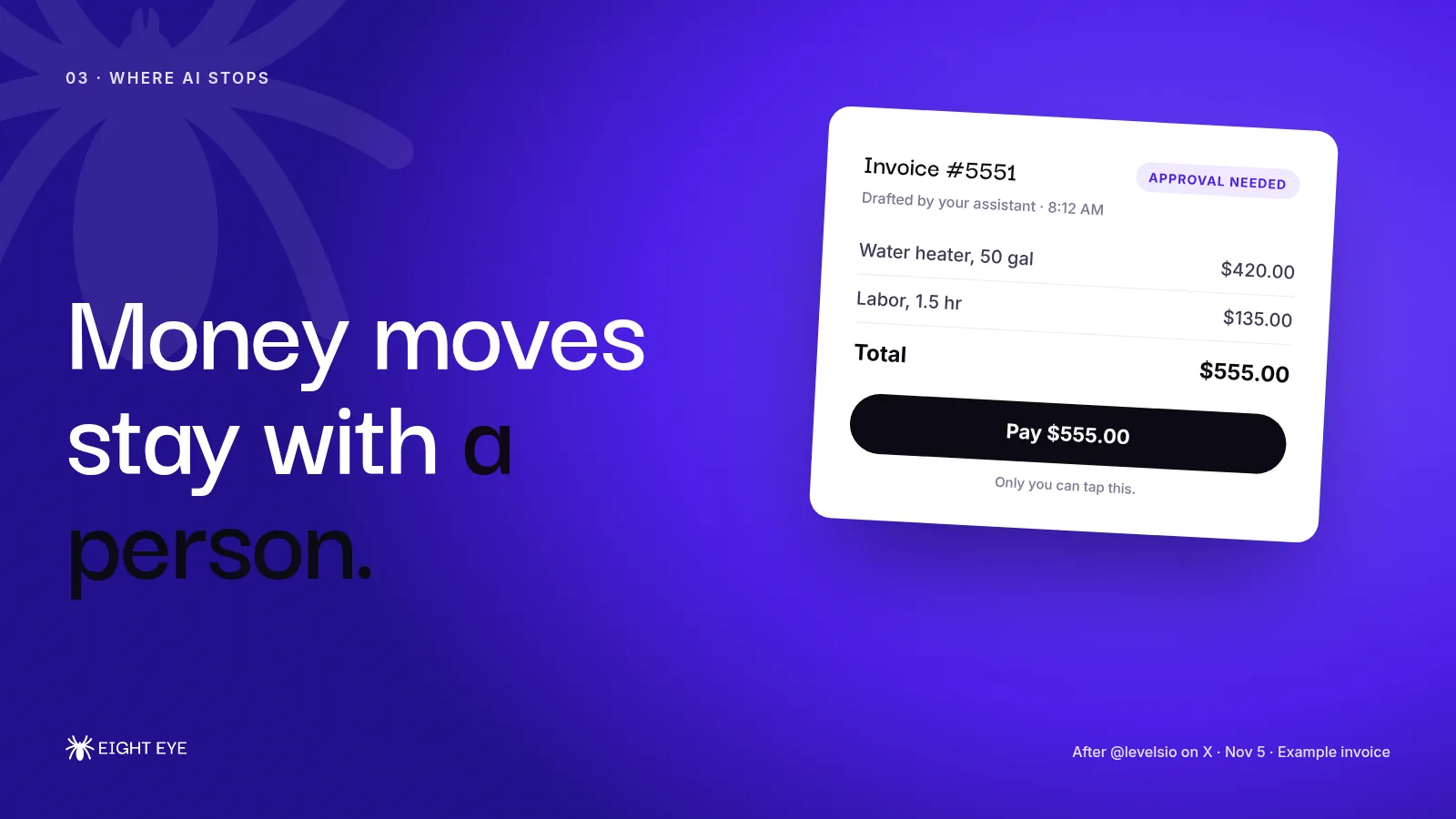
Our take: We think the rule is right, at least for now. AI is good at the work around money: drafting an invoice, reminding a customer their balance is due, sorting receipts for your bookkeeper, flagging a supplier bill that looks higher than last month. The actual send button should stay with a person. One wrong payment to a spoofed vendor email can wipe out a month's margin on a small job. Let software prepare the payment and let you approve it.
For the tech crowd
Agents that find and patch security holes. OpenAI (about 10,800 likes and 1.7 million views) said its security researchers built an autonomous pipeline that finds, tests and patches vulnerabilities. In one run with an upcoming cyber model, it validated and produced patches for 948 local privilege escalation bugs in the Linux kernel, for about $1.2 million in API credits. OpenAI says human researchers review the results before anything is reported, and it's working with Linux maintainers on fixes.
AIs read symbols differently than we do. Ethan Mollick (about 410 likes and 200 bookmarks) pointed to a paper suggesting AI models are strongly affected by visual symbols in ways they don't always mention in their own reasoning, and that they react to those symbols very differently than a person would.
What to build when AI can build anything. Greg Isenberg (about 710 likes and 1,000 bookmarks) took on the question he says sits behind much of today's AI anxiety and broke down eight kinds of businesses he thinks get stronger as AI gets better.
That's issue twenty-three
One thing to try today: ask Google's AI Mode for the job you most want, like "no heat, need someone tonight" plus your town, and see who comes up. If it's not you, that's your to-do list. If the hard part is answering those calls and booking fast at all hours, write to us at support@eighteye.ai. Eight Eye is the AI growth partner for small businesses. We answer your calls, text back missed leads, follow up until they book and help you get found online, while you keep the final say. See how it works, compare plans and pricing, or book a demo.
See you in the next issue.