
Every few weeks one AI product takes over the business side of X. This week it's Meta's Muse, the AI agent that can act on your behalf, and the small business version Meta added in late September. One post about it was saved more than 23,000 times in a day.
So that's where we start, along with a privacy catch that showed up this morning and that every Muse user should know about. After that: a regular office worker who just discovered AI coding, AI getting better at decades-old business software, why AI coworkers need clear lanes, and a simple test for whether to keep pushing on something. As always, each item links to the original, and engagement numbers are as of the morning of October 20.
1. Meta Muse and the one-person business
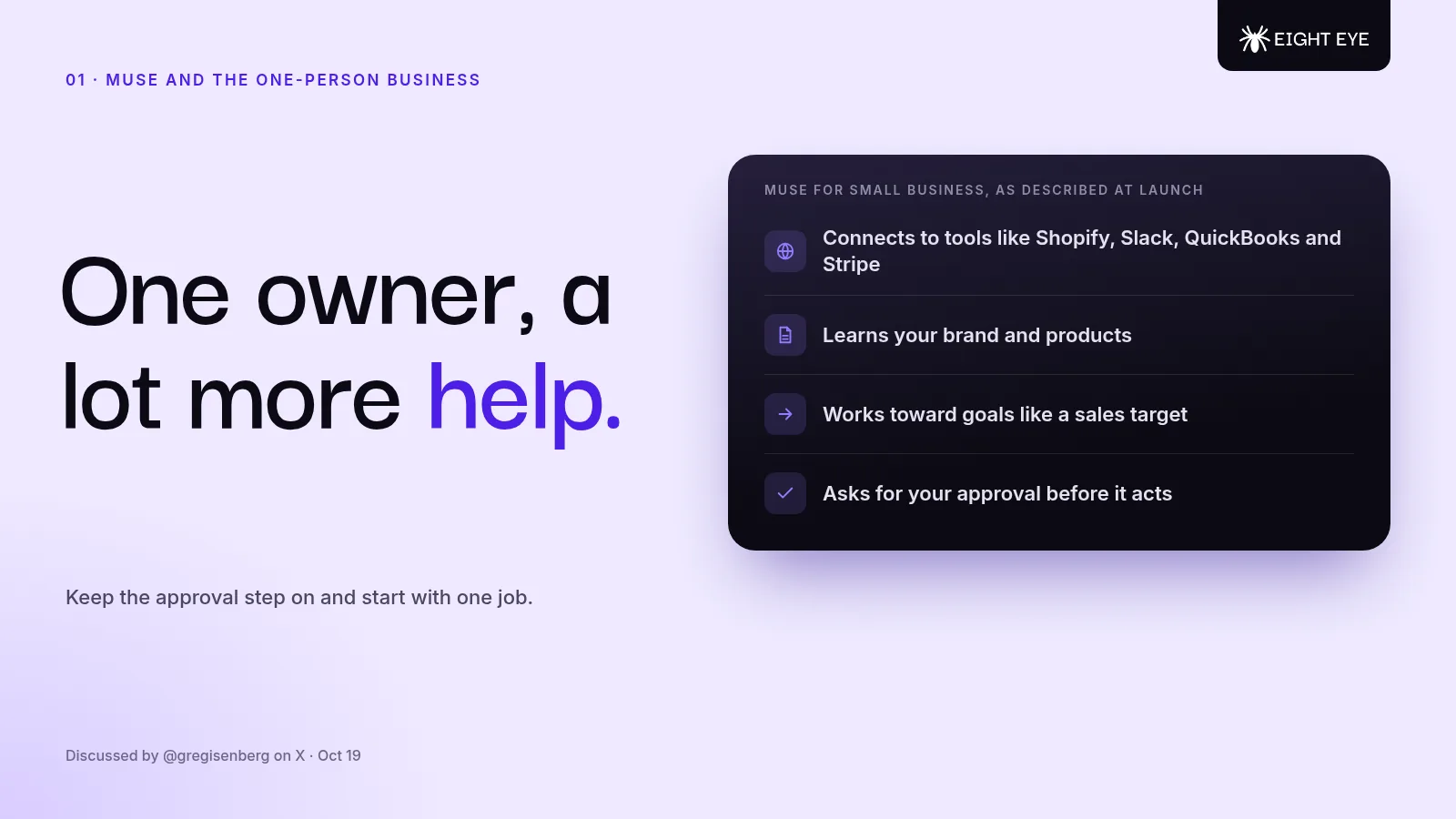
@gregisenberg, October 19. About 8,800 likes, 23,000 bookmarks and 1 million views.
Greg Isenberg, who builds and invests in internet businesses, called Muse the most overlooked opportunity he's seen in years and predicted it will probably create more than a thousand millionaires. His post is a clip from his podcast on how he'd build a one-person business powered by Muse starting with no money and no social following, and he linked the full episode on YouTube. Bookmarks outnumbered likes almost three to one, which usually means people plan to come back and try it.
For context, X's news summary of the launch describes Muse for Small Business as an agent that connects to tools like Shopify, Slack, Zoom, Stripe and QuickBooks, learns a business's brand, products and patterns, works toward goals like a sales target, and asks the owner to approve each action. The same summary says it's free for most uses.
Our take: Treat the millionaire talk as a pep talk, not a forecast. The useful part for an owner who already has customers is simpler: an agent that knows your products and your past campaigns can take the first pass at the marketing you keep putting off, like the weekly post, the slow-month promo or the follow-up to last spring's customers. Keep the approval step on, start with one job, and judge it on whether it brings in calls and bookings, not on how much it produces. And read item 2 before you connect your accounting.
2. Before you share a Muse chat, read this
Ars Technica, October 20, shared on X by @TheCyberSecHub. This one is only a few hours old and hasn't spread much yet, but it belongs next to item 1.
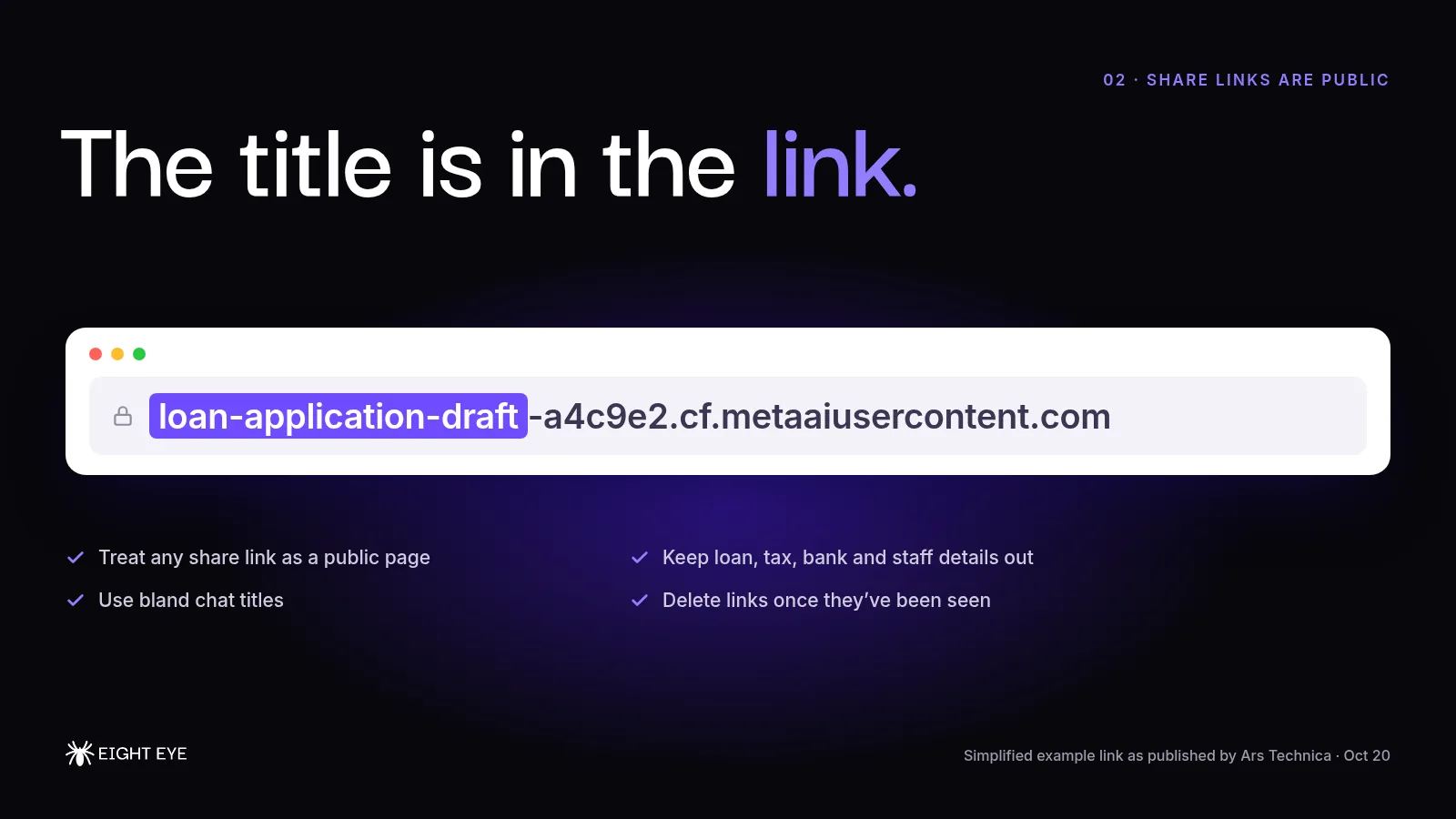
When you share a Muse conversation, Muse creates a web link to it. According to Ars Technica's report, researchers at the security firm Claroc found that those links include the conversation's title in the web address, and public DNS records (a kind of history of which web addresses get looked up) make them searchable. With one query, the researchers found 6,800 shared links. In the few hundred they opened, they found things like a small-business owner's loan application with the amount requested, a company's internal revenue review, and a workplace's full-year staff vacation calendar. Claroc told Ars it contacted Meta and heard nothing back, and that the behavior appears to be by design. Meta didn't immediately answer Ars's questions.
Our take: This is good advice for every AI tool, not only Muse. Assume any share link is a public page. Don't paste customer lists, loan or tax documents, bank details or staff information into a chat you plan to share. Give chats bland titles, and delete shared links once the other person has seen them. If you need to send something sensitive to your accountant or a partner, use a tool built for it, like your bank's portal or a password-protected file.
3. "We'll cancel the license and build our own"
@levelsio, October 20. About 170 likes and 19,000 views in under an hour.
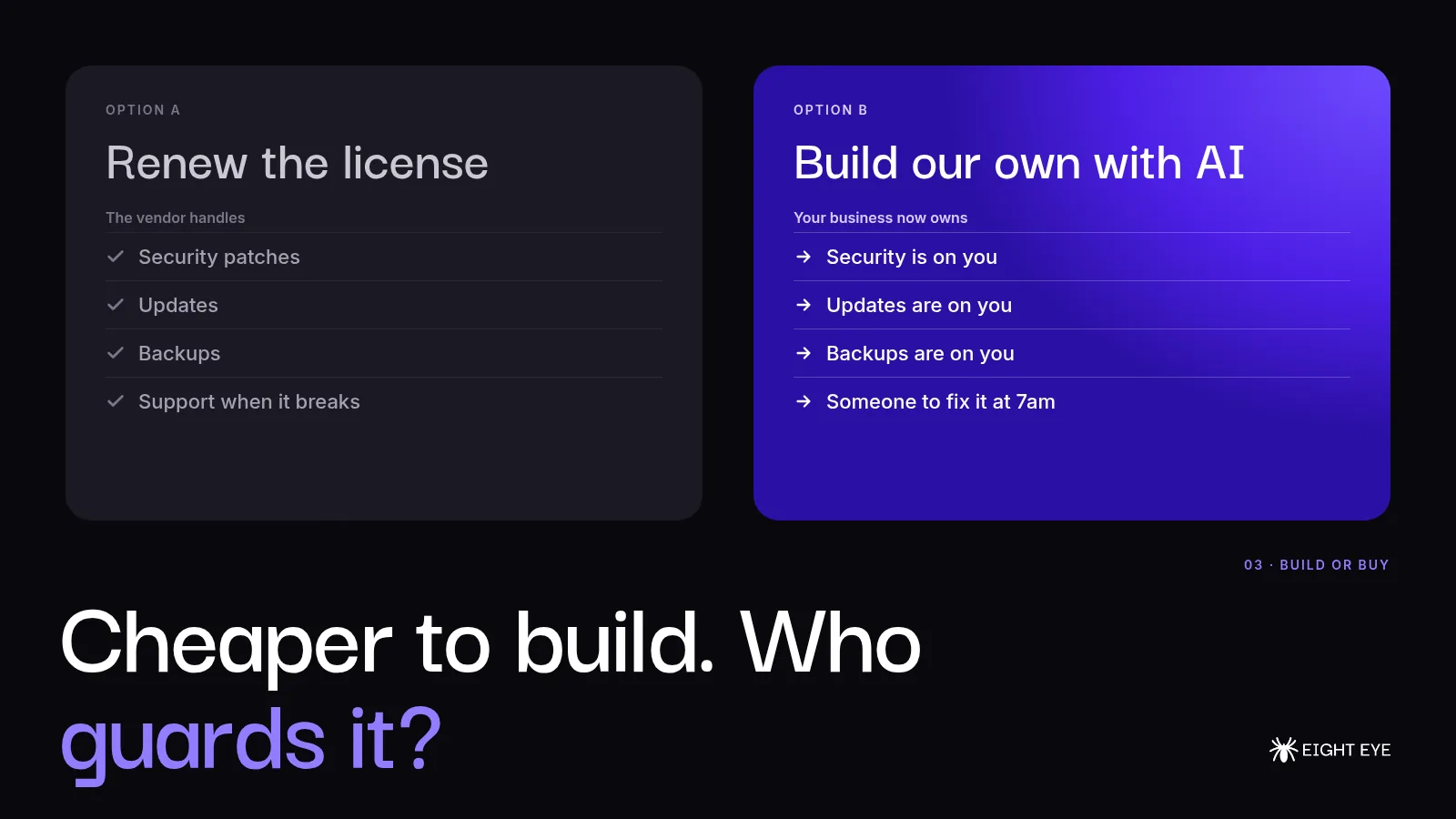
@levelsio, who runs several profitable one-person websites, shared messages from a friend with a regular software job at a traditional company in a small town in Austria who just went all in on AI. "Everything takes me only 5 seconds now," the friend wrote. He also said his employer plans to cancel a CMS (the software that runs their website content) instead of renewing its $10K-a-year license, and have staff build their own dashboard with AI. @levelsio said it was the first time he'd heard that kind of talk from someone with a regular job outside the tech world he usually hears from, and wondered if it means AI coding has finally gone mainstream.
Our take: For a small business, the build-it-yourself question is coming, and sometimes the answer is yes. A simple internal tool, like a job tracker or a price calculator, is fair game. But a license fee also pays for security, backups, updates and someone to call when it breaks. Last week, a coffee chain in South Africa learned that the hard way: according to X's news summary of the story, an operations dashboard it built quickly with AI coding tools exposed franchisee names, emails and performance data for 132 stores before it was taken down. If you build, keep anything with customer or payment data behind a proper login, have someone check it, and know who fixes it when it breaks.
4. AI is learning the old software businesses still run on
@OpenAI, October 19. About 7,700 likes, 670 replies and 1.1 million views.
OpenAI said its latest models are better at building and migrating software written in older, less common programming languages like COBOL, Fortran and Visual Basic. Those languages still run systems that banks, governments and businesses depend on, the company wrote, and the hard part is understanding decades of business rules while keeping what works. It asked teams working on these systems which languages and workflows it should take on next.
Our take: Plenty of small businesses have their own version of this: a pricing spreadsheet full of formulas only one person understands, an old database on the office PC, or a program the last IT person set up years ago. AI can now read that kind of thing and explain it in plain English. Start there. Ask it to document what the old tool does and what rules it follows, back everything up, and only then decide whether to replace it. The rules are the valuable part, so get them written down before anything changes.
5. AI coworkers need lanes, not a group chat
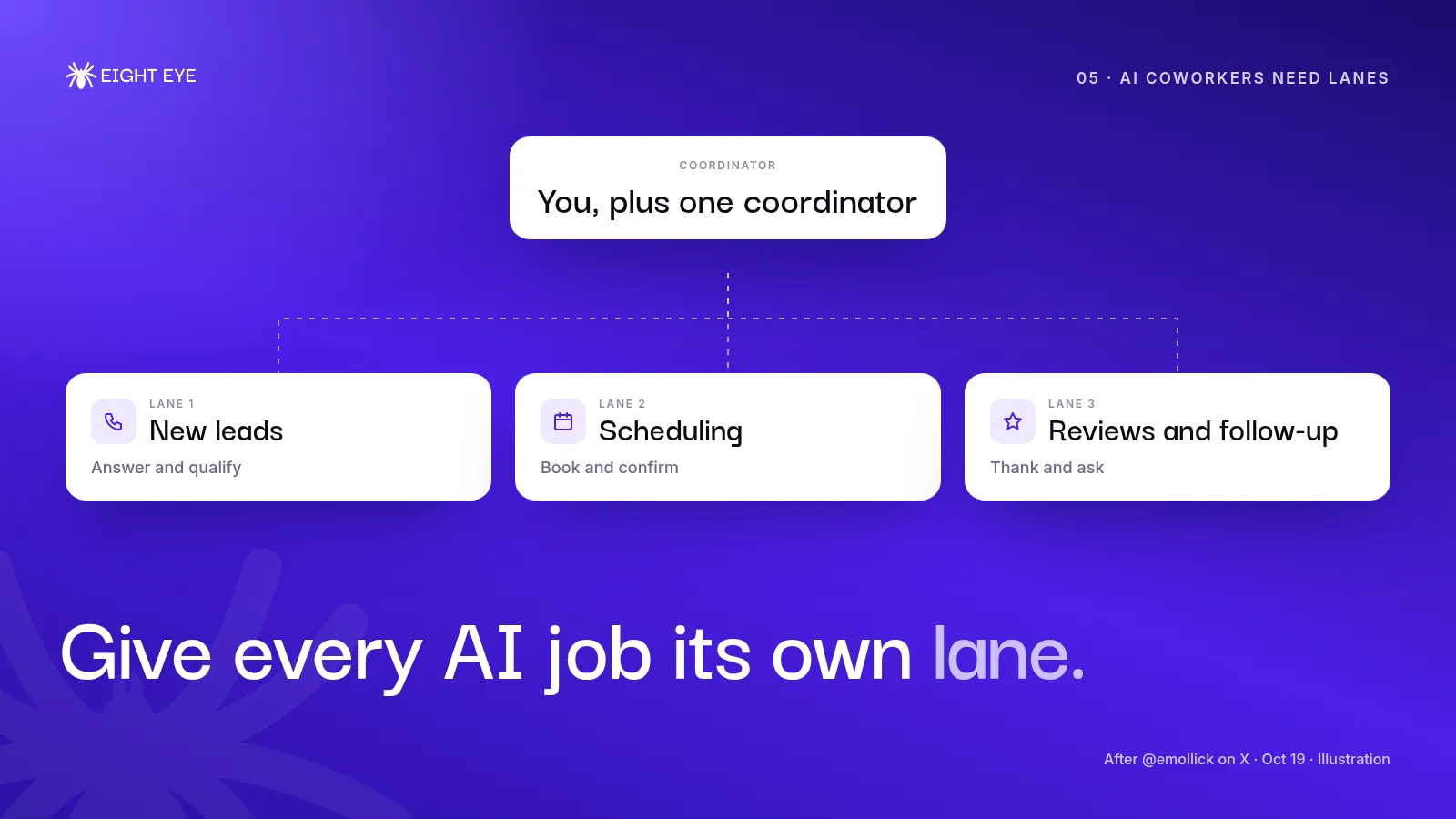
@emollick, October 19. About 400 likes and 170 replies.
Ethan Mollick, a Wharton professor who studies AI, argued that AI working with several people at once needs to move past the group chat. Chats get chaotic, everyone sees everything, and they're bad for long projects. A few hours later he posted (about 420 likes and 200 replies) that Anthropic's new Claude Projects is a nice way to run several AI agents together: you talk to one coordinator, and separate agents work their own threads and pass messages to each other. He said it takes some fiddling but is quite powerful.
Our take: The same setup works for a small business, whether the help is people or software. Don't hand one AI tool everything and hope. Give each job its own lane, like answering new leads, booking appointments, or asking happy customers for reviews. Decide what each one can do on its own and what it hands back to you, and keep one place where you can see what all of them did today. That's how you'd run a front desk with three people, and it's how AI help stays manageable.
6. Keep going or change course?
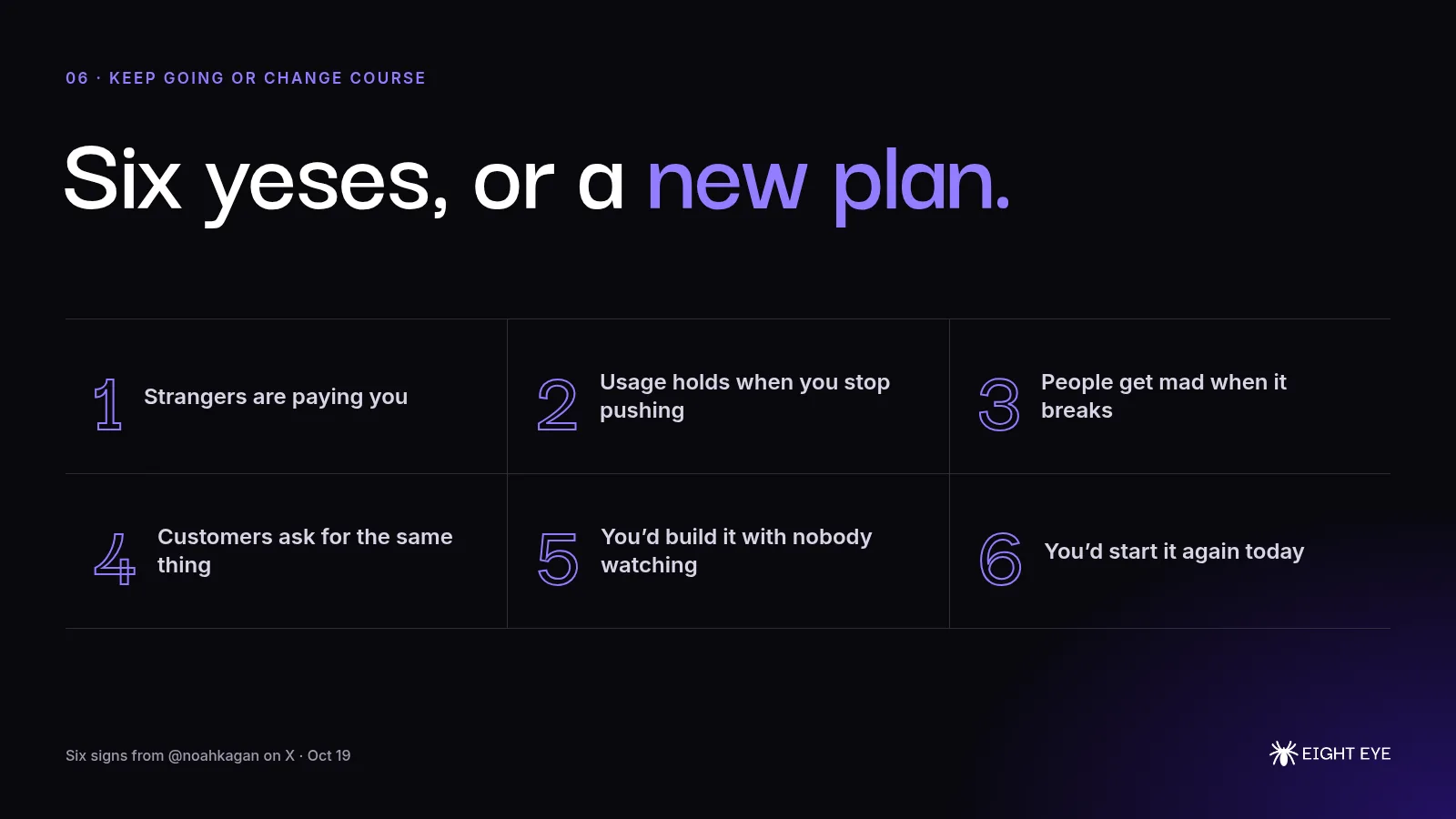
@noahkagan, October 19. About 190 likes and 190 bookmarks.
Noah Kagan, who runs the software deals site AppSumo, wrote that "never give up" is how founders lose three years, because grit only works if you're grinding on the right thing. His six signs: strangers are paying you, not friends; usage holds up when you stop promoting for a week; people get upset when it breaks; different customers keep asking for the same thing; you'd keep building it even if nobody were watching; and knowing what you know now, you'd start it again tomorrow. Score five or six and keep going, three or four and keep the customers but change the offer, two or fewer and change direction this week.
Our take: You can run this test on a single part of your business, not just the whole thing. Try it on a service you added last year, a new town you started covering, or a marketing channel you pay for every month. Are strangers booking it? Does it keep bringing in work when you stop pushing? Do customers ask for it by name? If a service gets two yeses, it might be time to drop it and put that time into the work people already call you for.
Quick hit: what used to be for big companies
@noahkagan (about 250 likes and 50 replies) also pointed out that the best businesses give everyone what only the rich used to have: Uber made a private driver normal, Airbnb a vacation home, and AI a genius on call. The small business version of that is real too. A phone that's always answered, a follow-up that always goes out and a marketing calendar someone actually keeps used to need a full office staff. They don't anymore.
One more for the tech crowd
Meta also released Muse Glimmer, an open-weight model that, according to X's news summary, has 30 billion parameters, runs on an ordinary computer with a single graphics card, and is aimed at agents that use tools and plan multi-day tasks. The summary says it's available on Hugging Face under the Apache 2.0 license. If you've wanted to try an AI agent that keeps your data on your own machine, it's worth a look.
That's issue seven
If you've tried Muse or another AI agent in your business, we'd like to hear what worked and what didn't. Write to us at support@eighteye.ai. Eight Eye is the AI growth partner for small businesses. We answer and follow up with every lead, help you get found in search and AI answers, and keep the busywork moving. See how it works, compare plans and pricing, or book a demo.
See you in the next issue.