
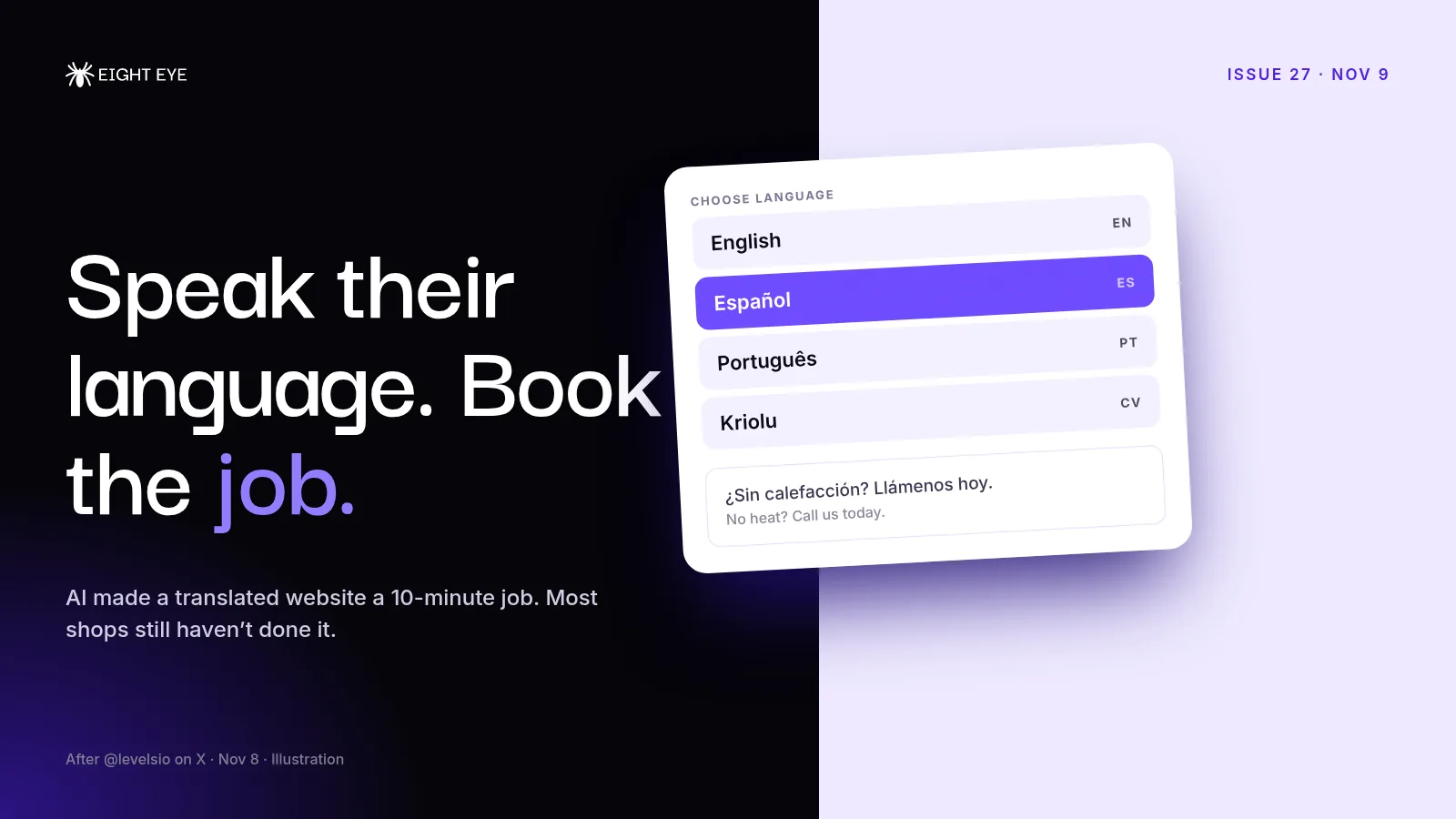
Pieter Levels always hated translating his websites. It meant messy code and a lot of busywork, so he just never did it. This weekend he had AI do it for his hotel site, Hotelist. Nine languages. He says it took 10 minutes.
That is a coder's story. Here is why it matters to a plumber in Framingham or an electrician in Lowell. A lot of your neighbors would rather read about a no-heat call in Portuguese or Spanish. Most shops never gave them that option because it used to be expensive and slow. It isn't anymore.
That is our lead. After it: Aaron Levie on why you should retest AI every few months, Dickie Bush on turning one piece of work into a week of content, and Ethan Mollick on the last time daily life changed this much. Hint: plumbing was a big part of it. Each item links to the original post on X. Engagement numbers are as of the morning of November 9.
1. AI made a translated website a 10-minute job
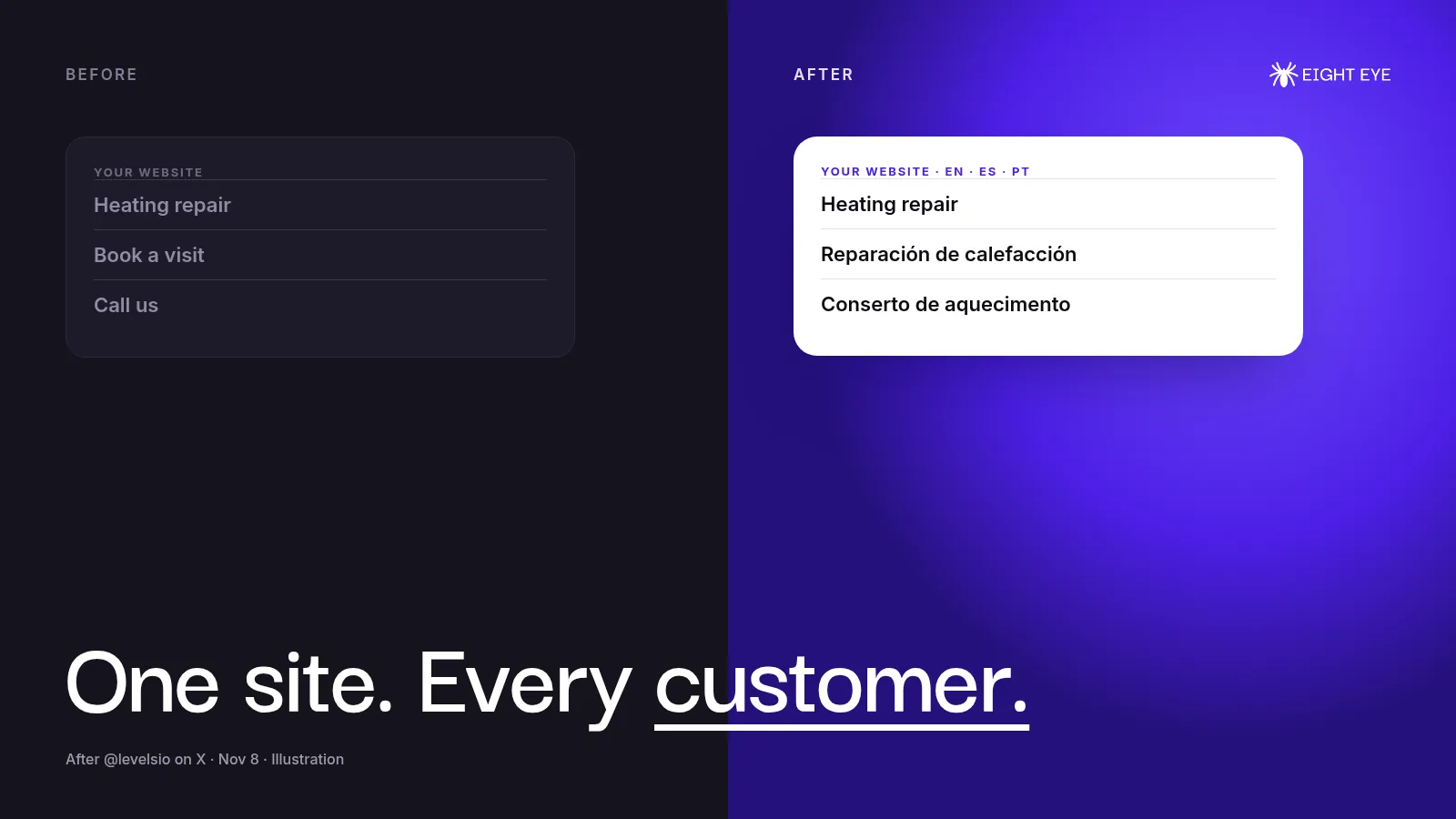
@levelsio, November 8. About 340 likes, 210 bookmarks and 109,000 views.
Pieter runs a bunch of one-person internet businesses. He wrote that adding languages to a site used to mean wrapping every word in code, so he skipped it for years. Now AI writes and maintains that code for him. He added English, Spanish, German, French, Italian, two kinds of Portuguese and two kinds of Chinese to Hotelist. He also thinks it may help with SEO, since each language gets its own pages.
Our take: Massachusetts has big Brazilian, Portuguese, Cape Verdean and Spanish-speaking communities. Many of them own homes. They have boilers and panels and water heaters like everyone else. If your site only speaks English, you are asking them to do extra work before they call you. Most won't.
- Start with two pages, not the whole site. Your main service page and your contact page. Ask ChatGPT or Claude to translate them, then have someone who speaks the language read them. A customer, a tech, a cousin. Fix anything that sounds off.
- Be careful with prices and safety. Anything about cost, warranty, gas or electrical safety gets a human check. Same rule as English.
- Make the reply match the page. If the page says "Hablamos español," someone has to answer that call or text. If you can't yet, say what you can do: "Send us a text in Spanish and we'll reply."
- Do the same on Google. Your Google Business Profile description and a few posts can go out in a second language too. That is where people look first.
2. AI failed you last spring? Try it again
@levie, November 8. About 320 likes, 150 bookmarks and 55,000 views.
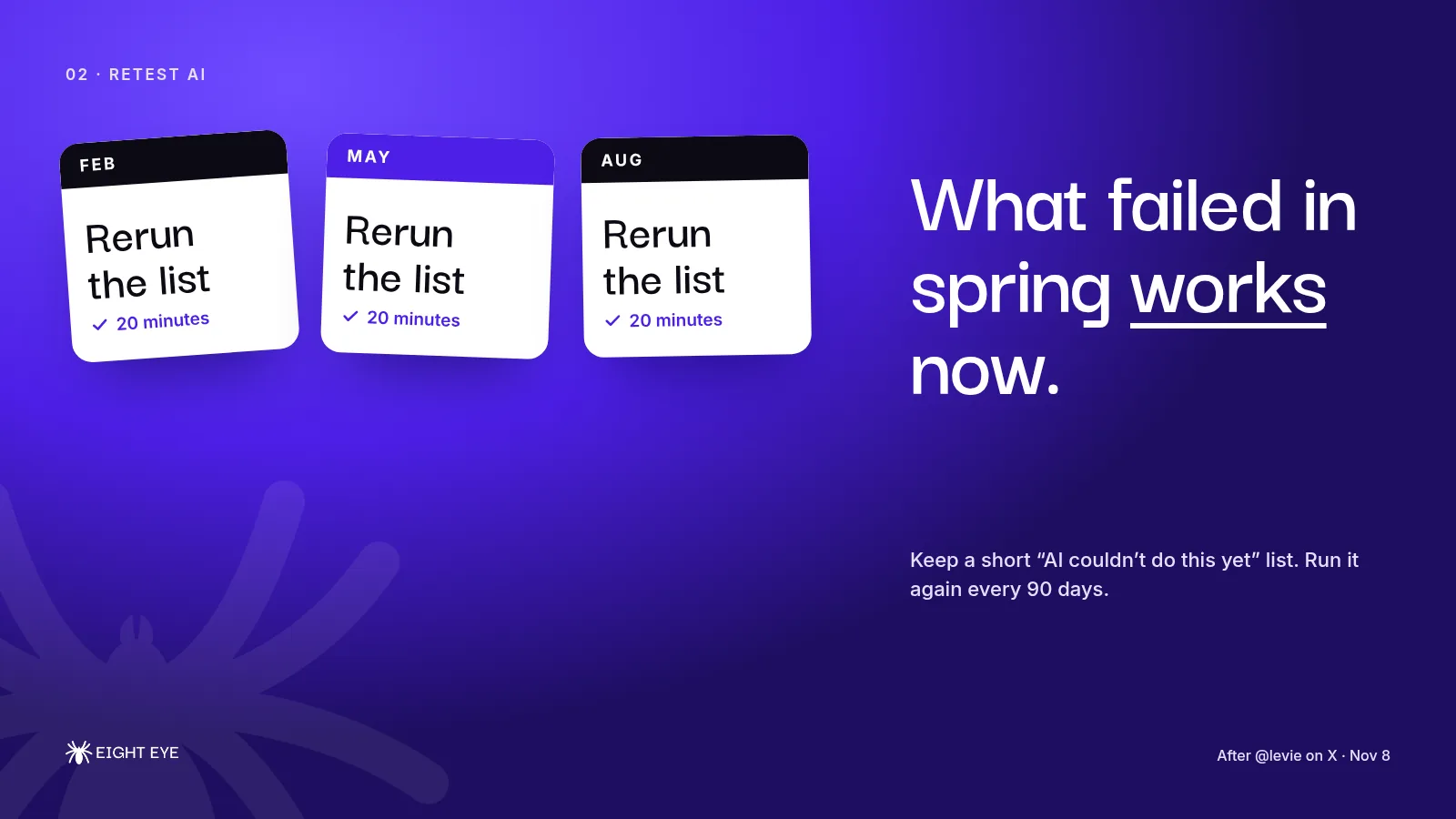
Box CEO Aaron Levie said a good habit with AI is to check back every three to six months and retry the thing that didn't work before. He wrote that the last six months alone brought better reasoning, better use of tools and computers, and deeper know-how in key fields. His bigger point: AI is getting good at running the software you already use, not just writing text.
Our take: Most owners try AI once, hit a bad answer, and decide it isn't for them. That was a fair call at the time. It is not a permanent one. Keep a short list called "AI couldn't do this yet." Writing a clean estimate from your notes. Reading a photo of a nameplate. Sorting a messy inbox. Put a reminder on your calendar every 90 days and run the list again. Twenty minutes. Whatever works now, you keep.
3. Do the work once. Let AI cut it into ten pieces
@dickiebush, November 9. About 130 likes, 195 bookmarks and 11,000 views.
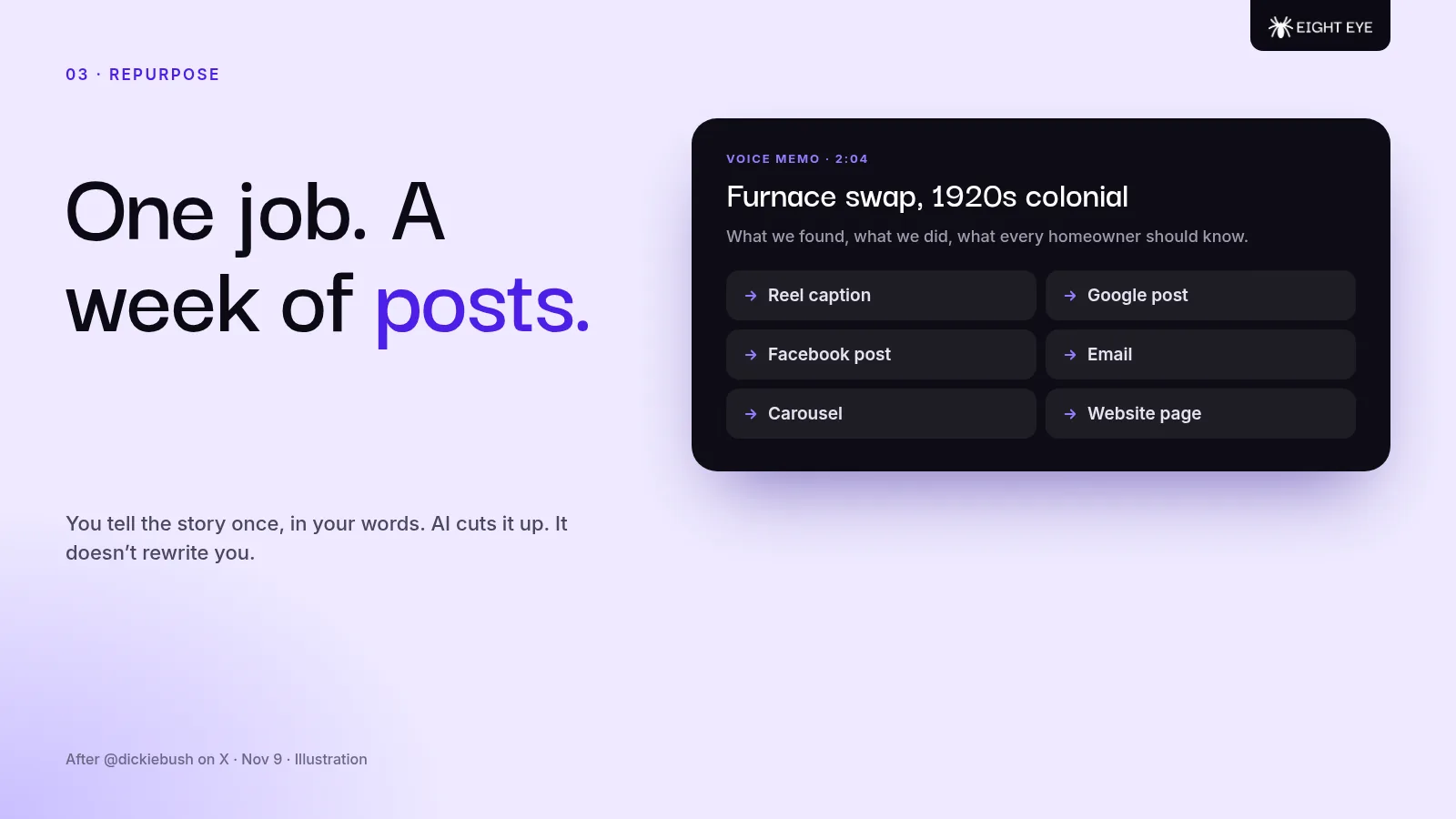
Dickie Bush, a writing coach, shared his weekly system. He writes one long newsletter, turns it into a long video, then pulls out about ten short posts, a couple of carousels and a couple of short videos, and publishes all of it across platforms. The key line: he writes every word and films every video himself. AI only slices it up, "without changing a single word."
Our take: You don't need a newsletter. You need one good job. Say a furnace swap in an old colonial. Take a few photos, with the homeowner's OK. Record yourself for two minutes in the truck: what you found, what you did, what you'd tell any homeowner. That is your long-form piece. Hand the transcript to AI and ask it to cut it into a Google post, a short reel caption, a Facebook post and a page for your website, in your own words. Bookmark-worthy content from a job you already did. The words are yours. AI just saves you the typing.
4. The last time life changed this fast, plumbers did it
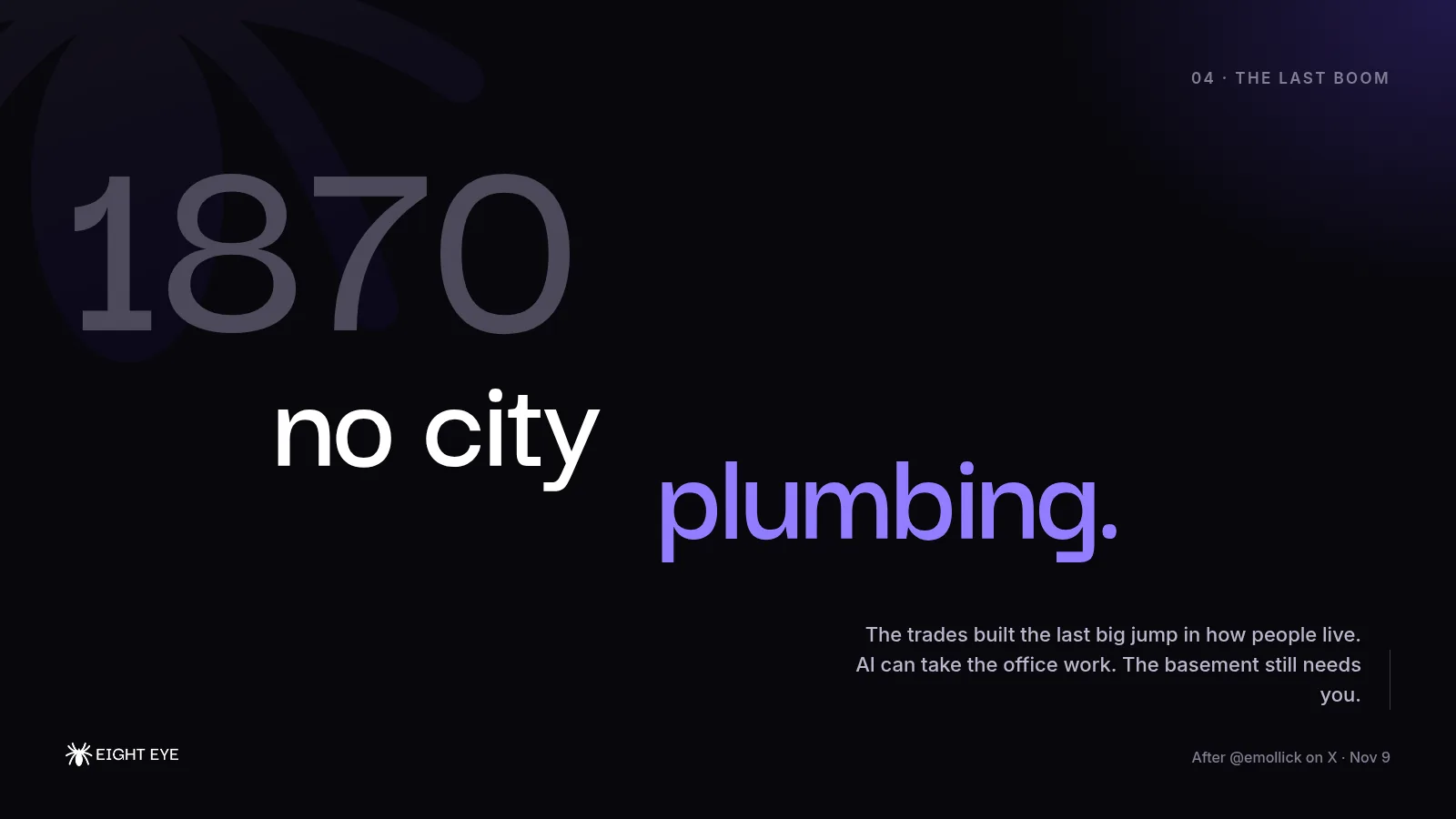
@emollick, November 9. About 390 likes, 180 bookmarks and 29,000 views.
Wharton professor Ethan Mollick pointed to the book "The Rise and Fall of American Growth." It argues that 1870 to 1920 was a one-time jump in how people live. In 1870 there were no toilets, no city plumbing, no central heating, and lamps for light. Fifty years later most of that was solved and the country was getting wired for electricity. The book said we may never see a jump that big again. Mollick's hopeful question: what if AI is the next one?
Our take: Read that list again. Plumbing. Heat. Electricity. The last time daily life changed that much, it was the trades that built it. If AI really is the next big jump, the shops that win will be the ones that use it for the office work and keep their best people on the tools. The phone, the follow-up, the paperwork: let the machine help. The work in the basement still needs you.
That's issue twenty-seven
One thing to try today: pick your main service page, translate it into the second most common language in your town, and have a real speaker read it before it goes live. If calls are slipping through while you're on a job, write to us at support@eighteye.ai. Eight Eye is the AI growth partner for small businesses. We answer your calls, text back missed leads, follow up until they book and help you get found online, while you keep the final say. See how it works, compare plans and pricing, or book a demo.
See you in the next issue.